
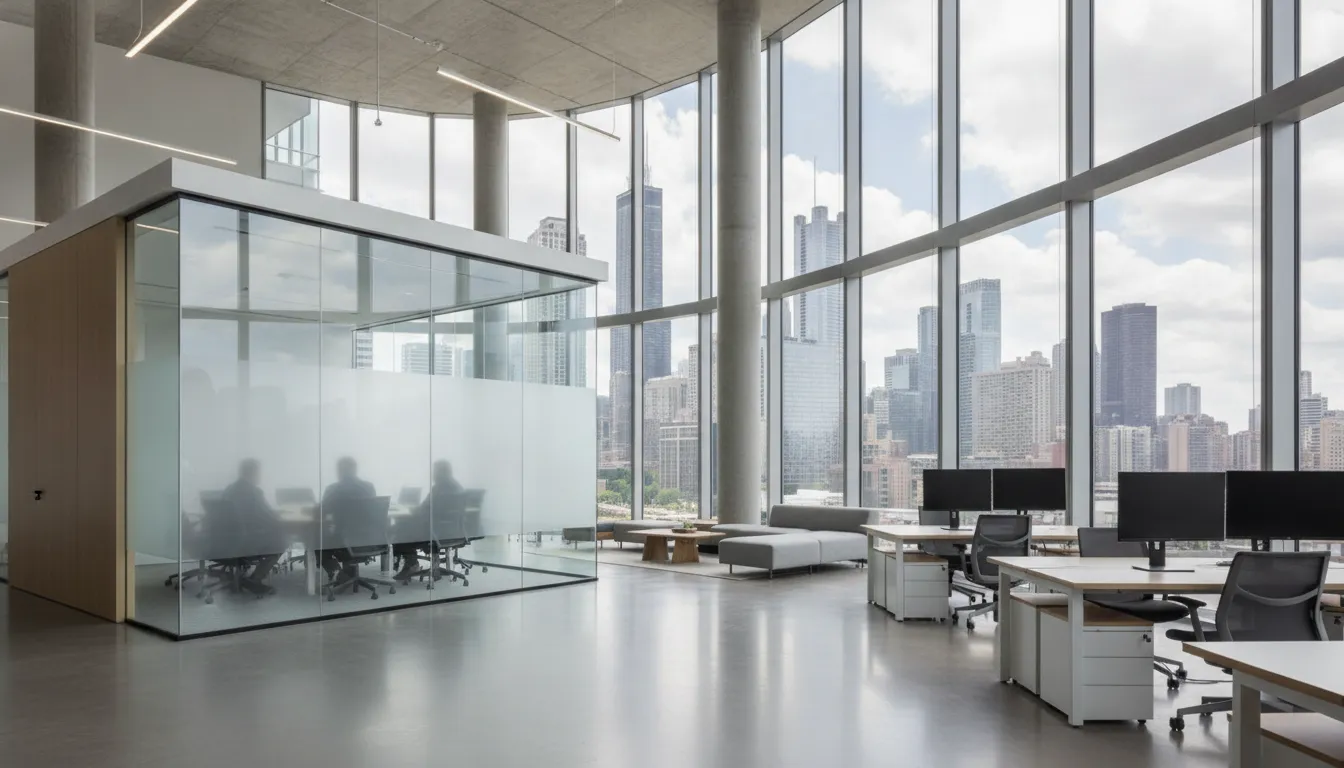
Chicago office buildings rarely have one glass problem. A south-facing conference room may need less glare, a lobby may need privacy, and street-level glass may need a protective surface. This commercial window film types comparison explains how the main categories differ. Property owners and facility teams can match each area to a practical goal instead of choosing the darkest shade by default.
Get a free estimate for commercial window film in Chicago
Commercial window film is an improvement applied to existing glass by a professional installer. Depending on the film category, it can manage solar heat gain, reduce glare, change visibility, improve appearance, or help hold broken glass together. The categories are not interchangeable. The right recommendation depends on the building, the glass, the exposure, and the outcome the business needs.
What Does a Commercial Window Film Types Comparison Cover?
A commercial window film types comparison separates four common categories by purpose. Solar control film targets heat and glare. Decorative and privacy film changes visibility or appearance. Safety and security film helps retain glass fragments after breakage. Anti-graffiti film protects exposed glass with a replaceable surface. A building may use one category or a planned combination of several.
The four categories below solve different problems:
- Solar control: manages sunlight, heat gain, and reflections on work surfaces or screens.
- Decorative and privacy: obscures views, defines interior spaces, or supports branding while maintaining a finished appearance.
- Safety and security: adds a film layer intended to help hold glass together when it breaks and can support a broader glass-safety plan.
- Anti-graffiti: places a sacrificial layer over vulnerable glass so surface damage can be addressed without immediately replacing the glass itself.
- Electric switchable film: changes from clear to private when powered, making it useful for selected rooms that need flexible visual separation.
These categories can be combined by elevation or room. For example, a Chicago office may use solar control film on west-facing windows, privacy film on conference-room glass, and safety film near entry doors.
A storefront may prioritize anti-graffiti protection at street level while using decorative film inside. Sullivan’s Tinting’s commercial window film service is designed around this type of application-specific planning. For the broader cluster topic, read the commercial window film guide for Chicago businesses.
| Film type | Primary purpose | Common application |
|---|---|---|
| Solar control. | Manage solar heat gain and glare. | Sun-facing offices and conference rooms. |
| Decorative and privacy. | Obscure views or improve appearance. | Meeting rooms, partitions, and storefront interiors. |
| Safety and security. | Help retain broken glass. | Entry doors and vulnerable glazing. |
| Anti-graffiti. | Protect exposed glass with a replaceable layer. | Street-level storefronts and transit-facing windows. |
How Does Solar Control Film Help Chicago Offices?
Solar control film is usually the best starting category when an office struggles with afternoon heat, screen glare, or uneven temperatures near windows. It is selected for solar heat gain control and glare reduction while preserving useful daylight. The exact result depends on the existing glass, film specification, orientation, and professional installation.
Large windows bring valuable daylight into an office, but the same exposure can create hot zones, reflections, and uncomfortable workstations. Solar control film changes how sunlight passes through the glass. It can reduce the intensity of solar energy entering the room without forcing a business to close off the windows or replace the glazing.
Heat rejection and more consistent comfort
West- and south-facing windows can be especially challenging during bright Chicago afternoons. A solar control film recommendation should account for the direction of the glass. The time of day when discomfort occurs, and the way the HVAC system serves the space. The goal is not simply to make the glass look dark. The goal is to make the occupied area more comfortable and easier to manage.
Glare reduction without losing daylight
Reflections on monitors, displays, and conference-room surfaces can interrupt work even when the room temperature feels acceptable. A suitable film can reduce glare while keeping the office bright. Facility teams should evaluate the visual effect from the occupant’s position, not only from the sidewalk. Film appearance, visible light transmission, interior lighting, and screen placement all matter.
UV protection for furnishings and merchandise
Window film can also help reduce ultraviolet exposure through treated glass. Sullivan’s Tinting describes its window film solutions as blocking up to 99 percent of harmful UV rays. Businesses may use this protection to help limit fading of flooring, furniture, displays, artwork, and merchandise. For general background on high-performance window film, review the U.S. Department of Energy Better Buildings resource and discuss the building-specific application with an installer.
When Should You Choose Decorative and Privacy Film?
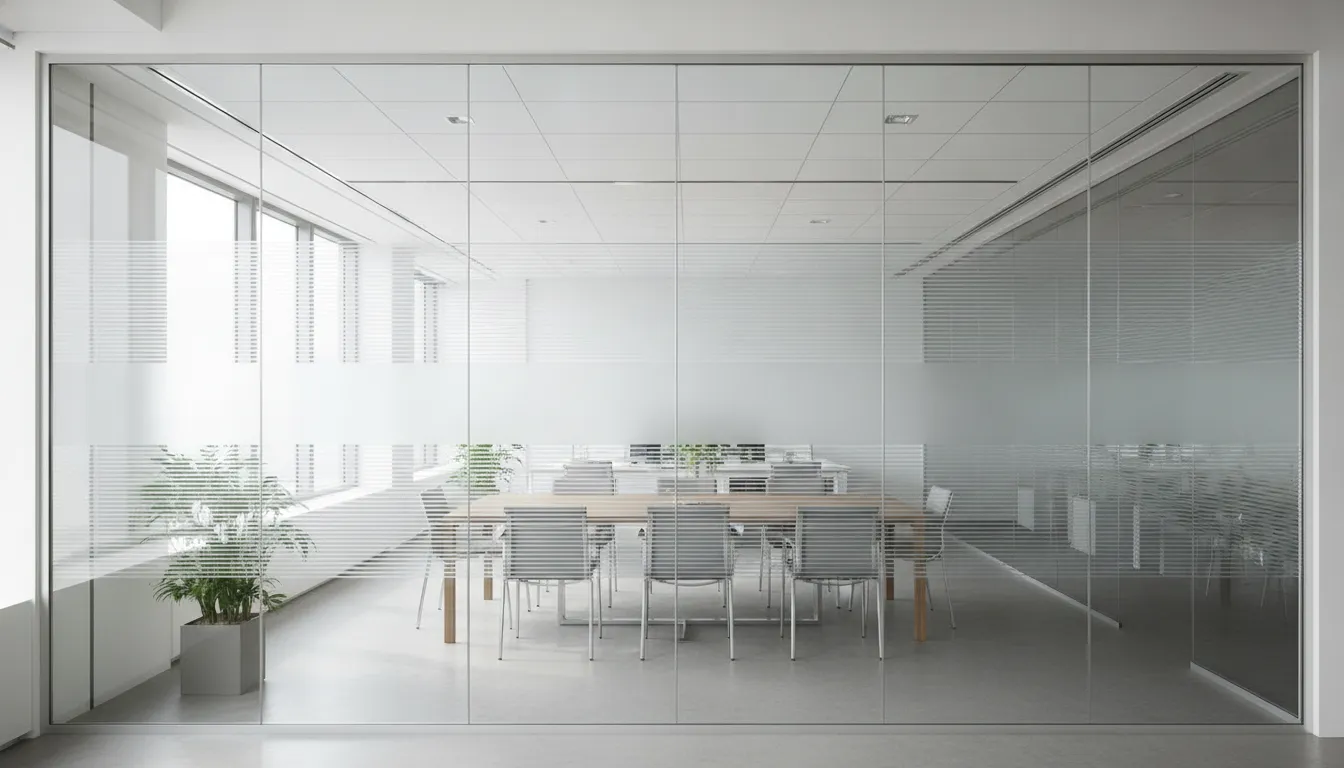
Choose decorative and privacy film when the main need is visual separation, a more finished glass appearance, or branding without replacing existing glazing. Frosted, patterned, and custom options can obscure selected views while retaining natural light. This category is often suited to conference rooms, interior partitions, reception areas, sidelights, and storefront displays.
Clear glass can make a workplace feel open, but openness is not appropriate for every room. Meeting participants may need privacy. A medical or professional office may want to separate waiting and working areas. A retailer may want branding or a visual feature without installing etched glass. Decorative and privacy film addresses these design and function needs on the existing glass.
Privacy without making a room feel closed in
Frosted and patterned films can obscure a direct view while allowing daylight to move through the space. The degree of privacy should be selected for the situation. A band across the middle of a conference-room wall may prevent distracting sightlines while leaving the upper glass clear. A more opaque design may be appropriate where the room handles sensitive conversations.
Branding and visual design on existing glass
Commercial decorative film can support a consistent interior experience through patterns, gradients, or custom graphics. It may be a practical alternative to replacing glass or installing permanently etched surfaces. The design should be reviewed at the actual viewing distance, with attention to edges, mullions, doors, and cleaning access. Professional installation is important for crisp lines and a smooth, factory-finished look.
For a focused example, see Sullivan’s guide to decorative window film for Chicago offices. The correct choice will depend on the design brief, privacy level, and condition of the existing glazing.
Is Safety and Security Film Right for Your Building?
Safety and security film is worth evaluating where broken glass could create an injury, access, or operational concern. The film can help hold glass fragments together after breakage, but it does not make every window impact-proof or replace a complete security plan. A professional assessment should consider the glass type, frame, attachment method, and the building’s specific risk.
Entry doors, sidelights, lobby glazing, and interior glass near high-traffic areas deserve special attention. A break can result from an accident, severe weather, attempted entry, or another event. The relevant question is not whether film makes glass indestructible. The relevant question is whether adding a professionally installed film layer can improve the way the glass behaves when it breaks.
Where commercial safety film can make sense
Safety film may be considered for doors, sidelights, low glazing, and other locations where people are close to glass. It can also support a risk-reduction plan in schools, offices, retail spaces, and public-facing facilities. Building owners should not assume that a film specification suitable for one pane is suitable for every pane. Glass construction and framing conditions must be reviewed.
Security goals require realistic expectations
Security film can delay access or help retain broken glass in some situations. It is not a substitute for locks, alarms, access control, laminated security glazing, or other measures. Sullivan’s commercial security window film guide provides additional context. A qualified installer can explain what the film is designed to do and where a different security upgrade would be more appropriate.
Where Does Anti-Graffiti Film Fit?
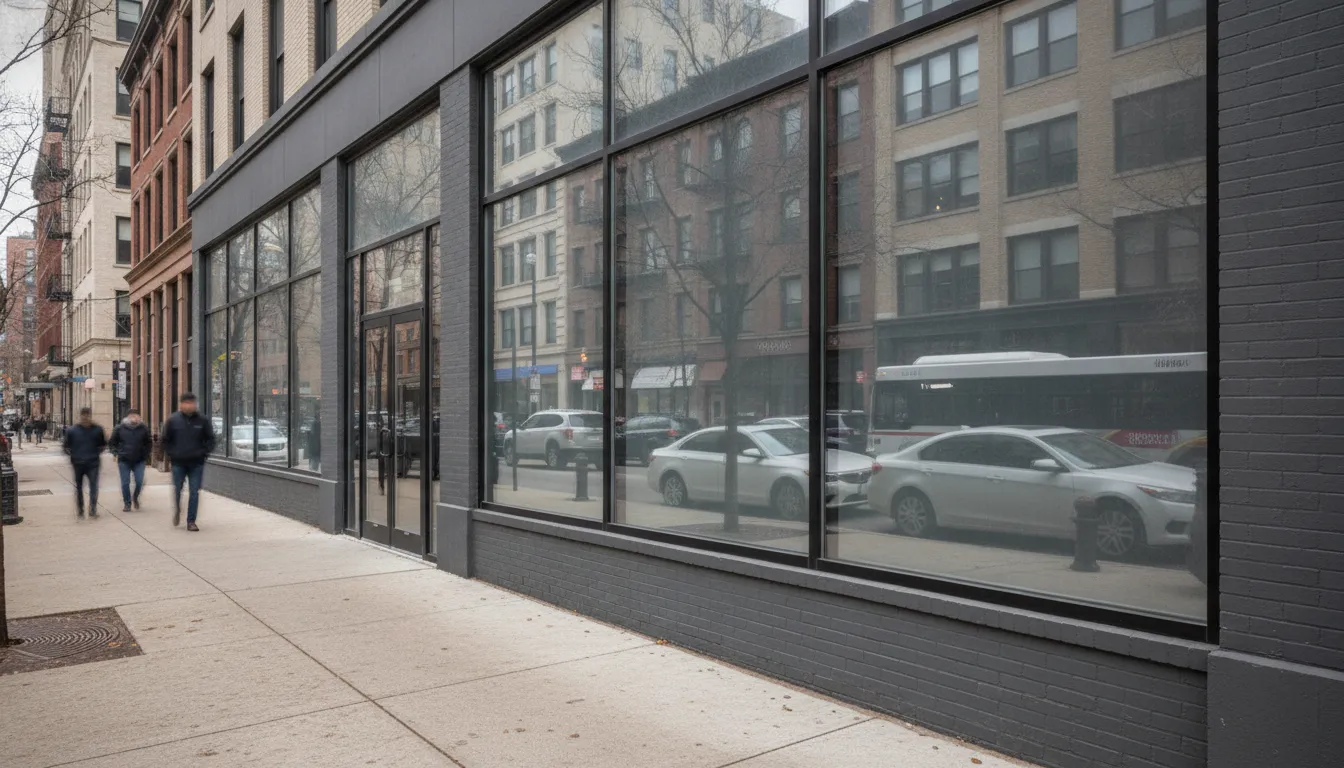
Anti-graffiti film fits buildings with exposed glass that faces repeated scratching, etching, paint, or other surface damage. It creates a replaceable protective layer over the glass. When the layer is damaged, the business may be able to replace the film rather than replace the entire pane. Subject to the damage and the film system used.
Street-level storefronts, transit-facing windows, public facilities, and vacant-property windows may have a higher risk of intentional surface damage. Anti-graffiti film does not prevent every incident, and it cannot restore glass that is already damaged. Its value is in making a vulnerable surface easier to maintain and repair through a planned replacement process.
Why a sacrificial surface matters
Glass replacement can interrupt operations, require coordination with a glazier, and change the appearance of a storefront. A replaceable film layer gives property teams another maintenance option. The film should be specified for the location, installed on clean glass, and inspected after an incident. Cleaning methods also matter because abrasive tools can damage both film and glass.
Retail and public-facing applications
Anti-graffiti film is most useful where the lower panes are accessible from a sidewalk or public area. It may be paired with solar control or decorative film on other areas, but the products should not be treated as identical. Read the anti-graffiti film guide for Chicago storefronts before deciding whether the risk and maintenance model fit the property.
How Can a Commercial Window Film Types Comparison Shape a Chicago Plan?
Use a commercial window film types comparison to map each glass area to one primary problem, then verify the glass and installation conditions before selecting a product. Start with heat and glare, privacy and appearance, breakage risk, or surface damage. A building may need different film categories on different elevations, rooms, or doors.
A strong plan begins with an on-site or project-specific review. Bring the installer the building’s priorities, not only a request for a particular shade. The following process keeps the comparison practical:
- Identify the affected areas. Note which rooms are too warm, where glare affects screens, which windows expose private activity, and which panes are vulnerable to impact or vandalism.
- Rank the primary objective. Decide whether comfort, privacy, appearance, glass retention, or surface protection comes first for each area.
- Review the existing glass. Consider pane type, thickness, frame condition, orientation, seals, doors, mullions, and any existing coatings or treatments.
- Choose the category before the shade. A darker appearance does not automatically provide the desired safety, privacy, or anti-graffiti performance.
- Plan around building operations. Discuss access, occupant schedules, furniture, cleaning, curing time, and how installation can minimize disruption.
- Confirm the finish. Review the intended appearance and edge detail so the final installation supports the building’s professional image.
One building can use several film types
Commercial projects are rarely all-or-nothing decisions. A property manager may specify solar control film for perimeter offices, decorative film for conference rooms, safety film for entry glazing, and anti-graffiti film for street-level panes. The combination should be coordinated so the appearance remains intentional and the performance goals are clear.
Use evidence, not a generic product promise
Product literature can explain a film’s intended characteristics, but the building’s glass and use conditions determine whether that option is suitable. For technical context on evaluating solar window film in an office building, review the National Institute of Standards and Technology office-building study. A recommendation should connect the evidence to the actual property rather than promise identical results in every installation.
Sullivan’s Tinting has served Chicagoland businesses as a family-owned and operated window film specialist since 1988. Its approach is consultative: understand the glass, explain the options, and provide a professional installation with a clean, factory-finished result. The broader commercial window film productivity article covers related office comfort and workplace considerations.
Request a free estimate for your Chicago commercial glass
Frequently Asked Questions About Commercial Window Film
Which commercial window film is best for reducing office heat and glare?
Solar control film is the category most directly associated with heat rejection, solar heat gain control, and glare reduction. The right specification depends on the glass, orientation, interior use, and desired appearance. A professional assessment is needed before selecting a film.
Can one type of film provide both privacy and natural light?
Decorative and privacy film can obscure views while allowing useful daylight into a room. Frosted, patterned, and gradient designs provide different levels of visual separation. The best option depends on whether the priority is partial privacy, full privacy, branding, or a design feature.
What is the difference between solar control film and safety film?
Solar control film is selected primarily for heat and glare management. Safety and security film is selected for glass-retention and protection goals. Some projects need both categories, but one should not be represented as a replacement for the other.
Does commercial window film block ultraviolet rays?
Many commercial window film options are designed to reduce ultraviolet transmission, and Sullivan’s Tinting describes its solutions as blocking up to 99 percent of harmful UV rays. Confirm the performance of the proposed film and its suitability for the existing glass during the estimate process.
When should a Chicago office consider anti-graffiti film?
Consider anti-graffiti film for accessible glass exposed to scratching, etching, paint, or repeated vandalism. It is especially relevant to street-level storefronts and public-facing properties. The film is a replaceable surface, not a guarantee that damage will not occur.
Get a free estimate and compare film options for your building