
Commercial Window Film Warranty Chicago Businesses Should Understand
Warranty decisions affect more than paperwork. They also affect maintenance planning, ownership transitions, and the time it takes to resolve a concern. A property manager who keeps the right records can give an installer or manufacturer useful information at the first contact.
For a Chicago office, storefront, medical facility, or other commercial property, window film is a long-term building improvement. A clear warranty helps your team understand what the film should do, how long it is expected to perform, and who handles a concern if the material or installation does not meet expectations.
Get a free estimate for commercial window film installation in Chicago
A commercial window film warranty may cover material defects such as peeling, cracking, blistering, or delamination. A separate installer warranty typically addresses workmanship. Terms vary by film type, manufacturer, glass, and installation conditions, so review both documents before approving a project.
The most useful warranty review starts by separating product coverage from workmanship coverage. That distinction makes it easier to choose the right commercial window film for your building and to keep the right records after installation.
What Does a Commercial Window Film Warranty Cover?
Manufacturer coverage generally applies to the film material. Depending on the product and written terms, covered defects may include peeling, cracking, blistering, crazing, discoloration, delamination, or de-metallizing. The exact list is not universal. Solar-control, decorative, privacy, and safety films are engineered for different purposes and can carry different warranty language.
A published V-KOOL warranty is a useful example of why the product document matters. It describes specific coverage and conditions rather than promising that every film performs identically in every building. Review the manufacturer warranty example and compare it with the product proposed for your property.
Before signing a commercial film proposal, ask for written answers to these questions:
- Which film, adhesive system, and approved glass types does the warranty cover?
- Which appearance or material defects qualify for review?
- Does the remedy include replacement material, labor, or both?
- How long does coverage last, and does registration or proof of purchase apply?
- Which conditions exclude coverage, including impact, abuse, unapproved cleaning, or later glass work?
A warranty is not a promise that every window will have the same heat rejection, glare reduction, or UV performance. Window orientation, glass construction, shading, HVAC operation, and product selection affect results. Treat the warranty as one part of the decision, alongside the film specifications and the building assessment.

Why Does Professional Installation Protect Warranty Coverage?
Installation quality affects both the finished appearance and the ability to determine responsibility later. A professional installer evaluates the glass, prepares the surface, follows the product requirements, and applies the film with attention to edges, seams, and visual consistency. Those steps support the clean, factory-finished look commercial properties expect.
Improper application can void or limit a manufacturer’s warranty. Federal guidance on solar control films also emphasizes the importance of suitable product selection and professional installation. Read the GSA solar control film findings for background on applied-film performance and installation considerations.
Manufacturer and installer warranties cover different risks
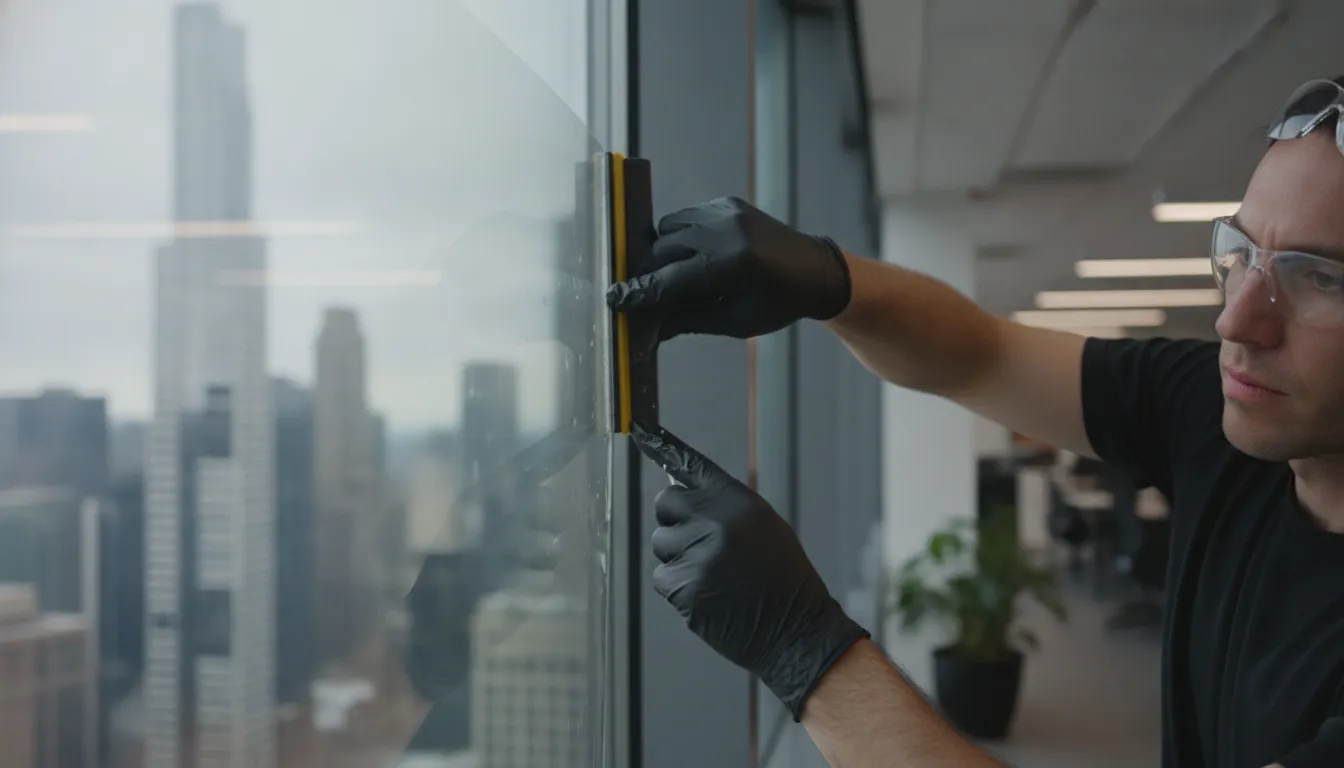
The manufacturer warranty generally addresses a defect in the film itself. The installer warranty generally addresses workmanship, such as an application problem that causes bubbling, edge lift, poor adhesion, or an inconsistent finish. The two warranties work together, but they are not interchangeable. The written terms determine which party reviews a specific concern.
Ask the installer how a claim is handled before work begins. A dependable process should identify the contact person, required documentation, inspection steps, and whether the installer coordinates with the manufacturer. Sullivan’s Tinting takes a consultative approach so property owners can understand the recommended film, installation requirements, and warranty responsibilities before approving the work.
Learn why professional window film installation matters when the project must look consistent across a commercial elevation. Precision work is especially important when occupants and visitors see the glass every day.
| Warranty detail | What to confirm |
|---|---|
| Covered defects | Ask whether peeling, cracking, blistering, delamination, discoloration, or de-metallizing are covered for the selected product. |
| Workmanship | Confirm whether installation-related bubbling, edge lift, adhesion problems, or finish concerns are handled by the installer. |
| Term and conditions | Check the duration, approved glass and location, registration requirements, cleaning rules, and exclusions. |
| Remedy and claim path | Ask whether replacement material, labor, inspection, and manufacturer coordination are included and who receives the first call. |
How Does a Commercial Window Film Warranty Chicago Businesses Receive Work?
A commercial window film warranty Chicago businesses receive should be read as a product-specific agreement, not as a universal promise about every type of film. The manufacturer may set one term for a solar-control product and another for a decorative, privacy, safety, or security product. The installer may provide separate workmanship coverage. Asking for both documents before approval prevents assumptions about who is responsible for a future concern.
Warranty language also matters when a building has unusual glass or exposure. Large south- or west-facing windows, insulated glass units, older glazing, exterior applications, and areas with frequent cleaning may require a closer review. The recommended film should be approved for the existing glass and installation location. If the proposal does not identify those details, ask the installer to explain them in writing.
Do not select a product based only on the longest number in a brochure. Compare the stated term with the coverage, exclusions, remedy, labor responsibility, and maintenance requirements. A shorter warranty on a properly matched specialty film may be more appropriate than a longer term attached to a product that does not suit the building. A professional evaluation helps connect the warranty to the actual project rather than treating it as a stand-alone sales claim.
Commercially applied window films are commonly planned as multi-year improvements. A U.S. General Services Administration evaluation describes applied solar-control films with lifespans of about six to 15 years, depending on the product and conditions. That range is useful for planning, but it is not a universal warranty term for every film.
The controlling document is the warranty for the specific product installed at your property. Film category, interior or exterior exposure, glass type, sunlight, cleaning practices, and installation quality can all affect the expected service life. A specialty safety or decorative film may have different terms from a solar-control film on a sun-facing storefront.
Chicago properties also experience seasonal temperature changes and regular heating and cooling cycles. During the selection process, ask whether the recommended film is approved for the existing glass and installation location. Ask which performance claims are covered, which are specifications only, and how a warranty claim is evaluated.
For a broader lifecycle discussion, see how long window film lasts. Keep the product name, invoice, installation date, warranty document, and care instructions with the property’s maintenance records.
What Can Void a Commercial Window Film Warranty?
Most warranty exclusions relate to damage, maintenance, or work performed after installation. The property team should share the film care instructions with janitorial crews and contractors. This simple step helps preserve the finish and makes it easier to identify the cause of a concern.
Cleaning and chemical damage
Use a soft, non-abrasive cloth or a clean rubber squeegee intended for glass. Avoid abrasive pads, scrapers, rough paper products, and harsh chemicals. Do not assume that every glass cleaner is film-safe. If the product label or care guide does not confirm compatibility, ask the installer or manufacturer before using it across the building.
Damage during later building work
Painting, drilling, signage installation, fixture work, glass replacement, and ladder use can cut, puncture, scratch, or lift film. Tell every contractor that the glass has film before work begins. If damage occurs, photograph the area and contact the professional installer. Do not patch, trim, or remove the film yourself, because that can complicate the inspection and claim process.
Unapproved installation or alteration
DIY application, an unapproved installer, or later alteration can create adhesion and responsibility problems. A professional installation record gives the property team a clear starting point if a concern appears. It also helps establish that the selected film, glass, and installation method were reviewed together.
How Should a Chicago Business Handle a Warranty Claim?
Start with documentation instead of trying to repair the film. Record the location, approximate date, visible condition, cleaning or maintenance activity, and any related building work. Take clear photographs from several angles. Then contact the installer using the service information in the project records.
- Identify the affected windows and describe the visible concern.
- Gather the invoice, product name, installation date, warranty, and care instructions.
- Note recent cleaning, impact, glass work, construction, or other changes near the window.
- Ask whether the installer or manufacturer will inspect the issue first.
- Keep the inspection result and any approved remedy with the property records.
A concern may involve the film material, installation workmanship, accidental damage, or a condition outside the warranty. An inspection helps separate those possibilities. Businesses considering specialized protection can also review security window film for commercial buildings and ask how that product’s coverage differs from solar or decorative film.
Why Does the Installer’s Experience Matter?
A warranty is more useful when the installation company remains available to explain the terms and help identify the next step. Sullivan’s Tinting is a family-owned and operated company serving Chicagoland since 1988. Its consultative process connects the building’s goals with the glass, film category, installation requirements, and manufacturer documentation.
That local accountability matters when a property manager needs a practical answer rather than a generic product statement. Sullivan’s serves commercial projects across Chicago and surrounding communities, with options for solar control, privacy, decorative, safety, security, and other window film needs. Learn more about the company’s commercial window film services near Chicago before requesting an evaluation.
The best time to clarify warranty responsibilities is before installation. A free estimate gives the property team an opportunity to discuss the building’s glass, project goals, recommended film, expected appearance, and documentation process without committing to a one-size-fits-all solution.
Request a free, no-obligation commercial window film estimate
Frequently Asked Questions About Commercial Window Film Warranty Chicago
What is usually covered by a commercial window film warranty?
Coverage may address specified film defects, including peeling, cracking, blistering, delamination, discoloration, or de-metallizing. A separate installer warranty usually covers workmanship
How long does commercial window film last in Chicago?
Applied commercial films are commonly planned for several years, and a GSA evaluation describes lifespans of about six to 15 years for the products it studied. The specific warranty and expected service life depend on the product, glass, exposure, maintenance, and installation.
Can improper cleaning void the warranty?
It can. Abrasive tools, harsh chemicals, excessive pressure, or cleaning methods outside the care instructions may damage the film and fall outside coverage. Share the manufacturer’s care guidance with the cleaning team.
Who handles a commercial window film warranty claim?
Contact the installer first when the concern may involve workmanship or when you need help identifying the cause. The installer or authorized channel can determine whether the manufacturer should review a material defect.
Is a commercial window film warranty transferable?
Transferability varies by manufacturer and installer. Before a property sale or ownership change, ask whether notice, registration, proof of purchase, or written approval is required for the next owner to receive coverage.
Talk with Sullivan’s Tinting about the right commercial window film for your property.
Coverage may address specified film defects, including peeling, cracking, blistering, delamination, discoloration, or de-metallizing. A separate installer warranty usually covers workmanship.