
Does decorative window film reduce heat? It may reduce some solar energy, but the result depends on the specific product and the glass it is applied to. Decorative film is usually chosen for privacy or appearance, so a patterned or frosted finish should not be taken as proof of heat rejection. If a room is uncomfortably warm, compare the film’s stated solar performance as well as its design.
What does decorative window film do?
Decorative window film changes the appearance or visibility of existing glass. A frosted finish can soften a view, a patterned design can add visual interest, and a privacy film can make a window less transparent. Depending on the product, it may diffuse or filter some incoming light. Those effects can improve how a room looks or functions without replacing the glass.
Heat control is a separate question. Solar energy entering through a window can contribute to warmth and glare, but a film’s decorative appearance does not tell you how much solar heat it rejects. A dense-looking pattern is not automatically a high-performance solar-control film, and a clear-looking film may be designed for a different purpose. Ask about the specific product and its intended use rather than judging by color, frosting, or sample appearance alone.
Sullivan’s offers professional window film services for different applications, including decorative and privacy needs. The useful starting point is to name the problem clearly: privacy, appearance, glare, solar heat gain, UV exposure, or a combination. The right category becomes easier to discuss once the goal is specific.
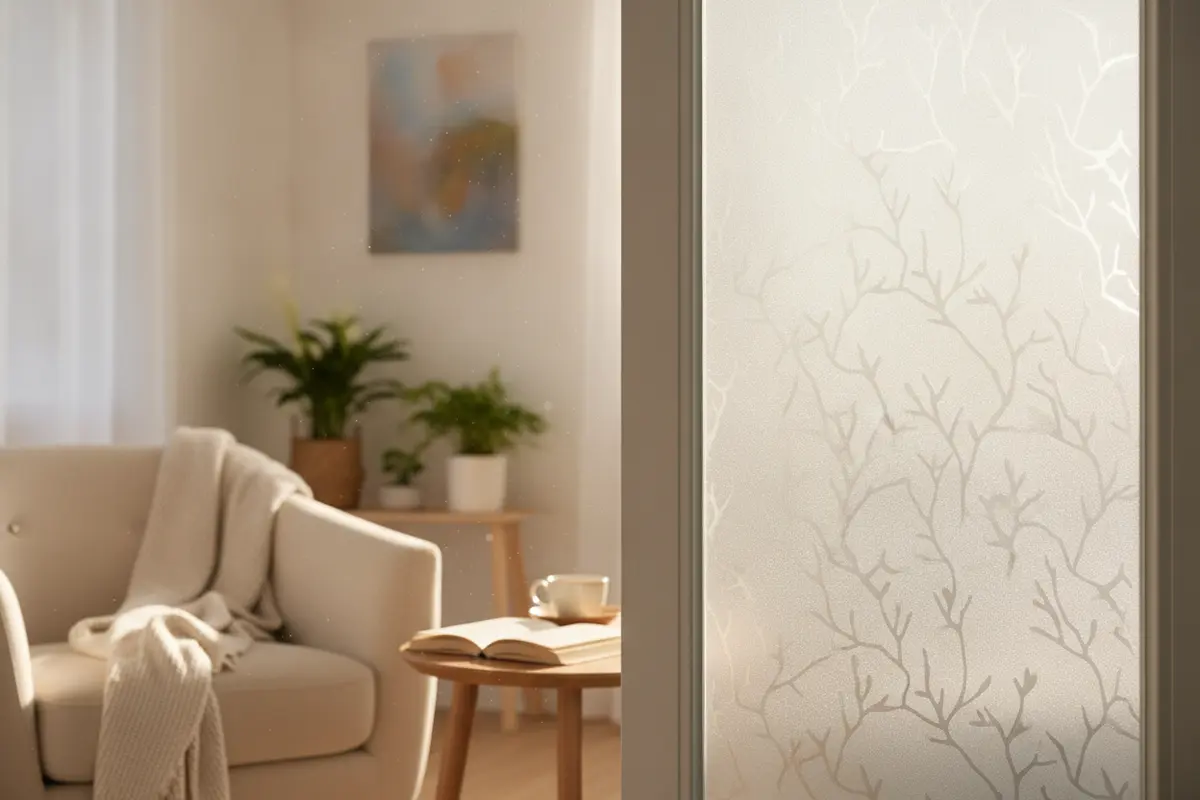
Does decorative window film reduce heat in every room?
No single answer applies to every product or window. Some decorative films may reduce some solar energy, while other products focus mainly on visual privacy or design. The room’s comfort also depends on the glass, direction and duration of sunlight, window size, shading, and other conditions in the space. That is why product information and a review of the actual windows matter more than a broad promise about all decorative film.
Consider two common situations. A bathroom window may need privacy while still allowing useful daylight. A decorative film could suit that goal, but if the room is not exposed to strong direct sunlight, heat rejection may not be its main value. A west-facing living room window, by contrast, might bring late-day glare and warmth into the space. In that case, a decorative appearance alone may not address the primary complaint; a solar-control option, or a combination product with documented performance, may be worth discussing.
Separate the outcomes you want before comparing products:
- Privacy or appearance: Consider the pattern, degree of obscurity, and whether the finish works with the room. Sullivan’s guide to privacy window film for homes can help you think through visibility and daylight.
- Heat and glare: Ask whether the product is designed for solar heat gain control and what documented performance information applies to the specific glass.
- UV protection: Ask which UV protection claims apply to the film under consideration. Sullivan’s describes its window film solutions as blocking up to 99% of harmful UV rays; discuss product-specific information for your project.
- Glass protection: Safety and security films serve a different purpose from decorative and solar-control products. Learn about those distinctions in this overview of safety film for glass.
Some products may address more than one concern, but do not assume their functions overlap. Ask the installer to identify the intended purpose and explain relevant specifications. For a broad introduction to product categories, see Sullivan’s window film guide. A useful conversation distinguishes what the film is designed to do from what a room happens to need.
How should you compare decorative and solar-control film?
Start with the job the film needs to do. Decorative film is a logical option when privacy or design leads. Solar-control film is worth evaluating when solar heat gain or glare is the main concern. If you want both, ask whether a suitable film combines those purposes and what compromises to expect in daylight, outward visibility, or appearance. Your best choice is the one that fits the room and the priority, not necessarily the film with the most noticeable finish.
| Film direction | Common priority | Questions to ask |
|---|---|---|
| Decorative or privacy film | Changing the look of glass, obscuring a view, or adding a patterned or frosted effect | How much visibility and daylight will remain? Is solar performance a stated feature? |
| Solar-control film | Managing solar heat gain and glare | What heat-rejection information applies to this product and this glass? How will appearance and daylight change? |
| Safety or security film | Helping hold glass together when it breaks or strengthening the glazing system | What protection is intended, and what limitations apply to the film and installation? |
The table is a comparison framework, not a product specification. Ask for information that corresponds to your actual windows. Visible-light appearance and solar-control performance are different considerations; make sure both are addressed. For more context on decorative options, read the guide to decorative film for homes and review the explanation of window tint versus window film.
For general background on energy efficiency in buildings and homes, consult the U.S. Department of Energy. Use that broad context alongside product-specific information; it cannot establish how a particular decorative film will perform on a particular pane.
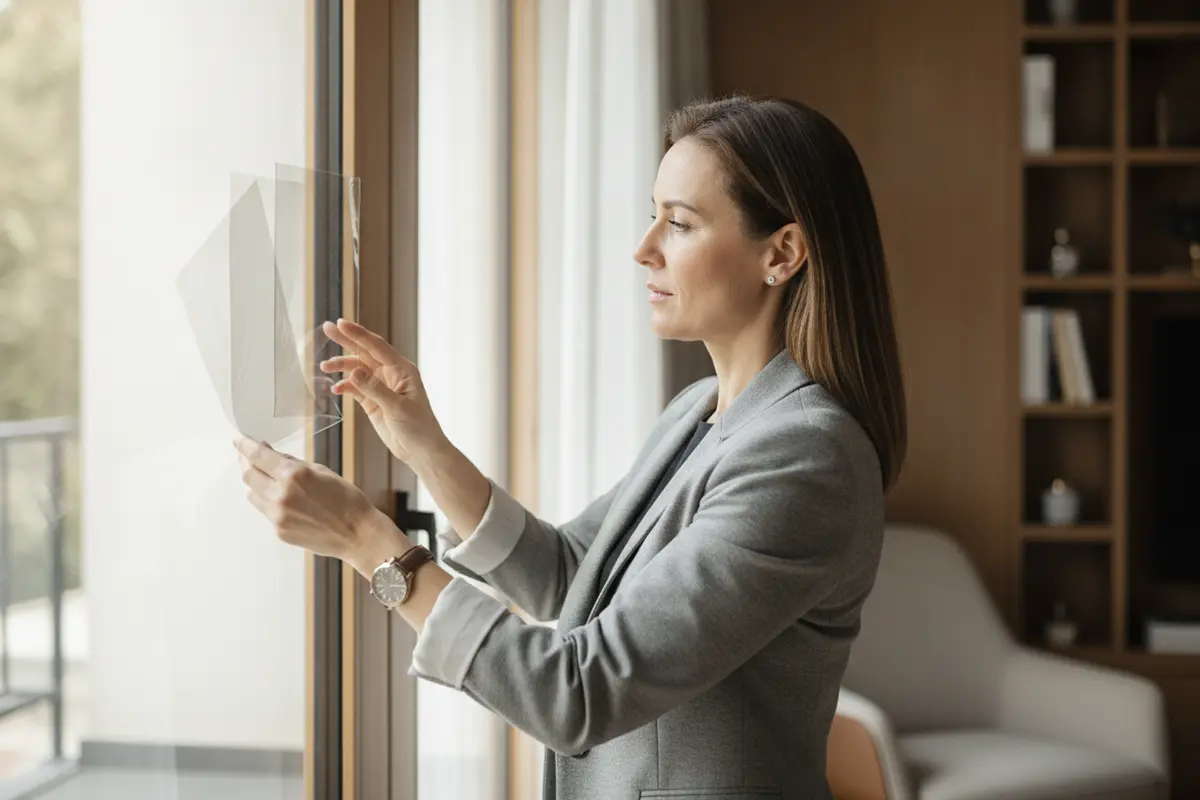
What should you assess before choosing a film?
A useful recommendation begins with the window and the way you use the space. Take a few minutes to note what happens in the room rather than starting with a product name. This helps separate a privacy project from a heat-control project and makes an installer discussion more practical.
- Identify the affected rooms and windows. Note which rooms feel warm, which windows receive direct sunlight, and the time of day when discomfort is strongest. If only one side of the building is an issue, mention that rather than describing the whole home as uniformly hot.
- Rank your priorities. Choose the leading concern—heat, glare, privacy, appearance, or UV exposure—and list secondary goals. If privacy is essential but preserving daylight matters too, say so. If heat control is the priority, make that clear even if you also like a decorative look.
- Decide how much view and light you want. A film can change outward visibility and the brightness of a space. Consider whether the window faces a neighbor, a street, a work area, or a view you want to keep. Review samples in context when possible, because interior and exterior lighting can alter how a finish appears.
- Share what you know about the glass. Tell the installer about existing coatings, multiple panes, unusual shapes, or prior film. Do not guess at technical details; a professional can inspect the actual glazing and determine which products are appropriate.
- Ask about product performance. If heat is part of the brief, ask which solar-control properties are documented for the specific product. Clarify what the figures mean, how they apply to the window, and whether the product is intended primarily for decoration, privacy, or solar control.
- Review care and warranty terms. Ask what manufacturer-backed warranty applies to the selected product and what care is recommended after professional installation. Confirm project-specific instructions before scheduling.
Photographs can help explain a concern, but they cannot replace an assessment of the actual glass. A sample viewed under showroom lighting may look different in a bright room or at night. This guide to choosing a window film installer offers additional questions to consider when comparing recommendations.
Can a decorative film also help with solar heat gain?
It may, depending on the product, but the combination must be confirmed rather than presumed. Ask whether the decorative option has solar-control properties and request the product information. If no suitable combination is available, an installer can explain alternatives: prioritize the visual treatment, prioritize heat and glare control, or consider different treatments for different windows when appropriate.
A simple decision matrix helps clarify priorities. Write down each window or room, the primary concern, and non-negotiable appearance requirements. For a conference room, privacy may matter most during meetings, while a bright, welcoming space remains important. For a sunny room at home, glare may be the main issue, with decorative style a secondary preference. These are different briefs, even if the same film category is being discussed.
Think through tradeoffs in advance. More visual privacy may mean less outward visibility. A finish that changes how light is diffused may alter the room’s appearance. A product selected for solar control may not offer the pattern you want. These are not reasons to avoid film; they are reasons to agree on priorities and review options before settling on a solution. The project gallery can show examples of film applications, but the exact result depends on product, glass, and lighting in your own space.
Window film can be one part of a comfort plan, but it does not diagnose every cause of a warm room. Direct sunlight, shading, ventilation, and other building conditions may also affect comfort. If heat remains the main concern, explore how heat-control film is evaluated and ask for guidance based on the windows in question.
What happens during a professional assessment?
A professional assessment connects the concern you describe to the glass and product options that may fit. The installer can review the window, discuss when sunlight or privacy is an issue, and explain which product characteristics matter. Bring your priority list and identify the windows involved. If you are unsure which concern matters most, describe what you notice: glare on a screen, a direct view from outside, or afternoon warmth. These concrete observations provide a practical starting point.
Ask how the recommendation addresses your leading concern, what appearance to expect, and what the product warranty covers. If heat reduction is central, request product-specific solar performance details and ask how they relate to your glass. If privacy is central, describe whether you need a softened view, a patterned design, or greater obscurity. Discuss views from both sides and how the film may look under daytime and evening conditions.
Professional installation matters for a clean, factory-finished look. Before the project, confirm the scope, which windows are included, how the glass will be prepared, and any aftercare instructions. Sullivan’s uses a consultative approach, with recommendations based on the project rather than one film for every situation. Read the company’s background and approach, browse its window film FAQs, or review the service locations page for area information.
How can you choose which film fits your windows?
Choose decorative film when privacy or appearance is the leading goal. Evaluate solar-control film when managing solar heat gain or glare is the priority. If you need both, ask whether one product can meet the two goals and what tradeoffs apply. Do not infer heat performance from a color, pattern, or degree of frosting.
A useful final check is to restate the project in one sentence: “We want more privacy in this room while keeping as much daylight as practical,” or “We want to reduce the impact of direct sun in this room and are open to a subtle appearance change.” Then ask whether the recommendation responds to that sentence. If a product explanation does not connect clearly to the priority, request clarification before moving forward.
For homeowners and businesses in Sullivan’s service area, an estimate can clarify options for the actual windows. Sullivan’s is family-owned and operated and has served the region since 1988. To understand which windows may be included in a project, review the home page and service information or visit the free estimate page.
Frequently asked questions
Is decorative window film the same as solar-control film?
No. Decorative film is generally selected for appearance or privacy, while solar-control film is evaluated for managing solar heat gain and glare. Some products may combine functions, but check information for the individual film and glass rather than assuming all decorative products have the same performance.
Will frosted film make a room cooler?
Not necessarily. A frosted appearance does not by itself establish heat rejection. If heat is the concern, ask whether the product is designed for solar control and what performance information is available for the specific application.
Can privacy film preserve natural light?
Many privacy applications are intended to allow daylight, but the result depends on the film, pattern, and lighting conditions. Discuss the balance you want between privacy, brightness, and outward visibility, and review samples in a setting that resembles the room.
What should I bring to an estimate discussion?
Bring a list of affected windows, the times when heat or glare is most noticeable, your privacy and appearance preferences, and any information you have about the glass or existing coatings. Photos may help illustrate the room, but the actual windows should be assessed before choosing a product.
Can window film solve every cause of a hot room?
No. Film may address concerns related to sunlight through the glass, depending on the product, but room comfort can have other contributing factors. Describe the symptoms and ask whether the proposed film addresses the issue you want to improve.
Ready to compare film options?
Request a free estimate for your windows
Share whether privacy, appearance, heat, or glare matters most so the recommendation can focus on your windows and the result you want.