
Privacy film for windows can soften views into a room while preserving daylight. The right finish depends on which sightlines matter, when privacy is needed, and how open you want the glass to feel. A practical assessment begins with the window’s use, not with a product name.
What does privacy film for windows do?
Window film changes the appearance of glass and the way a view passes through it. It does not make every window private under every lighting condition. Frosted and decorative finishes diffuse or interrupt a view. Reflective solar-control films have a different effect, which can depend on which side of the glass is brighter.
Begin by naming the problem precisely. Do you want to obscure faces and objects, block one direct angle, add visual separation between rooms, or introduce a decorative detail? Those goals are related, but not interchangeable. A film selected for a decorative pattern may not conceal detail enough for a sensitive space. A fully obscuring finish may be more coverage than a living room needs.
Film is applied to existing glass, potentially avoiding bulky coverings or glass replacement. Sullivan’s provides decorative and privacy window film. Recommendations depend on the glass and the application. For the company’s background, see its family-owned approach.
Which finish matches the privacy you need?
Consider who might see through the window, from which direction and at what time. A bathroom facing a neighbor has different requirements from a meeting-room sidelight or a street-facing living room. Include elevated walkways, nearby buildings and angled views. A window that seems private from the sidewalk may be visible from a second-floor vantage point.
| Finish or approach | Typical effect | Important tradeoff | Question to ask |
|---|---|---|---|
| Frosted or etched-look | Diffuses detail while allowing light through | Changes the view in both directions | Does the whole pane need screening? |
| Patterned decorative | Adds design and can screen selected areas | Pattern, coverage and sightlines must work together | Should the design be subtle or prominent? |
| Reflective solar-control | May make it harder to see in from the brighter side in some daylight conditions | Privacy effect varies as lighting changes | What happens after dark? |
| Clear or lightly toned solar-control | Prioritizes solar heat gain control and glare management | Does not obscure a view like frosted film | Is comfort more important than screening? |
These categories describe broad effects, not guaranteed results. Films vary in visible light transmission, reflectivity, opacity and appearance. Compare a sample from both sides of the actual glass when possible. Sullivan’s window film FAQs address common questions, but a glass-specific review remains useful.
When comparing samples, look beyond whether you can recognize a person standing close to the glass. Step back to the normal viewing distance, move across the room and observe whether shapes or motion remain noticeable. A finish that obscures detail at one angle may still allow silhouettes or movement to register from another. Ask what level of screening is realistic rather than treating “private” as an all-or-nothing promise.
How much daylight and openness should remain?
Privacy and daylight can coexist, but the balance depends on finish and coverage. A translucent film can blur a direct view without closing off a room. Darker or more opaque products can provide stronger visual screening but may make the room feel dimmer or change the look of the window.
Review the space at different times. Morning sun, overcast light and evening lamps can make the same film appear different. Ask whether the window is important for an outdoor view, plants or natural task lighting. A sample applied to a representative pane helps judge color and diffusion better than a phone screen or catalog photograph.
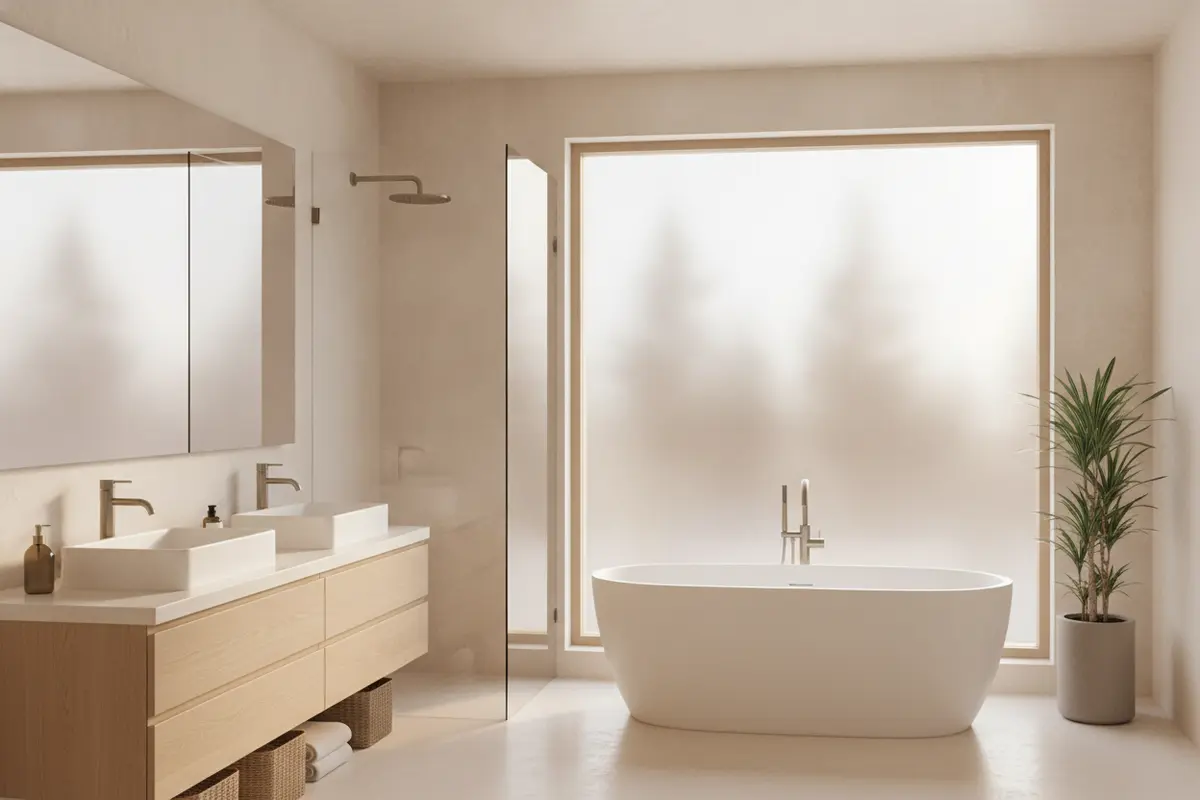
Coverage can be tailored to a sightline. A band across the middle of a street-facing window might screen seated eye-level views while keeping an upper view open. Full-height treatment may suit a bathroom or glass door where people pass close by. These are starting points, not universal prescriptions. Consider children, furniture placement, nearby windows and views from outdoors.
Try a simple sightline audit. Stand at the sidewalk, driveway or neighboring room and note what is visible. Inside, check the window from seated and standing positions. Mark the part of the pane that matters, then repeat the check at the time of day when privacy is most important. This record helps avoid choosing a finish based on a single viewpoint.
It also helps to decide what “open” means for this particular room. In a kitchen, you may want daylight and a partial view of the yard, while an entry sidelight may only need to hide faces near the door. If a view is valuable, partial coverage can preserve it; if no outward view is needed, a more complete diffusing treatment may be acceptable. Treat the choice as a balance between view, light and concealment, rather than assuming one finish maximizes all three.
Does reflective film provide privacy at night?
Reflective film is not a one-way curtain. Its mirror-like appearance generally relies on a brightness difference between the two sides. When outdoors is brighter, the exterior may look more reflective and it can be harder to see inside. After dark, interior lights can make the room brighter than outdoors, changing the effect and making the interior more visible.
If nighttime privacy is essential, plan a second layer such as curtains or blinds, or consider a finish that obscures a view in both directions. Test under realistic conditions: turn on the lights you normally use after sunset and check the glass from the exterior angles that matter. This guide to how the one-way effect works can help set expectations.
Separate daytime needs from after-dark needs before comparing options. A home office used mainly during daylight may have different requirements from a bedroom or bathroom used at night. Write down the times privacy is needed and whether you are willing to close a shade after dark. That decision can prevent a reflective appearance from being mistaken for dependable all-hours screening.
For example, imagine a front room with a clear street view by day and lamps on in the evening. A reflective product may support the daytime goal, but it should not be treated as the sole nighttime layer. If the same occupants want privacy without closing curtains, a diffusing finish may be worth comparing, with the tradeoff that the outdoor view will be softened in both directions. The useful question is not which option is universally best, but which compromise fits the routine.
Where can privacy finishes work around a home?
Room-by-room planning prevents a single finish from being used where it does not fit. List the views to screen, the light to retain and the times privacy is needed. Then consider how the room is used and whether the window should remain a source of an outdoor view.
- Bathrooms: Frosted or patterned film can soften direct views while retaining daylight. Check the full pane and nearby sightlines, not only eye level.
- Entry sidelights: A frosted treatment or decorative band can screen a view through the door area without covering every inch of glass.
- Bedrooms: For privacy after dark, account for interior lighting and consider a complementary window covering.
- Street-facing living rooms: Partial coverage may screen seated views while leaving an upper portion clear.
- Home offices: A translucent finish can reduce distraction from direct views while preserving a bright feel.
Think through a real daily routine. If a sofa faces the window, sit on it and note what a passerby can see. If a bathroom is used after dark, check it with the lights on. If a home office has glass beside a shared path, consider whether a band could screen movement without making the room feel enclosed. These small tests narrow the choices before product selection.
For a house with several problem windows, make a room-by-room worksheet rather than selecting one finish for all of them. Record room, window location, observer position, privacy hours, desired daylight and whether a view should remain. One row might say “bathroom, neighbor’s second-floor view, day and night, retain soft daylight, no clear outward view needed.” Another could say “living room, sidewalk at seated eye level, mainly daytime, preserve upper garden view.” The contrast makes it clear why the same treatment may not suit both spaces.
Explore a home privacy film guide and ideas for decorative film in residential spaces for additional planning context.
How can a business use privacy film?
In a workplace, privacy film can define a meeting area, screen a reception desk or create visual separation on interior glass. Frosted and patterned finishes are often considered for partitions because they soften views while allowing light through. A treatment can cover a full pane or use coordinated bands across several panels.
For a conference room, decide whether people need to see whether the room is occupied, whether screens or documents should be less visible from a corridor, and how much openness to retain. These goals may point to different coverage heights or patterns. For reception, consider the approach path and waiting seats. For a storefront, coordinate decorative treatment with existing signs and the views customers need from outdoors.
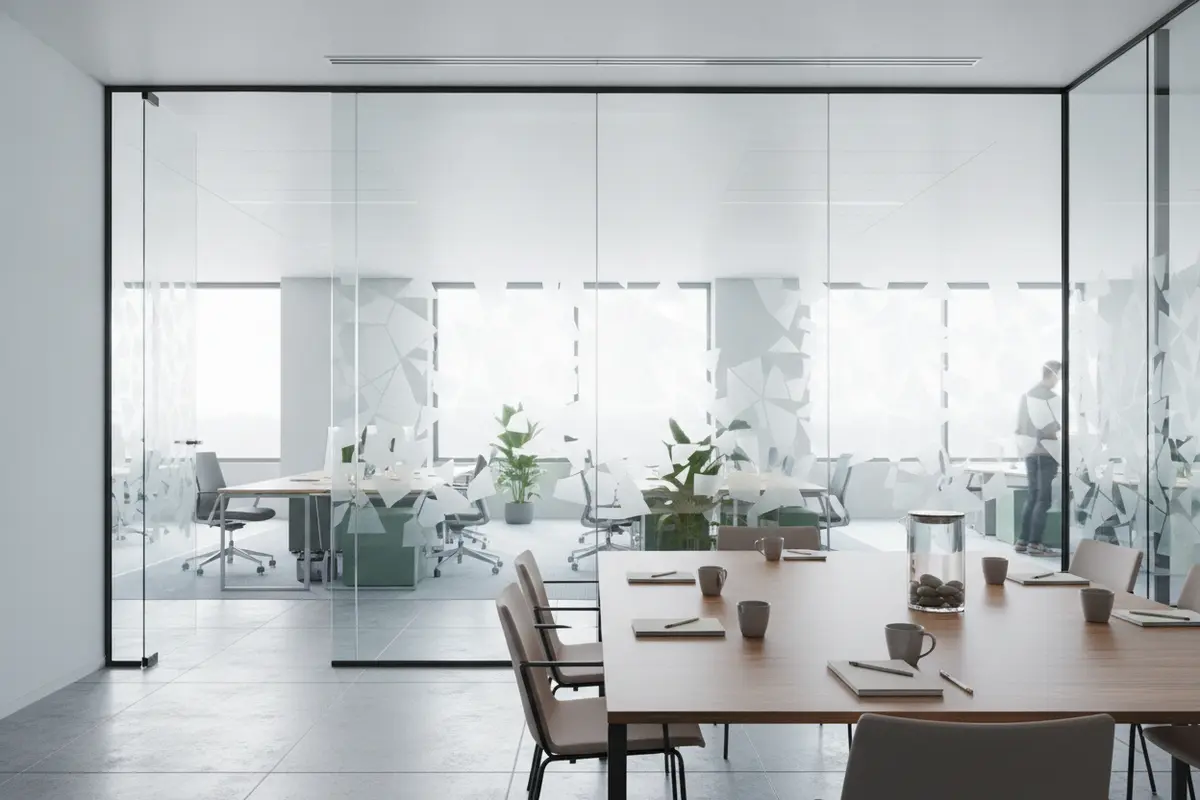
Before work begins, list glazing dimensions, room functions, desired coverage and design constraints. If installation spans several panes, consistent band height and alignment matter to the finished appearance. Sullivan’s offers commercial decorative and privacy film options; product suitability depends on the glass and intended use.
Consider a small office with a glass meeting room beside a corridor. If staff need to know whether the room is occupied, fully obscuring every panel may work against that purpose. A patterned band at the relevant sightline could provide separation while leaving upper and lower areas more open, subject to the room’s needs and product selection. In a reception area, by contrast, screening a monitor or paperwork may matter more than preserving a full view through the partition.
For a multi-panel project, agree on a reference height before installation and check how the pattern meets at mullions and door edges. A band that looks balanced on one pane can appear inconsistent when it continues across a long wall. Include door swings, handles, adjacent clear glass and seated versus standing views in the discussion. A marked-up photograph or simple sketch can help everyone approve the intended coverage before the work is scheduled.
What should you check before selecting a film?
Use a short planning checklist to clarify the project:
- Identify the view to obscure. Note the observer’s position, angle and distance. Include standing and seated viewpoints.
- Set the time requirement. Decide whether privacy is needed by day, after dark or throughout the day and night.
- Choose the openness level. Decide how much daylight and outward view you want to retain.
- Set the appearance. Consider a neutral frosted look, a pattern, partial coverage or clear glass.
- Describe any other goal. If heat rejection, glare management or UV protection matters too, say so; these are distinct performance goals.
- Review the window. Glass type, condition, construction, seals and sun exposure can affect which products are appropriate.
Do not assume one film serves every purpose equally. Decorative film is selected chiefly for appearance and screening. Solar-control film is intended to manage solar heat gain, glare or UV exposure. Safety and security film addresses a different use. Ask how the proposed product addresses each goal and what tradeoffs apply. Compare residential and commercial film services before discussing the particular window.
To make the assessment efficient, gather a few useful details: approximate pane dimensions, photographs from inside and outside, the window’s orientation if known, and a note about when the concern occurs. You do not need to diagnose the glass or choose a film in advance. The point is to describe the problem clearly so recommendations can be compared against the same criteria.
Ask about appearance from both sides, coverage edges, cleaning and care instructions, and any applicable manufacturer-backed warranty. If one pane differs from others in size, construction or exposure, mention it rather than assuming all windows are identical. This is especially important when the project includes doors, unusual shapes or multiple glazing types.
Why does a professional assessment matter?
A professional assessment considers glass, window construction, orientation, exposure, room use and sightlines from both sides. It helps determine whether the desired combination of privacy, daylight and appearance is realistic. It can also identify details that are easy to miss from a photograph, such as a nearby reflection or an unusual pane shape.
Bring a simple room list and photos showing each window from inside and outside. Mark the viewing positions that concern you and note whether privacy is needed after dark. For a business, include each room’s purpose, preferred coverage height and any need to keep a clear section. These details make recommendations more specific and make it easier to compare choices fairly.
Professional installation involves accurate measurement, surface preparation and careful application, which contribute to a consistent, factory-finished look. Ask to review the proposed finish, coverage, expected appearance from each side, care instructions and any applicable manufacturer-backed warranty. Sullivan’s is family-owned and operated and has served the region since 1988; view the project gallery or learn about the company.
For general context on window coverings and energy considerations, the U.S. Department of Energy discusses energy-efficient window coverings. That resource addresses coverings and energy-related considerations; it does not prescribe a privacy-film product.
Before approving a proposal, restate the goal in plain language: “From the sidewalk, seated people should not be clearly visible during the day, but we want to keep the upper view open.” Or: “This meeting room needs a visual privacy band, but the team should still be able to see whether it is occupied.” Then confirm that the suggested finish and coverage answer that specific request. Shared expectations are more useful than relying on a product label alone.
Get a free estimate for your windows
Frequently asked questions
Can privacy film let sunlight in?
Many translucent films allow light through while diffusing a clear view. The quantity and quality of light depend on the film and coverage, so evaluate a sample on the actual window when possible.
Can people see through frosted film?
Frosted film obscures detail, but the degree of visibility varies by product, lighting, distance and movement. Ask what level of obscuring to expect in the specific application.
Will reflective film keep a room private after dark?
Not reliably by itself. When interior lights make the room brighter than outdoors, the reflective effect may change. Pairing it with a covering or selecting a finish that obscures views in both directions may be more suitable.
Can privacy film go on every window?
Suitability depends on glass type, construction, condition and product. A professional should review the application and recommend a compatible film.
Ready to choose a privacy finish?
With the right finish and coverage, privacy film can address specific sightlines while supporting the way a room should look and feel. A professional review can help compare suitable options for your windows.