
For Schaumburg businesses, schaumburg window tinting is often part of a broader decision: how can the right commercial window film make a space more comfortable, usable, and protected without replacing the glass? The best choice depends on the building, the windows, and the problem you want to solve. Solar control, privacy, decorative, and safety films serve different purposes, so it helps to start with your priorities rather than a product name.
Request a free estimate for your Schaumburg business
What should Schaumburg businesses expect from commercial window film?
Commercial window film is applied to existing glass by trained installers. Depending on the selected film, it can help manage solar heat gain, reduce glare, provide UV protection, add privacy, change the appearance of glass, or help hold broken glass together. These are not interchangeable results. A film chosen for daylight privacy is not automatically the right option for heat control, and a safety film is not the same as a solar-control film.
That distinction matters in a business setting. A bright south- or west-facing office may have a different concern from a conference room where people need visual privacy, or a street-facing storefront exposed to scratches and vandalism. Start by identifying what occupants experience and which windows are involved. Then an installer can recommend a film category and explain the trade-offs for that location.
Sullivan’s Tinting is family-owned and operated and has served the region since 1988. Commercial projects begin with a consultative assessment and personalized recommendations. You can review the company’s background and approach or see an overview of its commercial window film services.
Window film is a retrofit for existing glazing, so a business can focus on the panes connected to a specific concern instead of assuming that every window needs the same treatment. That makes a clear scope important. A manager might prioritize the few workstations with afternoon glare, while a retailer might focus on display windows or an exposed entry. In either case, listing the affected areas helps turn a broad concern into a manageable project discussion.
Which business problem are you trying to solve?
A clear project goal helps narrow the choices before considering shade or appearance. Walk through the space at different times of day and note where the problem occurs. Ask employees or tenants which areas feel uncomfortable, distracting, exposed, or vulnerable. These observations give a professional installer more useful information than a general request for darker glass.
- Solar heat gain and uneven comfort: If sunlight makes certain areas warmer than the rest of the building, discuss solar-control film and heat rejection. The right performance depends on the glass and film combination, so recommendations should be based on the actual windows.
- Glare on screens or work surfaces: Note when glare appears, where people sit, and which windows cause it. A suitable film may reduce glare while retaining useful daylight, but film appearance and visible light transmission vary.
- UV exposure: Sunlight can contribute to fading of furnishings and displays. Window film can provide UV protection; Sullivan’s standard messaging is that its films block 99% of harmful UV rays. Film does not prevent every cause of fading, so consider the materials and exposure in the space as a whole.
- Privacy: Identify whether the need is for a meeting room, reception area, ground-floor window, or another space. Decorative and privacy films can obscure views in different ways while allowing daylight, but the amount of privacy depends on the film design and lighting conditions.
- Glass protection: Where breakage, impact, or surface damage is a concern, ask about safety and security or anti-graffiti film. These are different film categories for different glass-protection needs. Discuss the intended outcome and limitations with the installer.
It can help to describe the problem as an observable situation rather than a product request. For instance: “The afternoon sun creates reflections on two monitors between lunch and closing,” or “People in the conference room can be seen from the reception area.” This points the conversation toward the location, timing, and outcome. It also leaves room for an installer to explain whether a film is appropriate or whether another adjustment should be considered.
For a general overview of how building energy use and efficiency are considered, the U.S. Department of Energy provides information at energy.gov. A building-specific film recommendation still requires a review of the glass, sun exposure, and project goals.
How do commercial film categories compare?
Use this table as a starting point, not as a final product specification. Film performance and appearance vary by product. A professional assessment can help match the desired result to the glass and conditions at your property.
| Film category | Common business goal | Questions to discuss | Important consideration |
|---|---|---|---|
| Solar-control | Manage solar heat gain, heat rejection, or glare | Which windows receive the strongest sun? How much daylight should remain? | Performance and appearance depend on film selection and the existing glass. |
| Decorative or privacy | Change a glass surface or limit visibility in selected areas | Is privacy needed all day, in one direction, or only in a particular room? | Privacy effects can vary with design, angle, and indoor-outdoor lighting. |
| Safety and security | Help hold glass fragments together after breakage | Which glass areas need attention, and what level of protection is intended? | Film can strengthen glass against breakage but is not a guarantee that glass cannot break. |
| Anti-graffiti | Help protect accessible glass surfaces from scratching or marking | Which storefront or ground-level panes are exposed? | Ask how the protective layer is maintained or replaced if damaged. |
| Electric switchable | Change glass between more transparent and more private states | Where is on-demand privacy useful, and what electrical planning is needed? | Discuss system requirements, controls, and installation conditions. |
For example, a business with afternoon glare in a work area may begin by exploring solar-control options. A conference room where conversations need visual privacy may instead call for a decorative treatment. Some properties have more than one goal, and may need different films in different areas. Sullivan’s provides decorative film options for office spaces and information about commercial safety and security film.
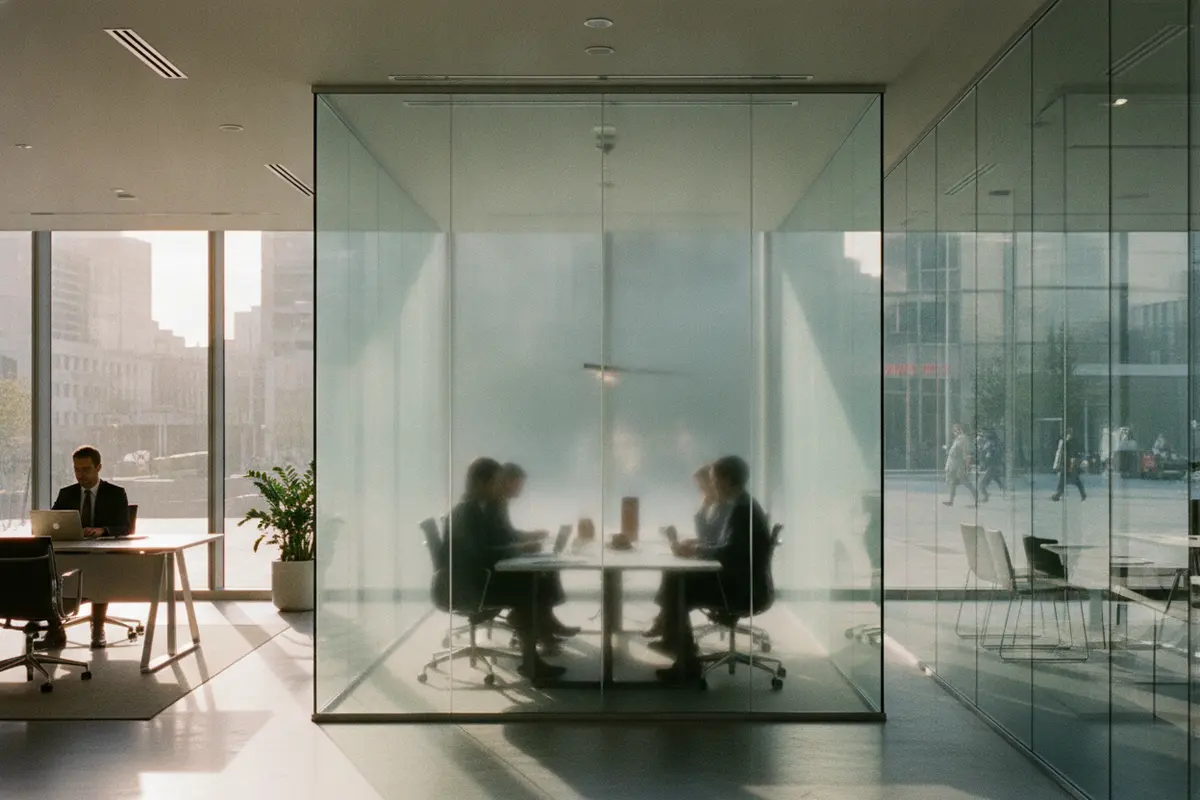
A useful way to read the table is to separate the primary goal from the secondary preferences. A meeting room may need privacy first, with daylight and a coordinated appearance as supporting goals. For an office perimeter, reducing glare could be the priority while retaining a clear outward view matters nearly as much. Tell the installer which outcome matters most if all preferences cannot be optimized equally. That helps make the comparison practical rather than choosing a film based on a single label.
Some properties can reasonably use more than one category. For example, a storefront manager may ask about an anti-graffiti layer on accessible panes and consider a different film for bright interior work areas. Avoid extending one choice across the whole building simply for visual consistency unless the film is suitable for each window and serves the needs in those rooms. Ask for a clear explanation of why a recommendation differs from one area to another.
What should you check before selecting film?
Before choosing a film, make a simple window-by-window inventory. The goal is not to diagnose the glass yourself. It is to prepare the details an installer will need to understand the project and assess compatibility.
- Record the location and purpose of each area. Note whether the glass is in an office, meeting room, entry, retail display, or another part of the property. Identify windows that have the same concern and those that need a different approach.
- Observe sunlight and glare. Record the time of day when discomfort or reflections are most noticeable. Note whether desks, screens, merchandise, or seating are affected. This helps distinguish a persistent problem from one limited to certain hours or seasons.
- Describe the desired outcome. Decide whether the priority is comfort, glare reduction, UV protection, privacy, appearance, or glass protection. Rank the goals if there is more than one. Ask which goals can be met together and where compromises may be necessary.
- Consider the glass and surroundings. Share any available information about the window type, previous film, unusual shapes, access constraints, or recent glass work. Do not assume that a product suitable for one pane will suit every pane in the building.
- Think about the people using the space. Consider daylight preferences, views, screen placement, customer experience, and whether meeting rooms need a different level of privacy from open offices.
To make the inventory easier to use, assign each affected area a simple label such as “west office,” “conference room,” or “street-facing display.” Record the time and condition when the concern occurs, then note what would count as a successful result. A sample entry could read: “West office, afternoon, reflection on the left-side monitor; reduce distraction but keep an outward view.” This kind of detail is specific enough to guide a conversation without presuming which product should be installed.
Also note whether there are constraints that affect access. Tall interior windows, furniture close to glass, public-facing areas, or rooms that remain occupied during business hours can all be useful planning details. Photos may help describe the layout, but they cannot show every relevant property of the glazing. Keep the list focused: location, current issue, preferred outcome, and any known access or scheduling concern.
Film compatibility is an important reason to use professional installation. An installer can review the glazing, explain applicable product choices, and discuss manufacturer-backed warranties where available. Sullivan’s emphasizes precision application and a factory-finished look. For background on why professional work matters, read this guide to professional window film installation.

How can you plan for a commercial assessment?
A little preparation makes a site visit more productive. Gather the information you have, even if measurements are approximate. A professional will confirm what is needed for a recommendation and estimate.
- Make a list of the windows or rooms you want assessed. Photos can help show the layout and problem areas, but they do not replace an on-site review.
- Write down the main issue for each area and when it is most noticeable. Keep separate concerns separate; glare in a west-facing office and privacy in a meeting room may call for distinct solutions.
- Identify business constraints such as operating hours, access to windows, occupied work areas, or scheduling preferences. Ask how installation can be planned to limit disruption.
- Bring questions about film appearance, daylight, cleaning, expected performance, warranty coverage, and care after installation. Ask what the warranty covers rather than assuming every film has identical terms.
- Tell the installer about previous film or glass repairs if known. This information can inform assessment and planning.
During the assessment, walk through the areas in your inventory rather than discussing the building only as a whole. Point out which windows receive direct sunlight, where people sit or work, and which surfaces need privacy or protection. If the business has several decision-makers, bring the person who can explain daily use of the space as well as the person responsible for the project. Their different perspectives can surface practical requirements early.
Ask how the recommendation will be documented. A useful proposal should make it possible to see which areas are included, what film category is being considered, and how the recommendation addresses your stated priorities. If the property has different types of glass or distinct use areas, ask whether the assessment has considered those separately. If something is unclear, ask for an explanation in plain language before comparing estimates.
Commercial projects vary in size and complexity, so there is no universal rate that fits every Schaumburg property. The estimate is based on factors such as window measurements, selected film, project complexity, and location. Sullivan’s uses a custom estimate process rather than published pricing. Learn more about what to expect from a free estimate or review the window film questions and answers.
What should you ask an installer?
Use the consultation to understand both the recommendation and its limits. A clear explanation helps you compare options fairly and set expectations for the finished space.
- Which film category addresses the main concern for each area, and why?
- How could the film affect visible light, outward views, or the appearance of the glass?
- Is the selected film appropriate for the existing glazing?
- What should occupants expect during installation, and how will the work be scheduled?
- What manufacturer warranty applies to the recommended product, and what conditions or exclusions should we understand?
- How should the film be cared for after installation?
- Could different areas benefit from different solutions instead of applying one film throughout?
Ask for recommendations in terms of outcomes, not just product labels. For instance, if the goal is to improve comfort near a sunny window while retaining daylight, ask the installer to explain how the proposed solar-control film balances those priorities. If privacy is the goal, ask how the effect changes with lighting and whether a decorative finish would better suit the room.
It is also reasonable to ask how success will be evaluated after the work. For a glare concern, identify the workstations and times of day that matter. For privacy, define which sightlines need to be obscured and whether the requirement changes after business hours. For an exposed pane, confirm the specific protection goal and limits of the selected film. Clear expectations help avoid assuming that one product can eliminate every issue.
When comparing proposals, check that they address the same scope. One estimate may include only a few problem panes while another may cover an entire elevation; those are not like-for-like options. Compare the listed locations, film purpose, appearance considerations, warranty details, and installation plan. If the recommendations differ, ask what assumptions led to each one rather than deciding on price or darkness alone.
How does local service fit a Schaumburg project?
Every building has its own mix of glass, orientation, occupancy, and design. A regional installer can assess the specific property and recommend options based on what the business needs, rather than relying on a one-size-fits-all product. Sullivan’s serves Schaumburg and other communities across Chicagoland and select Wisconsin markets. See the full service area or browse the project gallery for examples of window film applications.
For an office or customer-facing property, planning should also account for how the space is used. A treatment that makes sense for a meeting room might not be suitable for a reception area where visibility matters. Likewise, a film that addresses sunlight in one orientation may not be the right fit for shaded windows elsewhere. A tailored assessment helps keep the recommendation connected to the actual conditions at the property.
Think through the project from the perspective of staff, visitors, and building operations. Will access to a particular room need coordination? Are there customer-facing areas where the work schedule matters? Do occupants need advance notice about when a work area may be affected? These are practical questions to raise while planning. They do not determine which film is right, but they can help the installer understand the site and discuss a workable approach.
For an initial conversation, the most useful summary is concise: where the glass is, what happens there, when the problem occurs, and what result would help. Pair that description with your room-by-room list and the assessment can move directly to the relevant questions. If a recommendation involves more than one film category, ask how each choice connects to a particular window or goal. That explanation makes it easier to share the plan with owners, facilities staff, or other stakeholders.
Get a free estimate for commercial window film
Frequently asked questions
Does commercial window film make an office dark?
Not necessarily. Films differ in appearance and light transmission. During an assessment, explain how much daylight and view you want to preserve and ask to compare appropriate options for the glass and goal.
Can one film solve glare, privacy, and security concerns?
Do not assume that a single film serves every purpose equally. Solar-control, decorative/privacy, safety/security, and anti-graffiti films are designed for different applications. An installer can determine whether one product meets multiple goals or whether separate solutions make more sense.
Does film need to cover every window in a business?
No. The project can focus on the panes tied to the stated concerns. Some businesses may choose different films for different rooms or orientations. A window-by-window assessment helps determine the scope.
How do we know which option is compatible with our glass?
Have a professional review the existing glazing and project conditions before choosing a product. Compatibility can depend on the glass and selected film, so avoid selecting solely by a product description or a neighbor’s experience.
Ready to assess window film for your Schaumburg business?
Start with the windows that cause the most difficulty and describe what you want to change. Sullivan’s Tinting can discuss your commercial project, assess the property, and provide a personalized recommendation through its free-estimate process.
Request your free commercial window film estimate
The right solution begins with the building’s glass, the way each space is used, and the result your business wants to achieve.