
If you manage a storefront, office entrance, school facility, public building, or other property with reachable glass, you may ask: what is anti-graffiti film? It is a professionally applied, replaceable protective layer placed over glass so scratches, etching, marker, paint, and similar surface damage affect the film before the original pane. The goal is not to make vandalism impossible. The goal is to create a serviceable surface that can be cleaned, inspected, and replaced when damage is too deep for cleaning.
What does anti-graffiti film do?
Anti-graffiti film is sometimes called sacrificial film because it is intended to take the wear that a bare glass surface would otherwise receive. A vandal may scratch, mark, etch, or coat a panel. Depending on the product and the severity of the incident, a cleaning process may remove some residue. When the damage penetrates or mars the film, an installer can assess whether that section should be removed and replaced rather than replacing the entire glass pane.
This distinction matters for property managers. A damaged film is not automatically a failed project. The film is doing its job as a replaceable maintenance layer when it keeps the original glass from being the first surface exposed to the damage. It can give a business owner another response option between repeated cleaning and full glass replacement. It also creates a reason to document the condition of vulnerable panels and set a consistent response process.
Anti-graffiti products are not all identical. Film construction, thickness, adhesive, clarity, edge treatment, glass type, installation quality, and the substance causing the damage can affect the result. No film should be presented as a guarantee against vandalism. A person may cut, tear, deeply scratch, or otherwise damage the film. A professional assessment is the right way to determine whether a particular opening is suitable.
Where can anti-graffiti film help?
The best candidates are usually glass surfaces that are easy to reach and exposed to repeated public contact. Examples include ground-level storefront windows, entry doors, sidelites, vestibules, display panels, interior partitions, shared lobbies, and low glass panels in public-facing facilities. A glass door beside a sidewalk has a different exposure pattern from a high window behind a controlled access area.
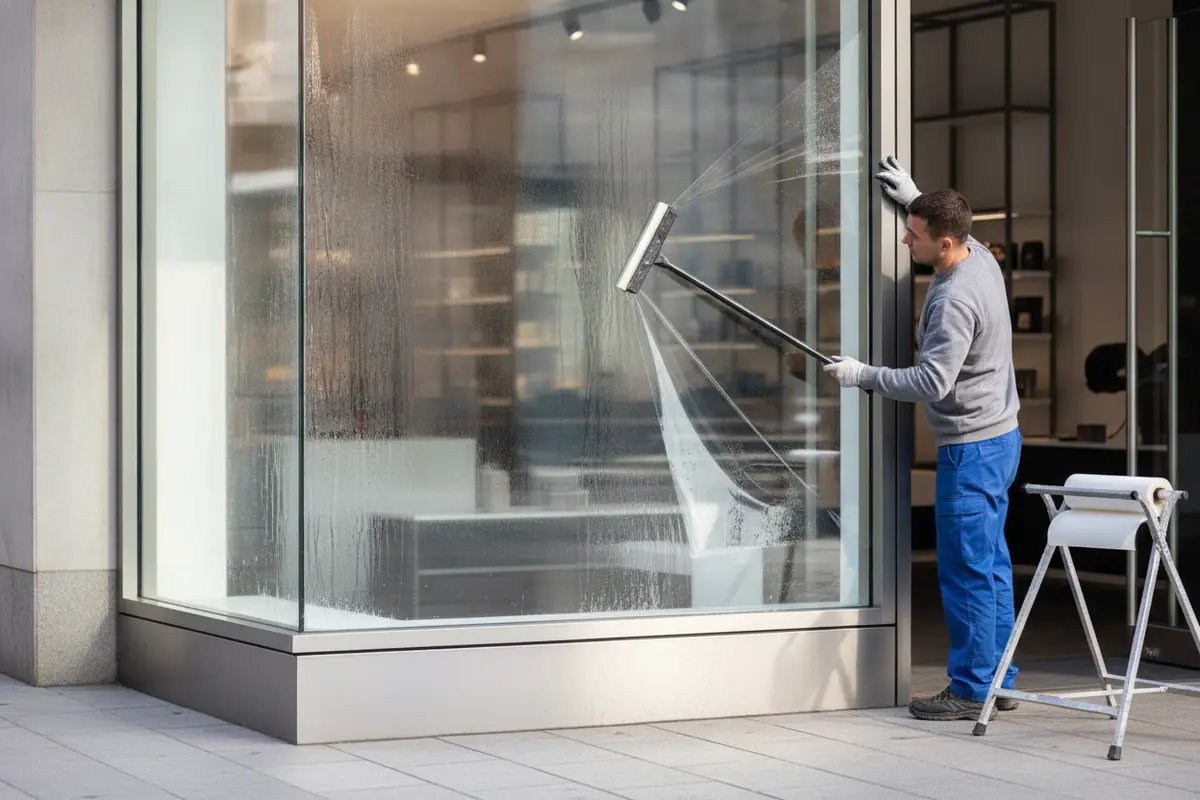
Start by looking at the opening rather than choosing a product from a label alone. Ask who can reach the glass, when the property is occupied, whether previous incidents have occurred, and how quickly the surface must be restored after damage. A property with one frequently marked entrance may need a focused project. A property with multiple exposed panels may benefit from a survey and a phased plan.
Anti-graffiti film may be considered for:
- Retail entrances and display windows near sidewalks or parking areas.
- Office building doors, sidelites, and shared lobby glazing.
- School entrances, interior glass doors, and low panels in common areas.
- Apartment, condominium, and mixed-use building vestibules.
- Public-facing facilities where the appearance of clean glass affects daily operations.
- Interior partitions where repeated marking creates a maintenance problem.
The building’s use and exposure should guide the conversation. A school administrator may focus on inspection schedules and safe access. A retailer may focus on appearance and the ability to restore a display quickly. An office manager may prioritize work outside business hours. The same general film category can support different project plans.
For broader information about film categories and applications, see Sullivan’s window film services. A review of the anti-graffiti film options for Chicago storefronts can also help a local business think through exposed glass.
How is anti-graffiti film different from other film?
Window film categories can overlap in a project, but they are not interchangeable. Anti-graffiti film is primarily about protecting a surface from marking and making restoration more manageable. Safety film is intended for a different concern: helping hold glass fragments together after breakage. Security film is part of a broader approach to delaying or complicating forced entry. Privacy and decorative films change visibility or appearance. Solar control film addresses sunlight, glare, and solar heat gain control.
| Film category | Main purpose | Questions to ask | What it does not replace |
|---|---|---|---|
| Anti-graffiti film | Protect a reachable surface from marking, scratching, and etching | How often is damage occurring, and how will the surface be serviced? | It is not a guarantee against vandalism or a substitute for site security. |
| Safety film | Help retain broken-glass fragments | What impact and glass-breakage concerns exist? | It does not primarily address repeated surface marking. |
| Security film | Support a layered plan for certain impact or entry concerns | What are the frame, hardware, access, and building-plan requirements? | It does not automatically provide a sacrificial graffiti surface. |
| Privacy or decorative film | Change sightlines, appearance, or light transmission | What visibility and design result is wanted? | It should not be selected solely for graffiti protection. |
| Solar control film | Manage solar heat gain, glare, and sunlight-related comfort concerns | Which elevations and rooms have the greatest exposure? | It is not a dedicated answer to scratching or paint. |
The Iowa Department of Transportation describes anti-graffiti coatings as products intended to prevent unwanted coatings from adhering or to facilitate their removal. That description helps explain the basic objective, although a coating and a replaceable film are not the same installation. You can read the Iowa DOT description when comparing the general purpose of anti-graffiti protection.
If broken glass is the main concern, compare the project with safety film for glass instead of assuming anti-graffiti film addresses every risk. If a building needs several forms of protection, the installer can discuss how separate film priorities relate to the same opening, the frame, the glass, and the property’s operating plan.
What kinds of damage can the film receive?
Common incidents include marker, paint, adhesive residue, scratches, and etching. The right response depends on what reached the surface, how long it remained there, how aggressively someone tries to remove it, and whether the film has been cut or penetrated. A light mark and a deep gouge should not be treated as the same maintenance event.
When damage is reported, first restrict unnecessary contact with the panel. Photograph the affected area from a consistent distance, note the date, and record whether the damage appears to be a coating, a scratch, a cut, or an etch. Do not begin with an unapproved razor, abrasive pad, or strong solvent. An unsuitable tool can turn a limited cleaning problem into additional film damage.
An installer can review the panel and explain the likely next step:
- Document the condition. Capture the panel, edges, frame, surrounding area, and any visible damage pattern.
- Identify the material. Note whether the incident involves marker, paint, adhesive, scratching, or another substance.
- Review the care instructions. Use only cleaning methods and materials appropriate for the installed product.
- Assess the film and glass. Look for cuts, lifted edges, adhesive changes, deep marks, or damage that reaches the original pane.
- Choose cleaning or replacement. Minor contamination may be addressed through suitable cleaning; extensive damage may call for film removal and new film.
- Update the response plan. Use the incident to improve inspection timing, access control, lighting, or the list of approved cleaners.
Replacing film is different from replacing the glass. The installer must still evaluate the existing pane and the opening. Removal can reveal conditions at the edges or beneath the film that should be considered before a new layer is applied. The replacement sequence should include surface preparation, careful measurement, alignment, application, edge review, and post-installation care.

How should a property owner evaluate the glass?
A useful assessment is more specific than asking whether a building has a graffiti problem. Walk the property and create a panel-by-panel risk map. Mark doors, low sidelites, display glass, corners, secluded areas, and any location that has received repeated contact. Then compare that map with incident records and cleaning activity.
Consider these questions:
- Which panels can a person reach from a public walkway, waiting area, or parking area?
- Are incidents concentrated at one entrance, or are they spread across several elevations?
- Does the property need clear visibility for customers, staff, visitors, or security cameras?
- Would film affect door operation, hardware clearance, edges, or adjacent seals?
- How quickly must a marked panel look presentable after an incident?
- Who will inspect the glass and who is authorized to request service?
- Will installation need to occur around tenants, classes, customers, employees, or deliveries?
- Are there separate needs for privacy, glare reduction, UV protection, safety, or security?
Photographs are useful when requesting an estimate, but they do not answer every installation question. A clear image can show dimensions approximately, the type of opening, and the location of a recurring problem. An on-site review may still be needed to examine access, frames, edges, glass condition, and the work area.
Owners who are comparing options can also review questions to ask a commercial window film installer. For a wider look at planning professional work, Sullivan’s guide explains why professional window film installation matters.
What should you ask before selecting a product?
The product discussion should follow the building’s exposure and maintenance needs. A clear appearance may be important for a storefront, while a school or office may be equally concerned with service access and scheduling. Ask the installer to explain the intended use in plain language, including limitations. A responsible recommendation should not promise that damage will never occur.
Use this checklist during a consultation:
- Suitability: Is the film designed for this glass, opening, door, panel size, and exposure?
- Appearance: How clear will it look in the property’s daylight and nighttime lighting?
- Edges: How will edges, corners, handles, hinges, seals, and frame conditions affect the result?
- Care: Which cleaners, cloths, tools, and techniques are approved after installation?
- Service: How will the installer inspect damage, determine whether cleaning is possible, and replace film?
- Scheduling: How can work be coordinated to limit disruption to customers, staff, residents, or students?
- Coverage: Is the recommendation for selected vulnerable panels or a broader group of openings?
- Documentation: What information should the property retain about the product, care, and warranty?
Do not choose based on a film name alone. A professional installer should consider the glass and the surrounding construction, then explain what the selected layer is intended to do. Sullivan’s consultative process begins with the property and its needs rather than a one-size-fits-all promise. The company is family-owned and operated, has served the greater Chicago metropolitan area and select Wisconsin markets since 1988, and provides free estimates for window film projects.
How does professional installation work?
Professional installation begins with reviewing the opening and preparing a workable plan. The installer may confirm measurements, glass condition, access, nearby surfaces, operating hours, and the number of panels. The work area is prepared to reduce dust and protect adjacent floors, furnishings, doors, and displays.
The film is then measured and cut for the opening. Application requires a clean substrate, controlled alignment, and careful handling around edges and hardware. After application, the installer reviews the surface and discusses the care period and approved cleaning approach. The exact sequence can vary with the opening, film, and project conditions.
Installation quality affects more than appearance. Poor preparation can affect adhesion. Inaccurate measurement can create edge problems. Rushed work can make a busy entrance difficult to maintain. A factory-finished look is a useful quality benchmark, but it should be considered alongside suitability, serviceability, and the product’s intended purpose.
For planning across multiple openings, a manager may choose a phased approach. Start with the entrance or display panels that have the clearest incident history. Record the condition before and after the project. Then decide whether additional vulnerable glass should be included. Phasing can help a business coordinate work with its operating schedule while keeping the decision connected to observed needs.
Sullivan’s portfolio gallery can provide visual context for professional film work, while the service locations page helps local property owners check the listed Chicagoland and southern Wisconsin markets.
What does anti-graffiti film cost?
There is no single published price for every anti-graffiti film project. A custom estimate can depend on the number and dimensions of openings, film type, glass condition, access, edge and frame details, removal needs, installation complexity, and location. A small group of accessible panels may have different requirements from a multi-entrance commercial project.
When requesting an estimate, include the building type, the approximate number of panels, panel dimensions if available, photographs, the history of damage, preferred scheduling windows, and any separate safety, privacy, glare, or security concerns. Also explain whether you are planning a new installation or need evaluation of film that is already damaged. Complete information helps the installer discuss a suitable scope rather than treating every panel as identical.
Do not compare proposals on a per-window figure alone. Ask what preparation, removal, installation, care guidance, and follow-up are included in the proposed scope. A lower initial figure may not answer the maintenance question that led you to investigate film. The practical comparison is how well the plan fits the exposed glass, the property’s schedule, and the expected response when a panel is marked.
Frequently asked questions
Is anti-graffiti film completely invisible?
Many products are designed to maintain a clear appearance, but the result depends on the selected film, glass, lighting, installation, edges, and condition. Ask to review the expected appearance for the specific opening.
Can anti-graffiti film be installed on a glass door?
It may be suitable for some doors and sidelites after an installer reviews construction, hardware, traffic, edges, and cleaning needs. Door use and access should be part of the assessment rather than an afterthought.
Does anti-graffiti film stop vandalism?
No. It does not guarantee that vandalism will stop. Its purpose is to provide a replaceable surface that can receive certain types of marking or damage and may simplify restoration when the original glass remains suitable.
Can damaged film be cleaned?
Some contamination may be addressed with approved cleaning methods. Deep scratches, cuts, etching, or extensive paint may require removal and replacement. Avoid improvised scraping or solvents until the product’s care instructions are confirmed.
Does anti-graffiti film replace safety or security film?
No. These categories address different concerns. Anti-graffiti film focuses on surface protection, while safety and security films relate to breakage or entry concerns. A property may need a separate assessment for each priority.
Get a free estimate for your glass
Ready to protect vulnerable glass?
Anti-graffiti film can give accessible glass a replaceable protective layer, and a professional assessment can help you decide whether it fits your property’s damage history, appearance goals, and maintenance plan.