
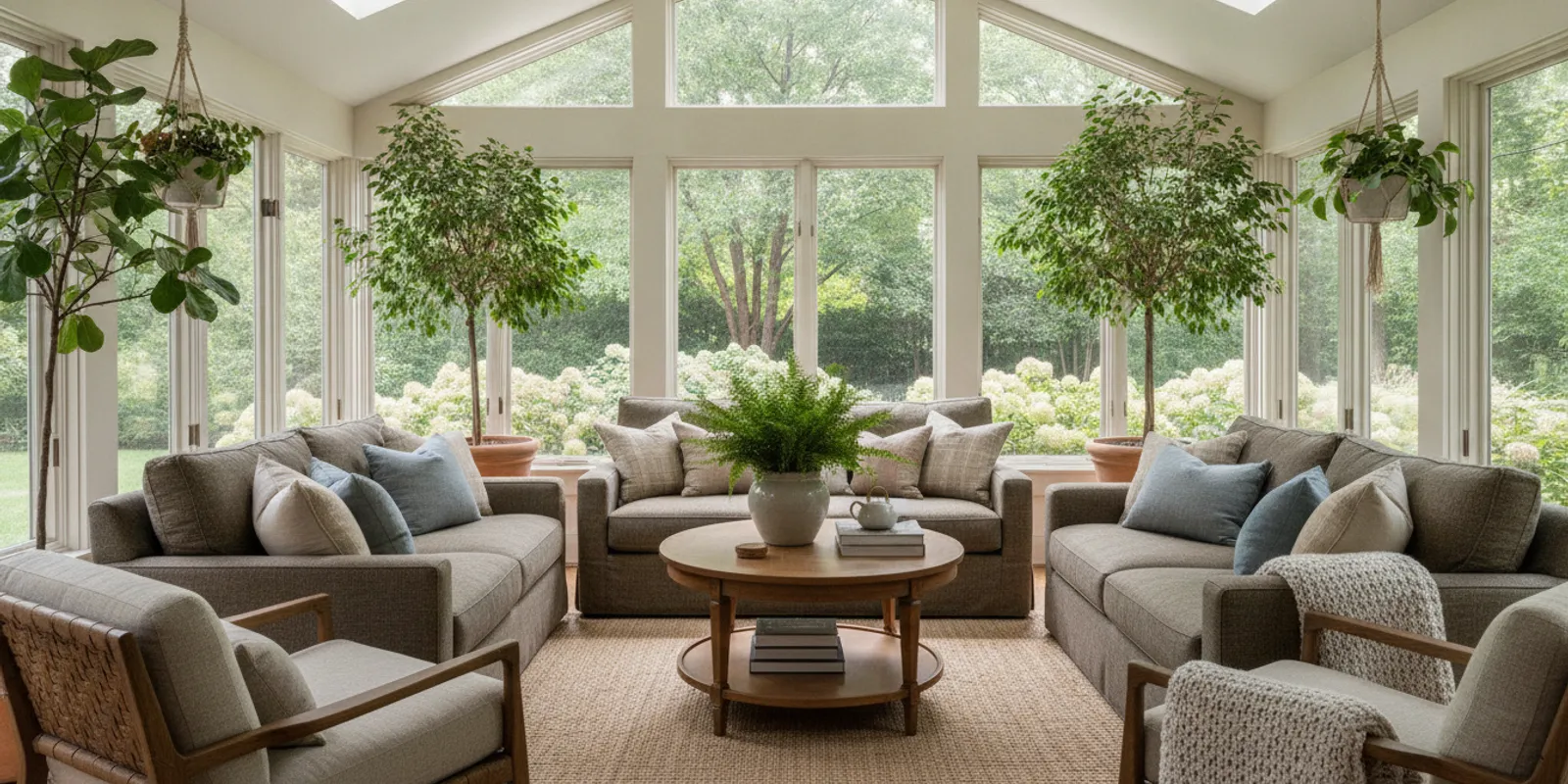
A sunroom should feel like a bright connection to the outdoors, not the hottest or brightest room in the house. The right window film Chicago sunrooms need depends on how the space is glazed, which direction it faces and what bothers you most: solar heat, glare, fading or privacy. A careful assessment can help you address those issues while keeping the room light and inviting.
Request a free estimate for your sunroom
Window film Chicago sunrooms: Why can a sunroom become uncomfortable?
Sunrooms often have more glass than other rooms. Sunlight enters through windows, doors and sometimes overhead glazing, warming the space and creating bright spots on floors, tables and screens. The effect changes over the day and across seasons. A room that is pleasant in the morning may have sharp afternoon glare; another may feel fine most of the year but become difficult to use on sunny summer days.
Before considering a product, identify the actual problem. Is one chair or work surface in direct sun? Does the whole room feel too warm? Is glare interfering with reading or screen use? Are rugs, furnishings or artwork exposed to sunlight? Does a neighbor have a direct view inside? The answer matters because window films are designed for different purposes. Solar-control film addresses solar heat gain and glare; privacy or decorative film changes visibility or appearance; safety and security film serves a different purpose again.
Make a short observation log for several days. Note the time when discomfort begins, which panes receive direct sunlight and where the problem is most noticeable. Include cloudy and sunny conditions if possible. This gives an installer a practical starting point instead of relying on a general impression that “the sunroom is too hot.” If the home also has a room-by-room concern elsewhere, Sullivan’s room-by-room guide to choosing home window film offers a useful way to think about different exposures and uses.
Window film Chicago sunrooms: How can it help without making the room feel dark?
Window film is applied to glass to change how some solar energy and visible light pass through it. Solar-control choices vary in visible light transmission, reflectivity and heat-rejection performance. Those characteristics are not identical from one product to another, so “tinted” is not a complete specification. A film selected to reduce harsh glare may look and perform differently from a film selected to prioritize a bright view.
For a sunroom, the goal is usually balance: reduce the specific discomfort while preserving the daylight and outdoor connection that motivated the room in the first place. Ask to compare candidate films by their documented performance and appearance, not only by shade or color. A professional can consider how each pane is oriented and how much light the room receives, then discuss options that suit those conditions. Sullivan’s overview of residential window films for heat reduction explains why different film types can address solar heat differently.
A lighter-looking film may still be designed for solar control, while a darker appearance is not by itself proof that a film is the best fit. Look at a sample in the actual room, if available, and view it from inside and outside. Consider the view at several times of day. Sunrooms often have large, uninterrupted panes, so a change in reflectivity or color can be more noticeable than on a small bedroom window.
It is also important to set realistic expectations. Film can change solar conditions at the glass, but it does not repair a draft, replace damaged glazing, or correct every cause of a warm room. If the sunroom has air leaks, a failing roof, inadequate ventilation or an HVAC problem, those issues may need separate attention. Film should be chosen for the glass and the problem it is intended to address, rather than treated as a universal remedy.
Which sunroom problems call for which film approach?
Start with the outcome you want. The following comparison is a conversation guide, not a product specification. The best option depends on the specific glass and your priorities.
| What you notice | Film approach to discuss | What to weigh |
|---|---|---|
| Strong sun or hot spots near particular panes | Solar-control film | Heat rejection, visible light, reflectivity, glass compatibility and view |
| Glare on a screen, table or reading area | Solar-control option selected for glare reduction | Which panes cause glare and how much daylight you want to retain |
| Concern about interior fading | Film with UV protection, potentially combined with solar control | UV performance, exposure, furnishings and continued care |
| Direct views into the room | Privacy or decorative film for the relevant panes | Daytime versus nighttime visibility, light level and desired design |
| Concern about glass fragments after breakage | Safety or security film assessment | Purpose, glass type, attachment details and realistic limitations |
Different categories solve different problems. A decorative privacy film can obscure a view or add a pattern, but it is not automatically a solar-control product. A safety film is intended to help hold broken glass together under specified conditions; it should not be described as making a window unbreakable. If fading is the main concern, UV protection is relevant, but the room’s total exposure and the materials being protected still matter. Sullivan’s pages on window film and UV protection and safety film for glass discuss these distinct goals.
When the main concern is privacy, consider how the sunroom is used. A reflective appearance that offers some daytime privacy may not provide the same effect after dark when interior lights are on. For a more complete discussion of how viewing conditions affect expectations, see this guide to the one-way effect of privacy window film. Privacy needs may be limited to one side or one section, rather than every pane.
What should you check about a sunroom’s glass?
Glass type and configuration should be part of the decision before a product is selected. A sunroom may combine vertical windows, doors, insulated glass units, older single-pane glass and angled or overhead glazing. Those panes can differ in construction, exposure and the way they respond to solar energy. A film suitable for one pane is not automatically suitable for every pane in the same room.
Tell the installer what you know about the glass: approximate age, whether panes are single- or double-glazed, any labels or manufacturer paperwork, and whether a pane has been replaced. Point out cracks, damaged seals, condensation between panes, unusual coatings or prior film. Do not assume that the room’s glass is uniform just because it was built at the same time. If records are not available, a professional assessment can help identify what needs closer review.
Overhead and sloped glass deserve particular attention. The Chicago building-code material describes surface-applied window film on existing single-pane fenestration assemblies in connection with reducing solar heat gain, while the International Code Council chapter covers glass and glazing requirements, including sloped glass applications. These are code references, not a product approval or a substitute for checking the rules and glass conditions that apply to a specific project. Review the Chicago building-code material on surface-applied window film and the ICC glass and glazing chapter with the project context in mind.
For a glass roof or skylight, ask explicitly whether the proposed film is appropriate for that exact glazing assembly and orientation. Do not extend a recommendation for vertical windows to sloped panes without review. The installer should be able to explain which panes are included, which are excluded and why, as well as whether a different film or a separate glass professional should be consulted.
Should every pane in the sunroom receive film?
Not always. A sunroom can have one wall that receives intense afternoon sun and another that stays shaded for much of the day. Treating every pane alike may not be necessary, and it could change the room’s appearance more than you want. Ask whether a focused plan for the panes linked to the main discomfort is worth considering. The answer depends on the glass, the room’s light balance and the product selected.
For example, imagine the west-facing windows create glare on a reading chair late in the day, while the north-facing side provides soft daylight and a clear garden view. A conversation could compare treating only the problem area with treating a larger group of panes for a consistent appearance. Neither choice is automatically right: selective film may leave visible differences between treated and untreated glass, while a uniform treatment affects more of the room. Decide which tradeoff matters most to you.
Look at the space from several viewpoints, including the doorway and outside the home. Ask how the finished glass may look beside untreated windows, doors or neighboring rooms. Consider whether the sunroom is visible from the street, whether the glass has existing tint or coatings, and whether the appearance should match other windows. A small visual difference can be especially noticeable across large panes or a continuous glass wall.
It may help to separate “must solve” from “nice to improve.” You might prioritize glare at a desk, then decide whether fading protection across the remaining glass is also important. Write down the minimum acceptable daylight and any view you do not want to compromise. This gives the installer a clear basis for discussing a targeted solution, a more uniform plan or a phased approach if the project scope allows it.
How do direction and room use change the recommendation?
Direction helps explain when sunlight arrives, but it is only one part of the assessment. Nearby trees, neighboring buildings, roof overhangs and seasonal sun angles all affect exposure. North-facing glass may have a different pattern from a west-facing wall, but a specific room’s experience is more useful than a rule based only on compass direction.
Also think about what happens in the room. A sunroom used as a quiet sitting area may have different priorities from one that doubles as a dining space, play area or home office. A screen positioned opposite a bright pane can make glare the central problem. A sofa or collection of furnishings in a sun patch may make exposure and UV protection more important. If you use the room throughout the day, changing light and privacy requirements may matter more than a single midday snapshot.
Sketch the room and mark the windows that cause trouble. Add the direction of each wall if known, the main seating or work areas, and the time of day when each issue appears. Take photos from the places where you sit or work, not just from outside. A basic map lets an installer discuss selective treatment instead of assuming that every pane needs the same solution.
If you want to understand the relationship between home film and energy use, Sullivan’s home window film energy guide can provide context. Avoid expecting a guaranteed bill reduction from a single film choice: results depend on the building, existing glass, exposure, heating and cooling equipment, weather and how the room is used. For some projects, preserving the view and improving comfort may be the primary objective rather than calculating a specific savings figure.
How should you compare recommendations from installers?
A useful recommendation should connect the proposed film to your stated problem and the actual panes. Ask for the film category and product name, the purpose of the selection, and the relevant performance information. Ask whether the proposal is for every pane or only selected glass. If two recommendations differ, compare what each is designed to improve rather than looking only at the shade or the total amount of glass covered.
- Problem and outcome: Which concern is being addressed: solar heat gain, glare, UV exposure, privacy, appearance or breakage concerns?
- Pane-by-pane scope: Which windows, doors and overhead panes are included, and are any excluded?
- Film characteristics: What are the expected visible appearance, light transmission, reflectivity and relevant performance features?
- Glass suitability: Has the existing glass construction and condition been considered for the specific film?
- Installation and care: What preparation, curing time and aftercare should you expect, and what manufacturer-backed warranty applies?
- Limits: What will the film not fix, and are there conditions that call for repair or another specialist?
Be cautious about a recommendation that treats all film as interchangeable or promises a particular energy-bill result without examining the home. A good consultation should make tradeoffs understandable. For example, a recommendation focused on glare may have a different appearance than one selected to maximize daylight. Your preferred view and the room’s light level should remain part of the conversation.
Professional installation is important in a room with broad panes, doors and possible overhead glazing. Clean preparation, precise cutting and careful application contribute to an even, factory-finished look. Sullivan’s explanation of why professional window film installation matters outlines the value of skilled application. Ask what the workmanship process includes, and review the window film lifespan and warranty guide for questions to raise about long-term care.
How can you prepare for a free estimate?
You do not need a technical report to start a useful conversation. Gather a few observations and photos, then describe what you want the space to feel like. For example: “The west-side seating area gets harsh glare after lunch, and I want to keep the garden view and as much daylight as possible.” That is more actionable than asking for the darkest film available.
- List the symptoms. Note the panes involved, the time of day, the season and whether the issue is glare, heat, fading or privacy.
- Describe the room. Explain whether it is used for dining, relaxing, work or another purpose, and identify any overhead or angled glass.
- Share photos and glass details. Include both a view of the pane and a view from inside the room. Mention any known glazing type, damage, previous film or replacement windows.
- Set priorities. Rank comfort, daylight, outdoor views, appearance, privacy and UV protection. If you have a must-keep feature, say so early.
- Ask for a tailored scope. Request that options distinguish between the different panes and explain the tradeoffs, care guidance and applicable warranty.
Sullivan’s is family-owned and operated and provides professional window film installation for residential and commercial properties in the greater Chicago area and selected Wisconsin markets. Recommendations and pricing are specific to the project, including measurements, film selection, complexity and location. To learn about the company’s window film services, see the service overview. You can also review the areas served or read answers to common window film questions before you get in touch.
For examples of completed work, browse the window film project gallery. If you are weighing a home project against other improvements, this guide to window film versus window replacement offers a comparison of those approaches without replacing a property-specific assessment.
Request a no-obligation free estimate
Frequently asked questions
Will window film make my sunroom dark?
Not necessarily. Film options differ in how much visible light they transmit and how reflective or tinted they appear. Share your daylight and view priorities with the installer, and compare the actual product characteristics and appearance before choosing.
Can the same film go on every sunroom window?
Not automatically. A sunroom can include different glass constructions, orientations and sloped panes. The installer should assess the glass and recommend a suitable option for each part of the room rather than assuming one specification fits every pane.
Does privacy film work at night?
Privacy depends on lighting on both sides of the glass. Some reflective privacy effects are strongest in daylight and can change after dark when indoor lights are on. Discuss nighttime visibility and consider whether a decorative treatment or another privacy approach better fits your needs.
Can film stop a sunroom from getting hot?
Solar-control film can help manage solar heat gain through suitable glass, but it cannot correct every cause of a hot room. Air leaks, ventilation, roof conditions and the home’s cooling system can also affect comfort, so establish which issue the film is expected to address.
Should I add film to a glass roof or skylight?
Ask for a specific assessment before adding film to overhead or sloped glazing. The glass construction and applicable requirements matter, and a recommendation for vertical windows should not simply be assumed to apply to a roof pane.
Ready to make your sunroom more comfortable?
The best plan starts with the room’s real conditions: which glass receives sun, when discomfort occurs, and what you want to preserve. With a pane-by-pane assessment, you can compare appropriate film options for comfort, glare, UV protection or privacy and understand the tradeoffs before choosing.
Request your free sunroom window film estimate
A tailored recommendation can help your sunroom stay bright, useful and more comfortable through the changing Chicago seasons.