
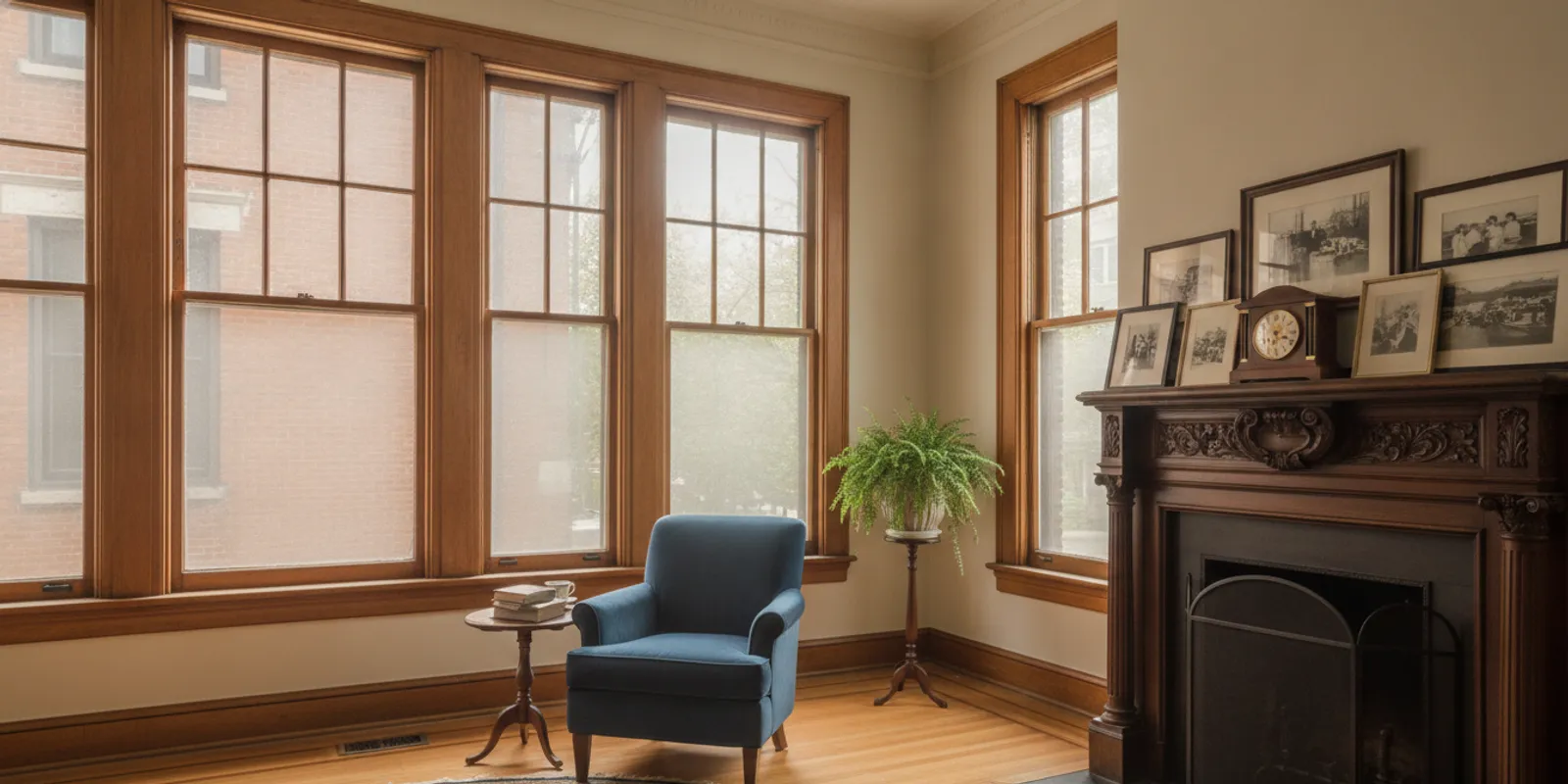
Historic Chicago homes have details worth preserving, but original windows can also bring glare, fading concerns, uneven comfort, and limited privacy. If you are researching window film historic Chicago homes, start with the goal for each window and the rules that apply to the property. The right film can address a specific concern while keeping the look of the home in view; the right choice depends on the glass, frame, room, and any preservation restrictions.
Request a free estimate for your home
Why Do Historic Homes Need a Window-by-Window Film Plan?
Historic homes rarely have one uniform window condition. A front parlor may have original single-pane glass and detailed wood trim. A rear addition may have newer insulated glazing. A bathroom may need privacy, while a sunny sitting room may need glare control. Treating every pane as if it has the same purpose can lead to a film choice that solves one problem but creates another.
Begin by noting the issue you want to improve in each room:
- Glare: Is direct sunlight making a desk, television, or seating area uncomfortable at certain hours?
- Fading concerns: Are rugs, artwork, books, or furnishings receiving prolonged sunlight?
- Privacy: Can passersby see into a bedroom, bathroom, or street-facing living space?
- Solar heat gain: Does a particular room feel noticeably warmer when the sun reaches its windows?
- Glass protection: Is there a specific concern about glass fragments if a pane breaks?
Write down the window location and the time of day when the issue is most noticeable. A west-facing room may have an afternoon glare problem; a street-facing window may need privacy even when glare is not an issue. The purpose is not to diagnose a film from the direction of the window alone. It is to give an installer the context needed to discuss suitable options.
For a general overview of residential choices, see this residential window film guide for Chicagoland homes. You can also use a room-by-room guide to choosing home window film to organize questions before an estimate.
What Should You Check Before Adding Film to a Historic Property?
Before comparing products, confirm whether the home has preservation requirements. A house may be in a designated district, individually landmarked, subject to a preservation easement, or covered by a homeowners association or other property rules. The requirements are not necessarily the same from one property to another, and a home’s age by itself does not tell you which approvals apply.
Ask the appropriate local preservation office, property manager, or governing body whether window film is reviewed as an alteration and what information is needed. If the property is a designated Chicago landmark or lies in a historic district, confirm the applicable review process before scheduling work. Do not assume that film is automatically exempt because it is applied to glass, or automatically prohibited because the home is historic.
A Chicago Commission on Chicago Landmarks meeting record, for example, discusses clear proposed window safety film as part of a specific property approval and also notes limits on exterior work to that building’s front facade. It is an example of a project-specific review, not a rule for every historic home. You can read the Chicago landmarks meeting minutes about that proposal and confirm the requirements for your own address with the relevant authority.
When asking about approval, be prepared to describe the proposed work precisely. Helpful details may include:
- Which windows are involved, including their location and approximate dimensions.
- Whether the glass is original, replacement glass, or part of a later addition, if known.
- The film’s intended function, such as solar control, privacy, decorative appearance, or safety.
- Whether the proposed film is clear, reflective, colored, patterned, or otherwise visible from outdoors.
- Whether installation would change the frame, exterior appearance, glazing, or trim. Professional film installation applies film to glass; it is not a window replacement project.
Keep any written guidance or approval with your project notes. If a preservation review asks for product details or a visual sample, get those items before committing to a particular option. A professional installer can help explain film characteristics, but the homeowner remains responsible for confirming property approvals.
Which Window Film Types May Fit a Historic Home?
Window film is not one product with one effect. Different film categories address different needs, and visual appearance can vary. A consultative recommendation should account for the pane and frame as well as the intended benefit. Use the comparison below to shape the conversation, not as a substitute for checking compatibility and preservation requirements.
Solar control
Common reason to consider it: Reduce solar heat gain or glare in a sunny room
Historic-home question to ask: How will the proposed film look from indoors and outdoors on this glass?
UV-protection film
Common reason to consider it: Help limit UV exposure to interiors
Historic-home question to ask: Can the film meet the need while maintaining the desired level of visible light and appearance?
Privacy film
Common reason to consider it: Reduce visibility into a room
Historic-home question to ask: Does the privacy effect work under both daytime and nighttime lighting conditions?
Decorative film
Common reason to consider it: Add a patterned, frosted, or designed appearance
Historic-home question to ask: Is a reversible or visually discreet treatment preferable for this window?
Safety or security film
Common reason to consider it: Help hold glass together if it breaks
Historic-home question to ask: What does the selected film do, and what does it not do, for this glass and risk?
Solar control for glare and heat
Solar control films are considered when sunlight creates glare or contributes to uncomfortable heat in a room. They differ in appearance and performance, so do not select by a label such as “heat rejecting” alone. Ask how a proposed film balances heat rejection, daylight, and the look of the window. A practical comparison can include how each option handles glare, solar heat gain, daylight, and exterior reflectivity; improving one quality may involve a tradeoff in another. Compare options against the same priorities instead of choosing based on a product name alone. This overview of residential window films for heat reduction can help you prepare questions. For a closer look at the general question, see what heat-blocking window film can and cannot do.
Do not assume a darker film is automatically the best fit. Historic interiors often rely on natural light, and the goal may be to reduce a specific discomfort without making the room feel dim. Ask to compare suitable film choices and their visible appearance before making a decision. Consider the room’s use, its strongest sun exposure, and whether the problem occurs for a short part of the day or for longer periods.
UV protection for furnishings and interiors
UV-protection film may be useful when sunlight reaches textiles, artwork, wood, or other interior materials. Sullivan’s describes its window films as blocking up to 99% of harmful UV rays. Film is one part of managing exposure; it does not mean a furnishing can never fade. Materials may be affected by more than UV, including visible light, heat, and ordinary aging. Ask what protection the specific film offers and whether it addresses the exposure you are trying to manage. Read more about how window film and UV protection are discussed.
Privacy and decorative treatments
Privacy film can help obscure views through selected windows, while decorative films can add a frosted or patterned look. These options can suit a bathroom, entry sidelight, or street-facing window where privacy matters more than solar heat control. A privacy effect can depend on lighting and viewing conditions, so ask how it behaves after dark when interior lights are on. A reflective appearance should not be treated as guaranteed one-way privacy at all times.
Browse examples in this home privacy window film guide and learn more about how the one-way privacy effect works. If the goal is a specific visual treatment, a guide to decorative window film for homes can help you consider patterns and placement. A decorative option should be evaluated for how it sits alongside original glass, muntins, and trim.
Safety and security films
Safety and security films are intended for different concerns from solar control or privacy film. Some safety-oriented films are designed to help hold broken glass together, but film should not be described as making a window unbreakable or as guaranteeing that an intruder cannot enter. The right product and installation details matter. Ask the installer to explain the intended performance and limits for the specific window.
For more background, review safety film for glass and the considerations in this home safety window film guide. If the glass is old, irregular, cracked, or otherwise damaged, make that clear before a recommendation is made.
How Can You Preserve the Character of Original Windows?
Historic character often comes from the complete window assembly, not only the pane. Wood profiles, divided lights, hardware, muntins, and trim all contribute to the view from inside and outside. Film selection should take these details into account. A subtle product on the glass may still change reflections or visible color, while a patterned product may draw attention to itself. Ask for a clear description of the expected appearance instead of relying only on a broad product category.
Walk through the home and sort windows into groups with similar goals. You might have original street-facing windows where appearance is the first concern, rear windows where afternoon glare is the priority, and bathroom glass where privacy matters most. A room-by-room plan can limit unnecessary treatment and avoid choosing a single film for windows that serve very different purposes.
For some owners, preserving a clear view of the original sash is the priority; for others, daily comfort in a west-facing room matters more. Write down which tradeoffs you are willing to consider before reviewing samples or recommendations. If the exterior appearance is important to a landmark review, ask whether the authority wants product specifications, a sample, or photographs showing how the film may look on the actual window. A sample viewed on a modern pane may not communicate exactly how it will appear alongside older glass, muntins, and trim. Avoid asking an installer to promise that a film will be invisible or approved. Instead, request factual information about its appearance and function so you can make a grounded comparison and submit any required materials to the appropriate reviewer.
When reviewing a proposed plan, ask:
- Will the film change the visible color, reflectivity, or brightness of the glass?
- Will it be noticeable from the street or neighboring properties?
- Does the recommendation account for the window’s existing glass and frame?
- Can the installer explain why this film category is appropriate for this location?
- What are the removal and care considerations if the film or property needs change later?
It can also be useful to understand what homeowners should know about removing window film. Removal is not a reason to skip preservation checks or product selection; it is simply one practical question to raise before installation. For older or distinctive windows, ask the installer to assess the specific glass rather than assume that all panes behave alike.
How Can You Compare Two Film Recommendations?
If you receive more than one recommendation, compare the reasoning and scope rather than looking only at the film name. A useful proposal should connect the product to the windows and concerns you identified. It should also make clear which openings are included, whether the recommended film is intended to address heat, glare, privacy, UV exposure, or another concern, and what appearance tradeoffs to expect.
Try a simple window-by-window review. For a sunny room where glare affects reading, ask how each option changes glare and daylight. For a street-facing bedroom, ask how privacy works in daytime and after dark. For a front window that is subject to preservation review, compare the visible appearance and the information available for approval before deciding. These are different goals; a product that is appropriate for one should not automatically be assumed right for the others.
Check that the estimates describe comparable work. One recommendation might cover only the most uncomfortable windows, while another covers the entire elevation. Clarify whether the quoted scope includes the same panes, preparation, film category, and installation details. If the products differ, ask the installer to explain the difference in plain language and relate it to your priorities. You do not need to choose the most elaborate option if it does not answer a concern you have.
Preservation approval and installation suitability are separate questions. A film may fit a homeowner’s comfort goals but still need review under local property rules; approval alone does not establish that the film is the right technical fit for every pane. Confirm both before scheduling. A written comparison can help you keep the process organized and remember why a recommendation was made.
What Should You Ask a Professional Installer?
A careful installation begins with clear information about the home and its windows. Share any known history of glass replacement, past repairs, storm windows, or prior film. Point out cracks, loose glazing, damaged frames, or condensation between panes. These details help an installer determine what should be reviewed before work proceeds. If you do not know whether glass is original, say so rather than guessing.
Useful questions include:
- What concern does this film address? Ask the installer to connect the recommendation to your stated goal, such as glare control, privacy, or UV protection.
- How will it affect the view and daylight? Request an explanation of appearance and visible-light tradeoffs for the specific rooms.
- Is it compatible with the existing glass? The recommendation should take account of the glass and window configuration, not just the room’s orientation.
- What preparation is needed? Ask whether any glass, frame, or glazing condition should be addressed first.
- What does the estimate include? Confirm the windows covered, film type, project assumptions, installation scope, and any product warranty details that apply.
- How should the film be cared for? Ask for the applicable cleaning and aftercare instructions once the installation is complete.
Professional installation matters because precise measurement, preparation, and application affect the finished appearance. A clean, even result should complement the window rather than distract from it. Learn more about why professional window film installation matters. Sullivan’s is family-owned and operated and has served the area since 1988; its approach includes free estimates and personalized recommendations. Most film products have manufacturer-backed warranties, but ask which warranty applies to the film proposed for your project rather than assuming every product has identical terms. You can also review this overview of window film lifespan and warranty considerations before discussing care and expectations.
How Should You Prepare for a Free Estimate?
A useful estimate starts with the areas that matter most to you. You do not need to know a film specification in advance. Instead, share what happens in each room and what you want to improve. A professional can discuss options after reviewing the windows and project details.
Before requesting an estimate, gather:
- Your property address and the rooms or elevations you want considered.
- Approximate window counts or measurements, if available. Do not delay a request if exact measurements are not handy.
- Photos that show the windows, frames, and surrounding trim, both from inside and outdoors when practical.
- A short description of each problem, including the time of day and season when it is most noticeable.
- Any information about landmark or district status, approval requirements, or association rules.
- Known details about original or replacement glass, previous repairs, or existing film.
Expect a custom estimate rather than a one-price-fits-all figure. Scope can depend on the number and size of windows, selected film, glass and frame conditions, installation complexity, and location. An estimate is a chance to compare a solution with your priorities. If one room matters most, say so; the project discussion can begin with that area and expand as needed.
Get a no-obligation free estimate
Frequently Asked Questions
Can window film be used on every historic window?
Not necessarily. Suitability depends on the particular film, glass, window configuration, and any property-specific preservation requirements. Have the proposed application reviewed before proceeding, especially if the glass is original, damaged, or unusual.
Will window film make an older home look modern?
Not automatically, but some films may change reflections, color, or the amount of light passing through the glass. Ask how the exact option will appear on your windows and whether the exterior appearance is acceptable to you and any reviewing authority.
Does privacy film keep a room private at night?
Privacy varies with the film and the difference in lighting between indoors and outdoors. A daytime reflective effect may not provide the same privacy after dark when lights are on inside. Discuss the room’s nighttime use and consider whether window coverings are also needed.
Can film stop all fading?
No. Window film can help limit UV exposure, but fading can have several causes, including visible light and heat. It is more accurate to view film as one way to manage exposure than as a guarantee that interior materials will never fade.
Does an estimate mean I have to install film?
No. A free estimate helps you review a personalized recommendation and project scope. You can ask questions, compare the proposed approach with your goals, and decide whether to move forward.
Ready to Protect Comfort Without Losing Sight of Character?
Historic homes deserve a plan based on their actual windows, the way each room is used, and any rules that apply to the property. Sullivan’s Tinting can discuss residential film options and prepare a custom estimate for your project.
Request your free estimate from Sullivan’s Tinting
With the right questions and a window-by-window review, you can explore comfort and protection options while keeping the home’s character at the center of the decision.