
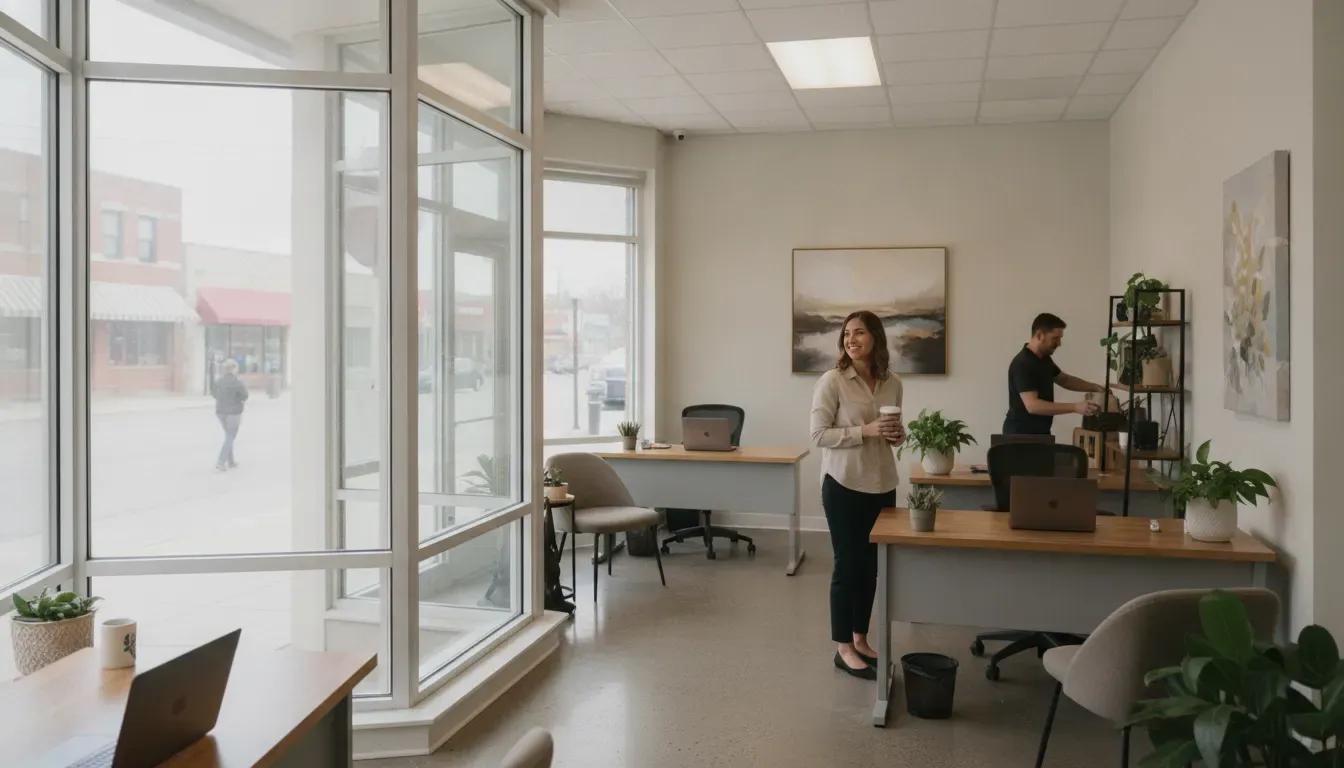
For Racine business owners, large windows can shape the customer experience while also creating practical challenges. Window film Racine WI businesses choose for privacy, glare control, UV protection, and glass protection can improve a space without replacing the existing glass. The right film depends on the building, window orientation, occupants, and the result you want to achieve.
Get a free estimate for commercial window film in Racine
Why are Racine businesses choosing window film?
Commercial window film gives Racine businesses a way to address uncomfortable sunlight, exposed interiors, fading, and vulnerable glass with a measured improvement rather than a full window replacement. It can be selected for one problem, such as afternoon glare, or combined across several areas of the same property.
Businesses in Racine may use window film in offices, retail storefronts, professional practices, restaurants, schools, and other commercial spaces. A street-facing office may need privacy for meetings, while a shop may want customers to see displays without harsh reflections. A reception area may need a more finished appearance, and a ground-floor property may benefit from an added layer of glass protection.
- Privacy: Frosted, decorative, or solar-control films can reduce unwanted views into selected rooms.
- Glare control: Solar-control film can make screens, counters, and seating areas more comfortable near bright windows.
- UV protection: Window film can help protect furnishings, flooring, merchandise, and finishes from harmful UV exposure.
- Glass protection: Safety and security film can help hold broken glass together after impact, depending on the film and glass assembly.
- Appearance: A clean, professionally installed film can create a consistent, factory-finished look across a storefront or interior glass wall.
These goals do not always call for the same product. A film selected for privacy is not automatically the best choice for heat rejection or security. A professional assessment keeps the recommendation tied to the way each space is used.
What can window film solve inside a business?
Window film works best when the film category is matched to the building’s specific source of discomfort or risk. Solar-control films address heat and glare, decorative films shape visibility and appearance, and safety or security films focus on glass performance after impact. Some projects use more than one category in different rooms.
Privacy without closing off natural light
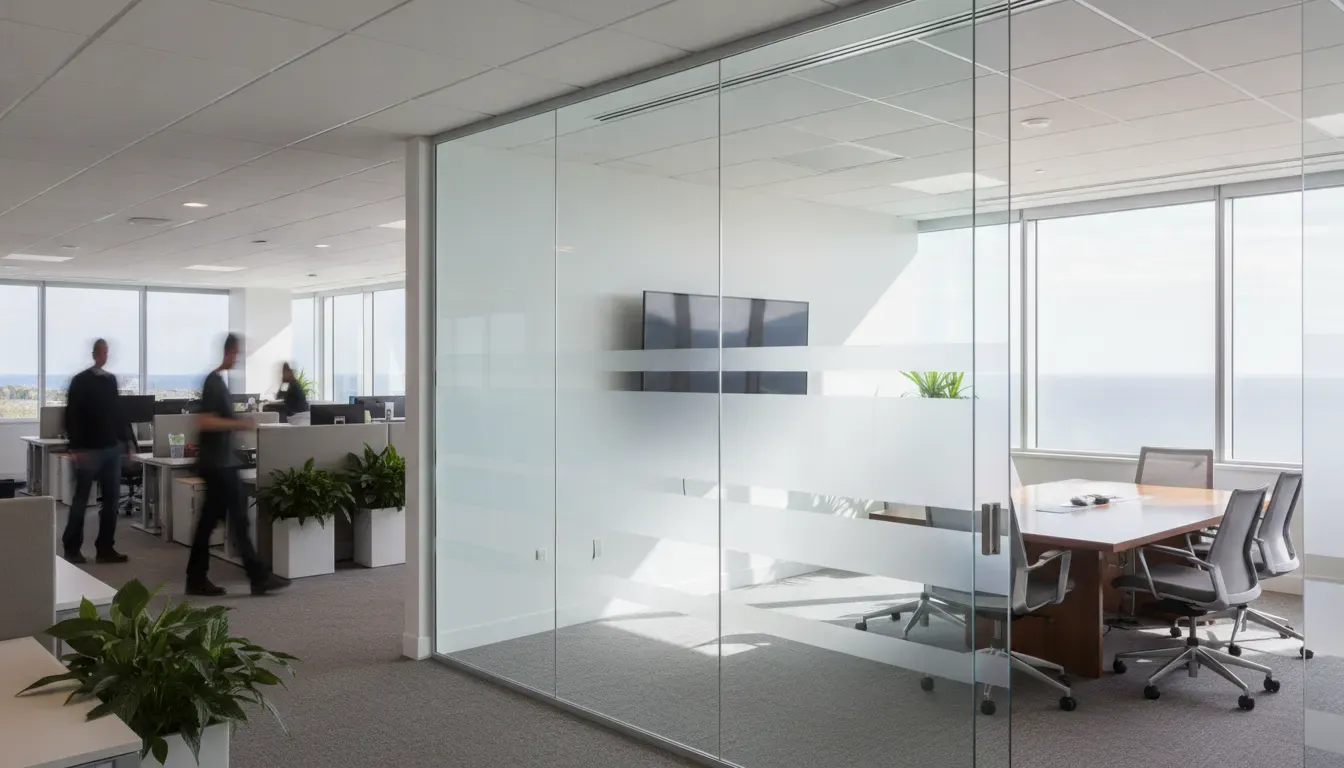
Privacy film can be useful for conference rooms, treatment rooms, employee work areas, street-facing offices, and interior glass partitions. Frosted or patterned film can soften sightlines while keeping daylight moving through the space. Decorative film can also establish a visual boundary without the closed-in feel of solid blinds or opaque wall construction.
Privacy is not one universal effect. Some solar or reflective films can provide stronger daytime privacy when the exterior is brighter than the interior, but that relationship can change at night when interior lights are on. A recommendation should account for the business schedule, lighting, neighboring buildings, and whether privacy is needed during the day, at night, or both.
Glare control near desks and displays
Bright windows can create reflections on monitors, point-of-sale screens, display cases, and polished surfaces. Employees may move desks, close blinds, or avoid parts of the room to work around the glare. Solar-control window film can reduce the intensity of sunlight entering through the glass while preserving useful daylight.
The best result depends on more than choosing a dark appearance. Window direction, time of day, interior finishes, screen placement, and the desired level of visible light all matter. A lighter-looking film may be appropriate when the priority is preserving a bright storefront, while a different solar-control approach may fit a west-facing office with strong afternoon exposure.
UV protection for interiors and merchandise
Ultraviolet exposure can contribute to fading and deterioration of materials over time. The US Environmental Protection Agency explains that ultraviolet radiation from the sun can affect people and materials, and that exposure is not limited to hot or cloudless days. Read the EPA overview of ultraviolet radiation for general background.
Commercial window film can be part of a broader protection plan for flooring, furniture, artwork, merchandise, and interior finishes near windows. It does not make a display or material permanently fade-proof, so businesses should still consider placement, curtains, shades, and product-specific care requirements.
Added support for vulnerable glass
Safety and security films are designed for a different job than solar-control or decorative films. When properly selected and installed, they can help retain shards if glass breaks and may add time or resistance during an attempted impact. They do not turn ordinary glass into a security wall, replace a door lock, or eliminate every risk.
For a retail entry, ground-floor office, or public-facing area, a professional installer can discuss whether safety or security film fits the existing glass, frame, and broader security plan. The recommendation should be specific to the property rather than based on the film name alone.
How does privacy film fit a Racine office or storefront?
Privacy film should be planned around sightlines and daily activity, not simply applied to every pane. A partial band, gradient, frosted pattern, or selected-room installation can protect sensitive areas while leaving exterior-facing glass open and inviting. The right design balances confidentiality, daylight, branding, and visibility.
| Business need | Potential film direction | Planning question |
|---|---|---|
| Conference room privacy | Frosted or decorative film | Should the entire glass wall be private, or only eye-level sightlines? |
| Street-facing office | Solar-control or privacy film | Is privacy needed only during business hours? |
| Retail display protection | Solar-control film with a neutral appearance | How can glare be reduced without hiding products from pedestrians? |
| Reception or waiting area | Decorative film or a subtle privacy band | Where should the space feel open, and where should it feel defined? |
Sullivan’s Window Tinting offers decorative and privacy window film as part of its commercial and architectural window film solutions. A consultation can help determine whether the project needs a functional privacy treatment, a branded design element, or both.
Can commercial window film reduce glare without making a space dark?
Yes, the goal of commercial solar-control film is often to reduce uncomfortable glare and solar heat gain while retaining useful natural light. The final balance depends on the glass, film performance, window exposure, interior layout, and the business’s tolerance for visible change. A darker film is not automatically the best glare solution.
For a Racine office, the most useful starting point is to identify when glare is worst and what it affects. Is the problem a morning reflection on monitors, a bright afternoon storefront, or a waiting area that becomes uncomfortable in summer? The answer guides the film selection and where it should be installed.
Window film should also be evaluated with the existing glass. Glass type, pane size, orientation, and frame condition can affect which products are appropriate. Professional installation helps avoid a mismatched appearance and supports the clean, factory-finished result Sullivan’s customers expect.
Energy performance is similarly project-specific. Solar-control film may reduce solar heat gain and lessen the burden on cooling in sun-exposed spaces, but no installer can responsibly promise the same savings for every building. HVAC design, insulation, occupancy, weather, and window area all influence results.
What glass protection options fit commercial properties?
Safety and security window film can be considered for glass that is exposed to people, public access, accidental impact, or a higher risk of breakage. It is most useful as one part of a property plan that may also include appropriate locks, doors, lighting, cameras, and emergency procedures. The film category and installation method should match the intended level of protection.
Potential applications include entry doors, sidelights, low windows, storefronts, interior partitions, and areas near customer or employee traffic. The goal may be to reduce injury from flying shards, make a pane more difficult to breach quickly, or add a discreet layer of protection without boarding up or replacing the glass.
Film does not eliminate the need for a professional assessment. A business should ask about the existing glass, frame, edge attachment, door hardware, and any requirements from its insurer, landlord, architect, or security consultant. Sullivan’s safety and security window film services can be evaluated alongside the building’s other protection measures.
How should a Racine business choose the right film?
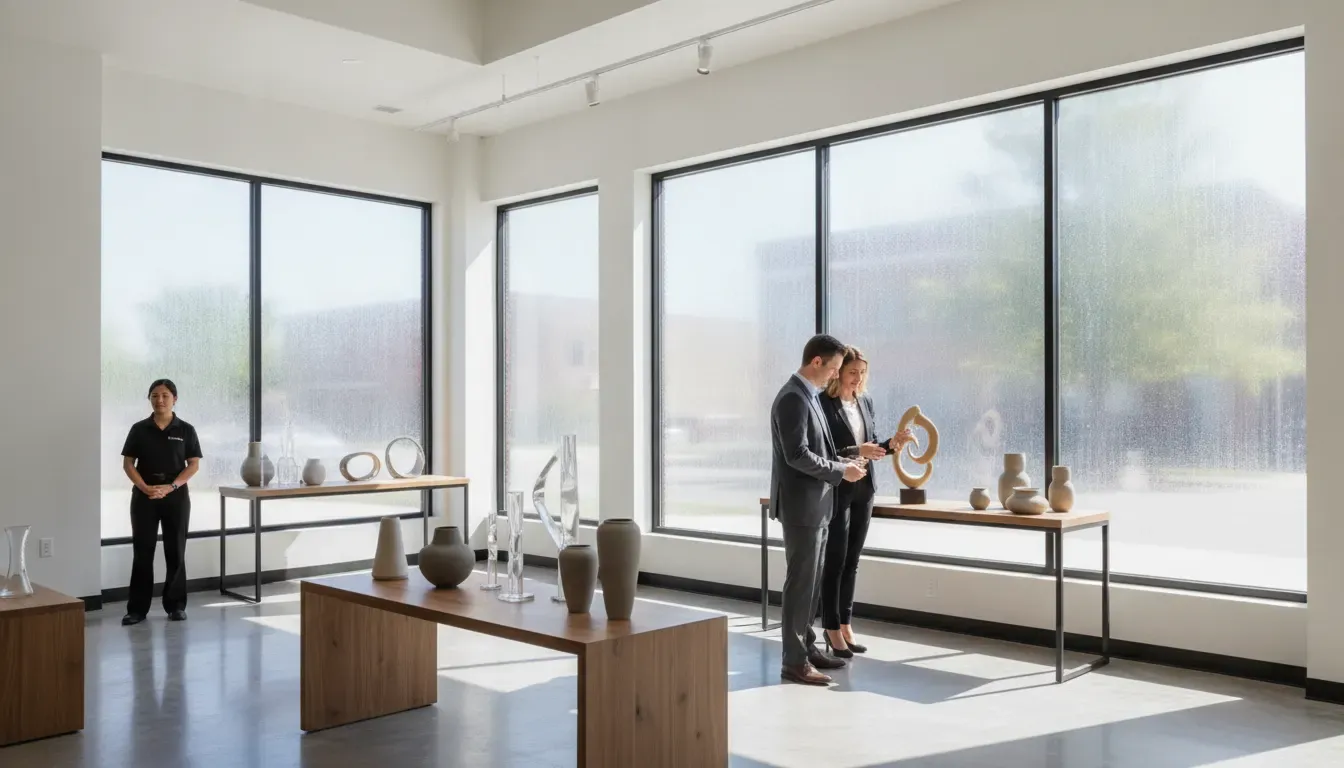
The right film starts with the business problem, then narrows through glass compatibility, appearance, light transmission, privacy timing, and installation conditions. A useful consultation looks at the property in context instead of recommending one product for every window. It should also explain what the film can and cannot do.
- Map the problem areas. Note which windows create glare, expose private activity, receive strong sun, or sit in vulnerable locations.
- Define the desired appearance. Decide whether the result should be nearly clear, lightly tinted, frosted, patterned, reflective, or branded.
- Consider when the space is occupied. Daytime privacy and nighttime privacy may require different strategies.
- Review the existing glass. Film compatibility, pane condition, frame design, and door hardware should be considered before installation.
- Plan around operations. Discuss access, preparation, curing, and how the installation will minimize disruption to staff and customers.
Businesses can review Sullivan’s commercial window film services to compare the main application categories. Sullivan’s family-owned team has served Chicagoland and nearby Wisconsin markets since 1988, with recommendations built around the property rather than a one-size-fits-all package.
What happens during professional commercial installation?
Professional installation typically begins with an assessment, continues through careful glass preparation and film placement, and ends with an inspection of the finished result. The process should account for the film type, window count, access, furnishings, business hours, and any areas that must remain available to customers or staff.
- Consultation: Discuss privacy, glare, UV protection, security, appearance, and priorities by room.
- Glass review: Examine the window type, condition, frames, doors, and any existing treatments.
- Recommendation: Match film categories to each objective and explain tradeoffs around appearance and light.
- Preparation: Protect nearby surfaces and prepare the glass so the film can bond cleanly.
- Installation and inspection: Apply, trim, and inspect the film for a consistent, professional finish.
Professional work matters because dust, inaccurate cuts, poor edge handling, and incompatible material choices can undermine both appearance and performance. Sullivan’s emphasizes a factory-finished look and manufacturer-backed warranties where applicable. For additional context, read why professional window film installation matters.
Request a free estimate for your Racine business window film project
Frequently asked questions about window film for Racine businesses
Racine businesses usually need to compare privacy, glare control, UV protection, and glass protection as separate but related goals. These answers provide a starting point, but the existing glass and the way a property is used should guide the final recommendation.
Will privacy film make a business completely private?
Not always. Frosted or opaque film can provide strong visual separation, while reflective films may provide more privacy when the exterior is brighter than the interior. Nighttime lighting can change the effect. A consultation should define where privacy is needed and at what times.
Can window film reduce glare on office monitors?
Solar-control film may reduce the intensity of sunlight and reflections that make screens difficult to view. Results depend on window direction, screen placement, glass, and film selection. Adjusting desks or shades may still be useful as part of a complete glare-control plan.
Does commercial window film block UV rays?
Many architectural window films are designed to block a high percentage of harmful UV rays, but the exact performance depends on the selected product. Ask for the product specifications and consider other measures for protecting sensitive merchandise, furnishings, and finishes.
Does safety film prevent a window from breaking?
No. Safety and security film is intended to help hold glass together after breakage and may add resistance during an impact, but it does not make glass unbreakable. Film should be selected and installed as part of a broader safety or security plan.
How much does window film cost for a Racine business?
Commercial window film projects are custom priced. The scope depends on measurements, film category, glass type, access, preparation, and installation complexity. Sullivan’s does not publish one-size-fits-all pricing, so the most useful next step is a free estimate based on the actual property.
Build a more comfortable, private, and protected business space
Window film can help a Racine business improve privacy, manage glare, protect interiors from UV exposure, and add support for vulnerable glass without replacing every window. The best result comes from matching each film to the building, the business schedule, and the specific problem. Sullivan’s Window Tinting provides professional recommendations and installation for commercial properties across Racine and nearby Wisconsin communities.