
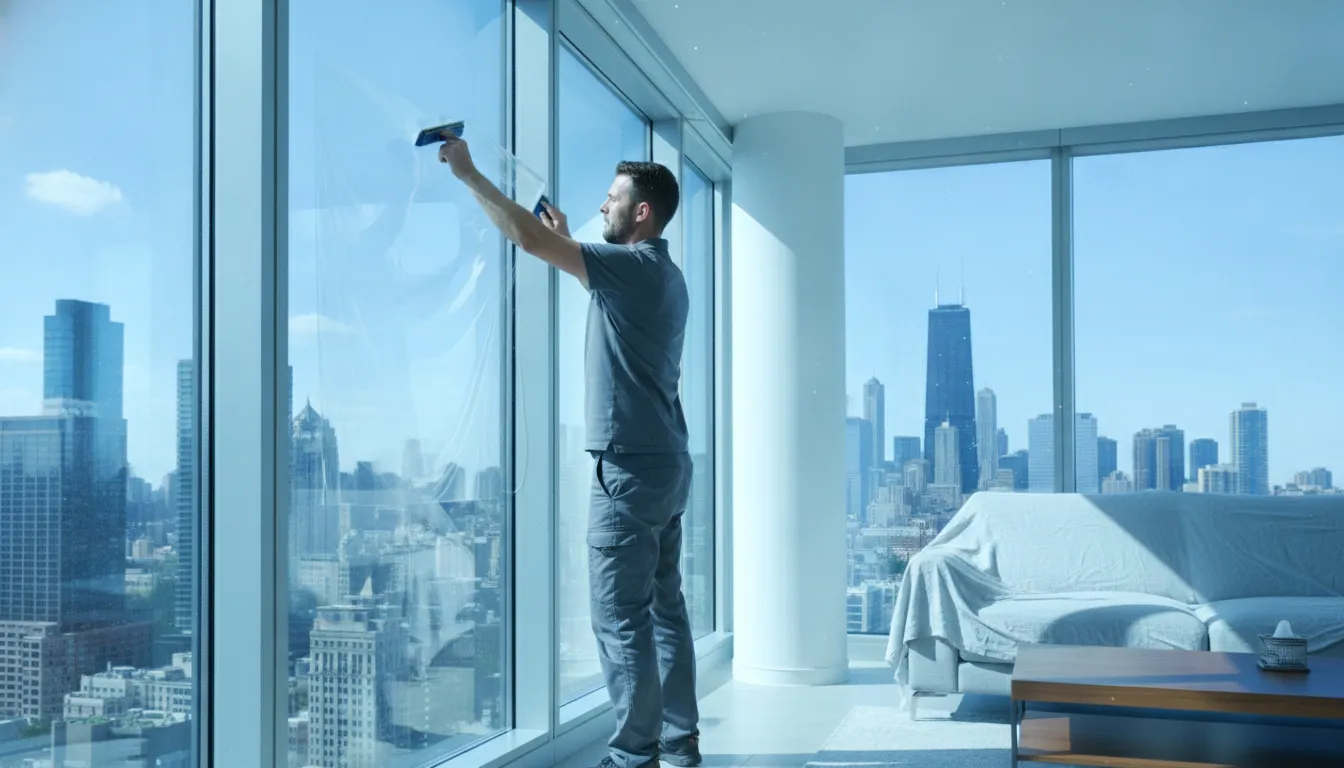
Rental property windows affect more than curb appeal. In Chicagoland, they can influence winter comfort, summer heat, interior fading, and the day-to-day experience tenants associate with a well-managed building. For landlords, the right film can improve existing glass without the disruption of a full window replacement.
For landlords evaluating window film rental property chicago options, professional installation can help control solar heat gain, block up to 99% of harmful UV rays. And support tenant comfort while protecting floors, furnishings, and other interior surfaces.
Schedule a free estimate for your Chicagoland rental property and discuss the right window film approach for your units.
The best choice depends on the property, window type, and the problem you are trying to solve. Before comparing solar control, privacy, and safety films, it helps to understand why window upgrades can be practical for both rental operations and tenants. Sullivan’s residential window film in Chicagoland guide provides additional context on how these systems work.
Window Film for Chicago Rental Properties: Why Landlords Install It
For landlords, window film is a practical property upgrade that addresses energy performance, interior protection, and tenant comfort without the disruption of replacing every window. In older Chicago rental buildings especially, improving the existing glass can be a more manageable way to make units feel more comfortable and appealing.
Managing seasonal heat gain and heat loss
Windows can be a major source of energy inefficiency. The U.S. Department of Energy reports that about 30% of a home’s heating energy is lost through windows. During the cooling season, about 76% of sunlight falling on standard double-pane windows enters the home and becomes heat. In units with strong sun exposure, that added heat can make rooms uncomfortable and place more demand on the building’s cooling system.
Solar control window film helps manage that exposure while preserving useful natural light. The result is a more balanced indoor environment for residents and a more thoughtful approach to operating costs. Landlords evaluating window film rental property chicago projects can review the broader considerations in this guide to residential window film in Chicagoland, then assess which exposures and window types matter most across the property.
Protecting finishes and furnishings from sunlight
High-quality window film can block 99% of harmful UV rays. That protection helps reduce sun damage to flooring, furniture, artwork, and tenant possessions, which may help a landlord preserve the finished appearance of a unit between turnovers. It also gives residents an added layer of everyday UV protection without requiring them to keep blinds closed all day.
- Preserve flooring and furnishings between tenant turnovers.
- Reduce sun-related fading without requiring residents to keep blinds closed.
- Add everyday UV protection for tenants and their belongings.
Improving existing windows without full replacement
The Department of Energy identifies window attachments as a way to improve energy performance and appearance without replacing the window assembly. For rental owners, that can make film a cost-effective improvement when the frames and glass remain serviceable. Explore more considerations around energy savings for your rental property.
Because film performance varies by category and glass type, a professional assessment is important. Sullivan’s Tinting can recommend an appropriate product and install it with a clean, factory-finished look across individual units or a multi-unit property.
Tenant Comfort and Retention: The ROI Angle
For a landlord, window film is not simply a cosmetic improvement. It is a property upgrade that can make units more comfortable, protect interiors, and give residents another reason to renew. Those benefits matter in a competitive Chicago rental market, where small quality-of-life improvements can influence how tenants judge their home.
Comfort tenants notice every day
Uneven temperatures and harsh sunlight are persistent frustrations, especially in apartments with large, sun-facing windows. The U.S. Department of Energy explains that window coverings can help regulate temperatures, improve comfort, and lower energy bills. Professionally selected window film can help reduce unwanted solar heat while preserving useful daylight, making rooms feel more balanced across changing seasons. Landlords can learn more about energy savings for your rental property before choosing a solution.
Glare is another practical concern in Chicago high-rises. Tenants who work from home may struggle with reflections on monitors and bright patches across a desk. Reducing glare can create a more usable workspace and support productivity without requiring residents to keep blinds closed all day.
Protection that supports long-term value
Window film can also address concerns that are less visible but important to residents and owners. High-quality film can block up to 99% of harmful UV rays, helping protect flooring, furnishings, and tenant possessions from sun damage. The CDC notes that prolonged ultraviolet exposure can contribute to premature aging, wrinkles, and skin cancer, so UV protection adds a meaningful comfort and wellness benefit for occupants.
For properties where breakage or intrusion is a concern, safety and security film strengthens glass against breakage. It does not make a window impossible to break, but it can help hold the glass together and make forced entry more difficult. A landlord may also reduce avoidable maintenance and replacement work when the right film is professionally installed.
Turn comfort into a retention advantage
No single upgrade guarantees a renewal, and turnover costs vary by property. Still, a more comfortable, functional, and well-maintained unit gives tenants tangible value throughout the lease. That can support satisfaction and retention while helping the property stand out during showings. For landlords evaluating window film rental property Chicago options, the strongest ROI case combines recurring tenant benefits with protection for the building’s existing assets.
Which Film Types Work Best for Multi-Unit Properties?
There is no single best window film for every building. A Chicago apartment property may need solar control on sun-facing upper floors, privacy treatment at street level, and safety film in entry-adjacent units. The right specification depends on each elevation, window type, tenant concern, and management goal.
| Film type | Best fit | Primary benefit | Planning consideration |
|---|---|---|---|
| Solar control film. | South- and west-facing units, upper floors, and rooms with persistent glare. | Reduces solar heat gain while preserving daylight. | Modern films can reflect unwanted infrared radiation while allowing sufficient visible light into the unit. Review the glass specification before selecting a film. |
| Privacy or decorative film. | Street-level apartments, bathrooms, bedrooms, and units facing nearby sidewalks or buildings. | Improves privacy without making rooms feel closed off. | Patterns, frosted finishes, and other decorative options can support the property’s design while addressing renter concerns. See privacy window film for tenants for related privacy considerations. |
| Safety and security film. | First-floor units, lobby-adjacent windows, and areas where accidental impact or intrusion is a concern. | Helps strengthen glass against breakage. | It is a protective upgrade, not a substitute for locks, monitored access, or other building security measures. Review the appropriate safety and security film specification for the glass and risk profile. |
| Low-E film. | Units that need more consistent comfort across Chicago’s heating and cooling seasons. | Supports year-round insulation and more stable indoor temperatures. | Confirm compatibility with the existing glazing and frame system. A professional assessment helps prevent mismatched film selections across a multi-unit property. |
Match the film to the building, not just the tenant request
Landlords often get better results by creating a simple film plan for the property. Check each condition across your building to match the right film type to the right location:
- South- and west-facing windows. Solar control film manages heat gain and glare.
- Street-level and walkway-facing units. Privacy or decorative film provides screening.
- First-floor and common-area glass. Safety and security film adds impact resistance.
- Units with persistent temperature swings. Low-E film delivers year-round insulation.
This avoids using a dark solar film where privacy is the real issue or specifying decorative film where heat rejection is the priority.
Protect the window warranty and installation quality
Before applying film to double-pane windows, verify that the window manufacturer will continue to honor its warranty. Some manufacturers may restrict aftermarket film applications. Professional installation is also important for a factory-finished look and to reduce bubbling or peeling. It helps ensure that the selected product is installed according to the glass and film manufacturer’s requirements, rather than treating every unit as interchangeable.
Can Tenants Request Window Film Installation or Removal?
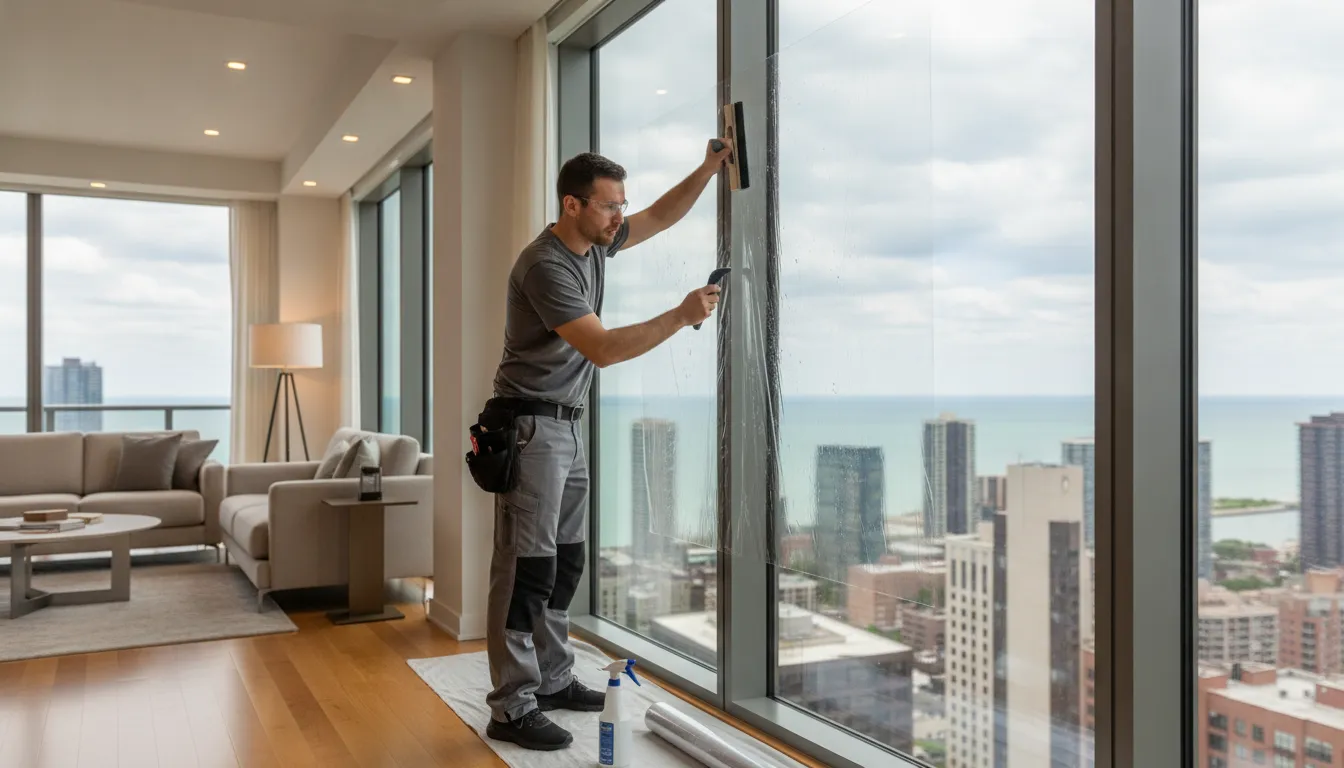
Yes, a tenant can request window film, but the request should go through the landlord or property manager before any work is scheduled. Lease terms often control alterations to windows, walls, and other building components. Even a well-intended improvement may require written approval, an approved installer, or documentation about the product and its removal.
The strongest request explains how the upgrade can benefit both parties. Solar control film may improve comfort by helping regulate indoor temperatures, while an energy-efficient window attachment can improve existing windows without replacing them. A tenant might also explain a specific concern, such as excessive afternoon glare, fading furnishings, or a warmer room. Positioning the project as a professionally managed property improvement is more useful than presenting it as a personal decorating choice.
Who pays for the installation?
Payment is a matter of negotiation and should be confirmed in writing. A landlord may cover the work when the film supports building-wide energy efficiency, tenant comfort, privacy, or maintenance goals. A tenant may offer to pay, but that does not replace the need for approval. The agreement should identify the film category, the rooms or units included, the installer, maintenance expectations, and responsibility for removal when the lease ends. It should also clarify whether the film remains with the property or must be removed before move-out.
Is window film permanent, and can it be removed?
Professional-grade window film is designed to be removable and should not harm the underlying glass when selected and removed by experienced professionals. That does not mean every product or installation is interchangeable. Before approving work, the property owner should verify the window manufacturer’s warranty, especially for double-pane windows. The Florida Solar Energy Center’s guidance on window film and window warranties recommends confirming that the manufacturer will continue to back the warranty after aftermarket film is applied.
Professional installation also matters at move-out. Correct preparation and application help prevent bubbling, peeling, residue, and an uneven finish that could create disputes over the window’s condition. Sullivan’s consultative approach includes explaining how the recommended film may affect the windows, appearance, warranty considerations, and eventual removal before installation begins. For any window film rental property Chicago project, securing written permission and documenting the approved scope protects both tenant and owner.
Getting a Free Estimate for Multiple Units
Planning window film for a rental property is easier when the project starts with a site-specific review rather than a generic package. Sullivan’s Tinting provides free estimates with no obligation for landlords and property managers considering one unit, several apartments, or a larger multi-unit property. The estimate gives you an opportunity to discuss the building’s goals before deciding whether to move forward.
Each estimate is custom. Sullivan’s considers window measurements, the type of film that best fits the property, the number and arrangement of windows, access requirements, and the complexity of the installation. A solar control film may be appropriate for units with heat and glare concerns. While privacy, decorative, or safety and security film may better address other areas of the property. Because every building is different, Sullivan’s does not publish one-size-fits-all pricing.
The consultation can also help you plan the work around tenants and property operations. You can discuss which units or common areas should be prioritized, what the finished appearance should look like, and how professional installation can maintain a clean, factory-finished result. Sullivan’s takes a consultative approach, helping you understand the available options before recommending a practical path. Installation is handled professionally, not as a do-it-yourself project.
Sullivan’s has more than 36 years of experience serving the Chicagoland area, including Wauconda, Barrington, Chicago, Northbrook, Schaumburg, Arlington Heights, and Hoffman Estates. The company also serves Wisconsin markets such as Delavan, Elkhorn, and Racine. That local experience can be useful when a property portfolio spans multiple communities and needs consistent guidance.
To discuss your units and receive a no-obligation recommendation, get a free estimate from Sullivan’s Tinting. Bring your window count, property address, and main concerns to the consultation so the team can evaluate the project accurately.
Frequently Asked Questions
Can window film be installed on rental properties in Chicago?
Yes. Window film can be professionally installed in apartments, single-family rentals, and multi-unit buildings to address solar heat gain, glare, privacy, UV exposure, or glass safety. The appropriate product depends on the window type, unit location, and property goal. Before approving the work, have the installer review the existing glass and confirm that the installation plan fits the building.
Is landlord permission required to install window film in a Chicago apartment?
Tenants should obtain written landlord or property-manager approval before any installation or removal. The approval can identify the film category, affected windows, installer, and responsibility for future removal. Landlords should also verify the window manufacturer’s warranty first, because some double-pane manufacturers may not continue coverage after aftermarket film is applied. The Florida Solar Energy Center recommends confirming warranty coverage.
Does window film improve privacy without making rental units dark?
Privacy and decorative films can improve screening in street-level units, bathrooms, and urban apartments while preserving useful daylight. Product performance varies, so a consultation should consider the direction of view, lighting conditions, and whether privacy is needed during the day, at night, or at all times. A professional installer can recommend the appropriate finish rather than treating every window the same.
Can window film protect furniture and floors in a rental unit?
High-quality window film can block up to 99% of harmful UV rays, helping reduce sun-related fading of flooring, furniture, and other interior materials. It may also improve comfort by managing solar heat and glare. It is a protective upgrade, not a guarantee that furnishings will never fade, since visible light, heat, material type, and exposure duration also affect results.
Is window film removable when a tenant moves out?
Professional-grade film is designed to be removable when the property owner needs a change, provided removal is handled correctly. Professional installation also helps maintain a factory-finished appearance and avoid bubbling or peeling. Confirm the removal plan in writing before installation, especially when a tenant requested the upgrade or the lease requires the window condition to be restored.
Ready to Plan Window Film for Your Rental Property?
A property-specific recommendation can help you compare film options for tenant comfort, privacy, glare control, or added glass protection. Schedule a free estimate for your Chicagoland rental property and discuss the right approach for one unit or multiple locations.