
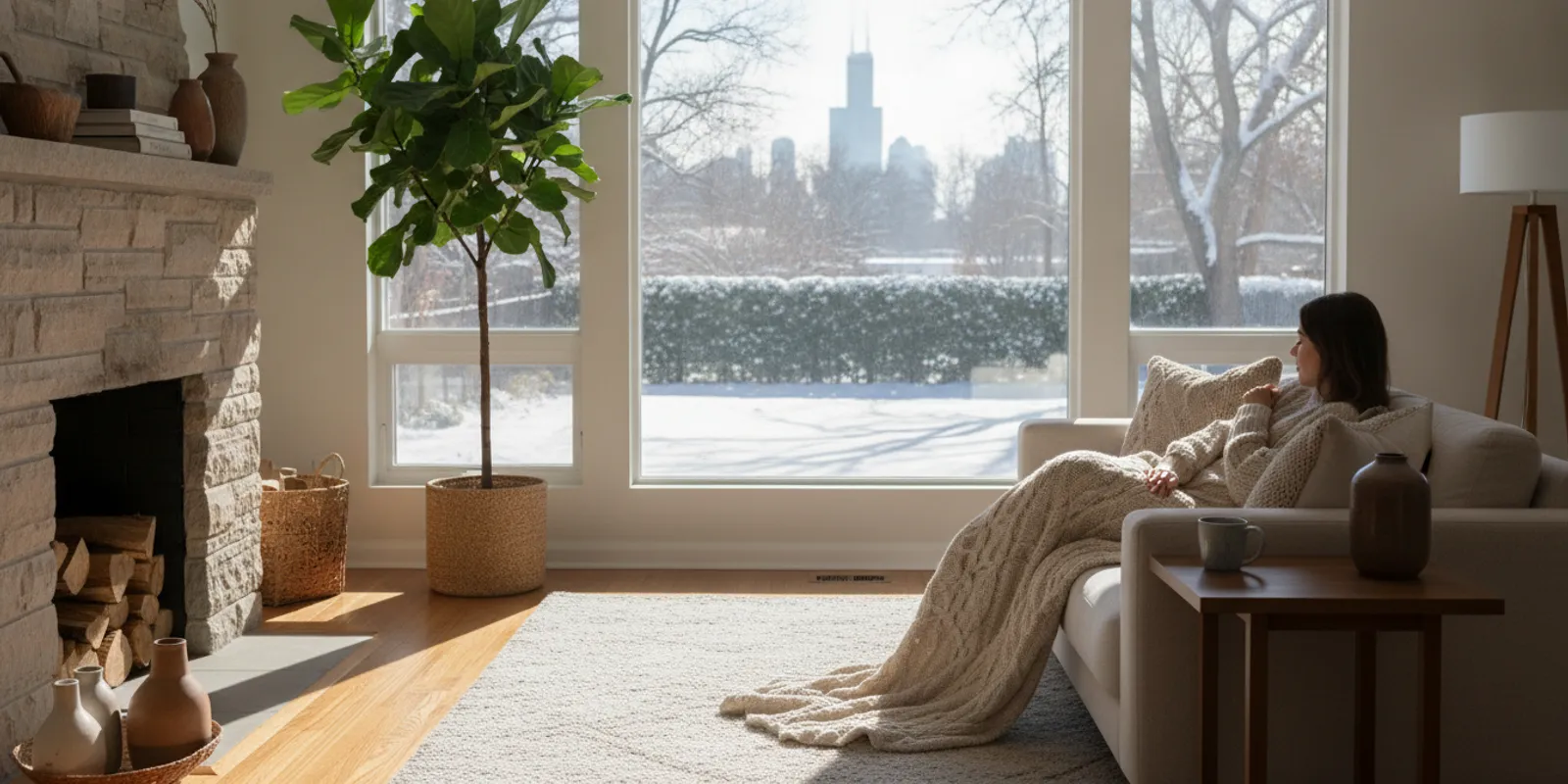
Cold Chicago winters can make a sunny room feel bright but uncomfortable, while a shaded room near a window may feel chilly even when the thermostat is set comfortably. The right window film winter comfort Chicago homes plan starts with a clear distinction: film can change how sunlight, glare, and UV rays affect a room, but it is not a substitute for repairing air leaks or upgrading poorly performing windows. Understanding that difference helps you choose an option that fits the actual problem.
Request a free estimate for your home
Window film winter comfort Chicago homes: How can it affect a room?
Window film is a thin layer professionally applied to glass. Depending on its design, it can manage solar heat gain, reduce glare, provide UV protection, add privacy, or help hold broken glass together. Those functions are not interchangeable, and no single film delivers every benefit to the same degree.
In winter, a key consideration is the difference between sunlight coming through the glass and heat escaping from the home. A solar-control film is designed to manage the sun’s energy. That can be useful when a room gets uncomfortable direct sun, but on a cold, sunny day it may also reduce some solar warmth entering through the treated glass. The best choice depends on the room, window orientation, glass, and what bothers you most.
Some people describe a cold feeling near a window as a draft. Film does not repair a loose sash, failed weatherstripping, or an opening around a frame. Air movement should be addressed at its source. A window film project is better considered when the glass itself creates glare, intense sun, UV concerns, or an uncomfortable contrast in the room.
For a broader look at residential options and what different products are intended to do, see this residential window film guide for Chicagoland homes. If you are weighing a specific room or goal, the room-by-room guide to choosing home window film can help organize the questions to ask.
What winter problems can film help address?
Window film is most useful when the discomfort is connected to the sunlight or the glass experience, rather than an unsealed opening. Think about when and where the problem appears. Does a home office become hard to use when low-angle sunlight crosses the desk? Does a living room have distracting glare on a television? Is sunlight fading furnishings over time? Different concerns point toward different product conversations.
- Glare: Select solar-control options may reduce harsh brightness and improve the comfort of a room used for reading, working, or watching a screen. The suitable level depends on how much daylight you want to preserve.
- Uneven sun exposure: A room with strong direct sun can feel noticeably different from the rest of the home. A film consultation can consider the exposure and glass before recommending a product.
- UV exposure: Window film can provide UV protection. Sullivan’s describes residential film options that block up to 99% of harmful UV rays, which can help protect interiors from fading. See the explanation of how window film blocks UV rays.
- Privacy: Decorative or privacy films can change visibility through a window. The right design depends on the room and desired look; privacy effects may vary with lighting and the film selected. Explore this guide to privacy window film for homes.
Film is not a universal winter insulation fix. If you feel moving air, see deteriorated caulk, or notice a window that does not close properly, deal with those conditions separately. The U.S. Department of Energy’s Pacific Northwest National Laboratory describes window retrofits as a way to address issues including air leakage and HVAC load in multifamily buildings; that is useful context for evaluating the whole window assembly, not proof that a particular film will solve a draft in a single home. Read its report on affordable window retrofit solutions.
Does winter window film stop drafts or keep heat inside?
Not by itself in the way many homeowners expect. Professional window film adheres to the glass; it does not bridge a gap between the sash and frame or replace missing weatherstripping. If you can feel air moving near a window, first identify whether the source is the glass, the operable sash, the frame, or another opening. A qualified window or building professional can help assess repairs when needed.
Temporary plastic insulating film is another product category. A Bonneville Power Administration weatherization article suggests covering interior windows with insulating film as a quick alternative for keeping drafts and moisture at bay, and stresses sealing it tightly to the frame. That advice is about temporary film over the window opening, not the same application or performance claim as professionally installed architectural window film. Read the BPA article on weatherization and insulating film.
This distinction matters when you compare solutions. If your goal is to reduce air infiltration, a temporary interior covering or repairs to the window assembly may be more directly relevant. If your goal is to address glare, manage solar heat gain, protect furnishings from UV, or add privacy, professional window film may be worth evaluating. A home may need more than one approach to address different sources of discomfort.
Window film winter comfort Chicago homes: Which film type fits?
Start with the outcome, then talk through the glass and room conditions. Solar-control films are designed to manage solar energy and glare. Their performance and appearance vary by product, so it is important not to assume that every option rejects the same amount of heat or looks equally light from inside. A comparison of residential window films for heat reduction can help you understand why product selection matters.
Decorative and privacy films serve different purposes. They can alter visibility or add a design element, but they are not automatically the best choice for solar control. Safety and security films are intended to help hold glass together if it breaks; they should not be treated as a draft seal or as a substitute for appropriate security measures. Sullivan’s also offers other film categories, each with a different use. The safety film guide explains that distinction.
| What you notice | Film category to discuss | What it may address | What it does not replace |
|---|---|---|---|
| Strong sun or troublesome glare | Solar-control film | Managing solar heat gain and glare, depending on the product | Repairing an air leak or correcting a window that will not close |
| Concern about fading from sunlight | Film with UV protection | Reducing UV exposure to interior furnishings | All causes of fading or the need to manage direct sunlight in other ways |
| Want more privacy or a finished design | Privacy or decorative film | Changing visibility or adding a patterned, frosted, or decorative appearance | Thermal insulation or dependable privacy in every lighting condition |
| Want glass to stay together better if broken | Safety or security film | Helping hold glass fragments together, depending on the system | Eliminating breakage, intrusion, or the need for a complete security plan |
The table is a starting point, not a product specification. A professional should confirm the film’s intended use and compatibility with your particular glass. That is especially important when windows have specialized coatings, multiple panes, or existing film.
Before choosing, think through the trade-offs that matter most to your household. If you want glare reduction, ask how the recommended product balances that goal with a clear view and daylight. If you are focused on winter comfort, ask directly whether the film could change the amount of solar warmth you feel on a sunny day. If your top concern is privacy, ask how the appearance works in daytime and after dark; do not assume a reflective look guarantees privacy whenever indoor lights are on.
These questions help distinguish a product’s primary purpose from secondary benefits. A film may offer more than one advantage, but that does not make it a replacement for draft sealing, window repair, or a heating-system evaluation. Set one or two priorities for each room and ask the installer to explain how the proposed option meets them. If a recommendation sounds like it solves every issue at once, ask for clarification about its limits and which concerns still need a separate solution.
How do window direction and room use change the decision?
Chicago homes can have very different window conditions from one room to the next. The direction a window faces, nearby buildings or trees, window size, and the room’s use all influence how sunlight feels. Direction is a helpful clue, not a replacement for assessing the actual glass and site.
- Rooms with strong afternoon sun: If the room becomes bright or uncomfortable late in the day, ask whether solar-control film could help manage glare and solar heat gain. Also discuss the amount of daylight you want to retain during darker winter months.
- Rooms used for work or screens: Note where reflections appear and at what hours. A specific glare complaint may call for a different recommendation than a general desire to reduce heating needs.
- Rooms with valuable furnishings: If fabrics, artwork, or flooring receive direct sun, ask about UV protection and remember that fading can have more than one cause. Window film addresses UV exposure, but it cannot prevent every source of fading.
- Rooms where privacy matters: Describe when you need privacy and from which sightlines. Some films change appearance or visibility depending on the lighting balance indoors and outdoors, so discuss the conditions that matter in your home.
- Rooms that feel cold near the glass: Separate a cold surface or radiant discomfort from an actual draft. If air is moving, film on the pane will not seal the opening; if there is no noticeable airflow, explain the sensation and timing so the installer can assess whether film is relevant.
It can help to compare rooms rather than treating all windows as one project. A sunny living room, a shaded bedroom, and a home office may have different priorities. You might choose to address glare in one area, privacy in another, and leave a window untreated where preserving winter sunlight matters most. That does not mean every room needs a separate film; it means the selection should follow the objective rather than the assumption that one product has identical results everywhere.
Seasonal priorities also deserve a direct conversation. A homeowner may want less intense sun in summer yet value passive sunlight during winter. Ask the installer to explain the trade-offs for the proposed product, including expected appearance and daylight, instead of relying on a broad label such as “heat rejecting.” Product names alone do not tell you how the film will look or perform on your particular windows.
How should you assess rooms before requesting an estimate?
A short room-by-room assessment makes the conversation more specific. Rather than asking only for a film that “keeps the house warm,” note what happens at each window and at what time of day. That gives the installer a useful picture of your priorities and helps avoid choosing a product based on one symptom alone.
- Identify the main complaint. Is it glare, direct sun, fading, privacy, or a draft? Write down the one issue you most want to improve for each room.
- Notice the time and season. Record when sunlight reaches the glass and whether the room feels uncomfortable on clear days, cloudy days, or both. This helps separate a sun-related issue from a general heating or air-leak concern.
- Describe the window. Note which windows are fixed or operable, their approximate size and orientation if known, and whether you see existing film or unusual glass features. Do not try to identify a glass coating by appearance alone.
- Set daylight and appearance preferences. Consider whether you want to preserve a bright view, reduce visible glare, create privacy, or add a decorative finish. Bring photos of the room if they help explain the issue.
- List other work already planned. If you are repairing windows, replacing them, or addressing weatherstripping, mention that before selecting film. Timing and product compatibility are worth discussing with the professionals involved.
Homeowners who are comparing film with a larger window project may also find it useful to review window film versus window replacement considerations. Film and replacement are not equivalent choices, and the right comparison depends on the condition and performance of the existing windows.
What should a professional estimate cover?
A free estimate is an opportunity to explain your goals and receive a recommendation based on the actual project. Sullivan’s Tinting is family-owned and operated and has served the area since 1988. Recommendations and pricing are customized to the windows, film type, project complexity, and location; there is no one price that fits every home.
For a useful consultation, ask the installer to clarify:
- Which specific concern the recommended film is intended to address.
- How the option may affect visible light, glare, appearance, and winter sunlight entering the room.
- Whether the proposed film is appropriate for each window’s glass and condition.
- What the professional installation involves, including preparation, access, and expected curing or care instructions.
- What manufacturer-backed warranty applies to the selected product and what its terms cover.
A careful recommendation should account for trade-offs. For example, a film selected to reduce strong solar exposure may not be the best fit if your highest priority is preserving every bit of winter sunlight in a north-facing room. Likewise, a privacy film should be discussed for the particular viewing angles and lighting conditions you care about. You can also read about why professional window film installation matters and film lifespan and warranty considerations.
Get a no-obligation estimate for your windows
Frequently Asked Questions
Can window film make a Chicago home warmer in winter?
It should not be assumed to work as a whole-home insulation upgrade. Film can affect sunlight, glare, UV exposure, and other window-related concerns, but solar-control products may also reduce some incoming solar warmth. Ask for a recommendation that accounts for the room, window exposure, and your winter priorities.
Will window film fix a drafty window?
No. Film applied to glass does not repair gaps around a sash or frame. Drafts call for finding and addressing the air-leak source. Temporary insulating film applied across an opening is different from professionally installed architectural window film.
Can I use the same film throughout the whole house?
Not necessarily. Rooms differ in orientation, sunlight, glass, use, and privacy needs. A film that makes sense for a bright west-facing room may not be the best match for a room where you want to preserve winter sun. Review each area with the installer.
Does window film make a room dark?
Appearance and visible-light transmission vary by film. Some products are designed to balance solar control with daylight, while decorative or privacy products have their own looks and purposes. Explain how bright you want the room to remain and review suitable options before deciding. See what to know about whether window film will darken a home.
When is the best time to plan a film project?
You can discuss a project whenever you know which rooms need attention. Planning ahead gives you time to compare goals and coordinate with window repairs or other work. An estimate can help determine the appropriate film and installation plan for your home.
Ready to plan for better winter comfort?
Begin by identifying whether the issue is harsh sunlight, glare, UV exposure, privacy, or air leakage. Film can be a useful upgrade when its function matches the problem, while drafts and window defects may need separate attention. A personalized assessment helps you weigh daylight, comfort, glass compatibility, and appearance before choosing an option.
Request your free estimate from Sullivan’s Tinting
With a clear goal and professional guidance, you can make a more informed decision about window film for your Chicago-area home.