
If you are comparing window tint and window film, the terms can sound like two different products. For homes and commercial properties, window tint usually describes the darker or shaded appearance people want, while window film is the broader category of professionally installed materials that can manage sunlight, improve privacy, or change the look of glass. The right choice depends on what your windows need to do—not just how dark you want them to look.
Request a no-obligation free estimate
What do people mean when they say “window tint”?
In everyday conversation, “window tint” often means a film that gives glass a shaded look. People may use the phrase when they want less glare, a more consistent appearance, greater privacy, or a cooler-feeling room. It is a familiar shorthand, but it does not describe every film option or every reason to treat glass.
For architectural glass, window film is the more inclusive term. Some films are selected mainly for solar control; others are designed for decorative effects, privacy, or safety and security. A film can be relatively subtle or make a more noticeable visual change. The category name alone does not tell you its shade, reflectivity, performance, or suitability for a particular window.
That distinction matters because a property owner who asks only for “dark tint” may be focused on appearance when the real issue is afternoon glare, fading, uncomfortable heat, or sightlines into a room. Describing the problem first gives a professional installer a better starting point for recommending a film type and appearance.
Is window tint different from window film?
In many residential and commercial conversations, the terms overlap. “Window tint” is commonly used to describe a shaded look or the act of adding a film, while “window film” refers to the full range of materials applied to glass. Neither phrase, by itself, identifies the film’s construction or performance. A product specification and a review of the actual glass are needed to understand what a particular option is designed to do.
Think of “tint” as a description of one possible look, not a guarantee of one specific result. Two films can look similar from inside a room but be designed for different priorities. Conversely, a solar-control film does not have to make a room feel cave-like. Choosing by shade alone can overlook the balance among glare, visible light, heat rejection, UV protection, and the view outdoors.
Window film is also not a single-purpose solution. Decorative film can add a pattern or a frosted appearance. Privacy film can change visibility through glass, with results that depend on film design and lighting conditions. Safety and security films are intended to help hold glass together when it breaks; they are not interchangeable with solar-control or decorative films. Review the window film service options to see the main architectural applications.
Which kind of window film matches your goal?
Begin with the outcome you want. A clear goal helps narrow the category before you compare shades and finishes. The table below is a starting point, not a substitute for checking your specific glass and conditions.
| Primary goal | Film category to discuss | What to consider |
|---|---|---|
| Reduce solar heat gain or glare | Solar-control film | Desired comfort, daylight, view, window direction, and existing glass |
| Increase privacy or alter appearance | Decorative or privacy film | Pattern, opacity, room use, natural light, and day-versus-night visibility |
| Help hold broken glass together | Safety and security film | Glass type, frame conditions, intended level of protection, and installation details |
| Change how a space looks without replacing glass | Decorative film | Finish, visual consistency, dimensions, and how the design fits the room |
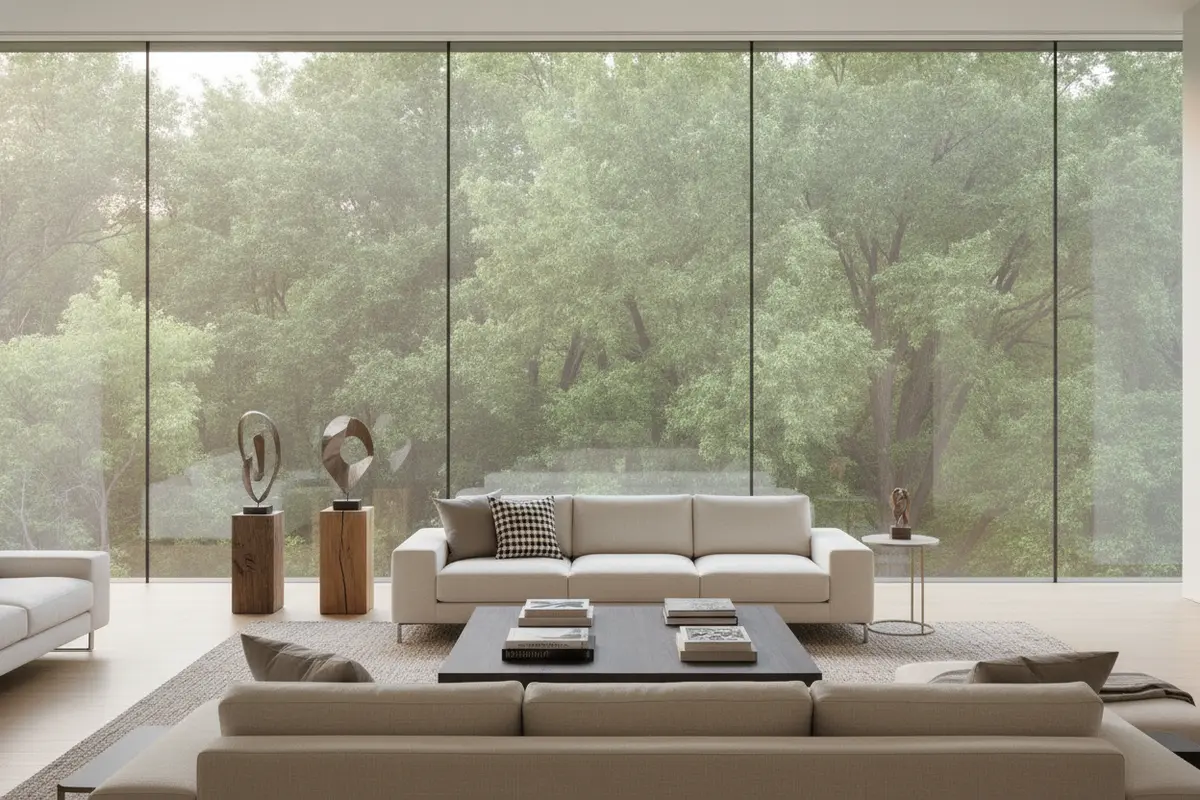
Solar-control film
Solar-control films are considered when direct sunlight contributes to excess heat, glare, or fading concerns. Different products can have different appearances and performance characteristics, so do not assume every option reduces heat or glare to the same degree. Ask how the recommended film balances heat rejection and solar heat gain control with natural light and a clear view. For broader information on building energy efficiency, the U.S. Department of Energy is a useful starting point: energy.gov.
Window film can block 99% of harmful UV rays, which can help protect interiors from UV exposure. It is one part of an overall approach to managing sunlight; it does not mean that every product has identical specifications or prevents all fading. Materials, light, and heat can all affect furnishings over time. See the explanation of how window film blocks UV rays for more on this benefit.
Decorative and privacy film
Decorative film can add a frosted, patterned, or otherwise distinctive look to glass. It can be useful where you want to soften visibility without replacing a window or partition. The amount of privacy depends on the selected film and the conditions on each side of the glass. A design that obscures a view in one lighting situation may behave differently when indoor and outdoor light levels change.
Before choosing a finish, consider what someone should be able to see from both sides, how much daylight the room needs, and whether the film should cover the full pane or only part of it. Explore privacy window film for homes and decorative film options for examples of these distinct goals.
Safety and security film
Safety and security films are selected for a different reason than a dark appearance. They are designed to strengthen the glass assembly by helping hold fragments together if glass breaks. They are not the same as a barrier that makes glass unbreakable, and they do not replace a complete security plan. The appropriate approach depends on the glass, frame, and the concern you are trying to address. Read the guide to safety film for glass to understand this category more clearly.
What benefits can window film provide?
The practical benefits vary by film type, product, window, and installation. Match a benefit to a specific need rather than expecting one film to solve every sunlight or privacy concern.
- More comfortable rooms: Solar-control film can help manage solar heat gain, which may be useful where sunlight makes a room uncomfortable. The result depends on the product, orientation, glass, and other conditions.
- Less glare: A suitable film can reduce the effects of bright sunlight on screens and work areas. Consider how much light you want to retain as well as the glare you want to manage.
- UV protection: Window film can block 99% of harmful UV rays, helping protect interior surfaces from UV exposure. It does not eliminate every cause of fading.
- Privacy: Decorative and privacy films can obscure or soften views while preserving some daylight, depending on the chosen design.
- A refreshed appearance: Film can change the appearance of glass without replacing it. A consistent finish can give a room or facade a more finished look.
- Help with broken glass: Safety and security films can help hold fragments together after breakage, depending on the film and the installed glass assembly.
For a home, the priorities might be a sunny living room, a street-facing bathroom, or a room where furnishings receive strong daylight. For a business, the focus may be glare at workstations, meeting-room privacy, or comfort for people near windows. Sullivan’s serves residential and commercial window film projects across Chicagoland and select Wisconsin communities. The service area page lists locations, and the home page provides an overview of the company’s work.
Will window film make a room too dark?
Not necessarily. A dark appearance is not a requirement for every film, and visible light, privacy, and heat-control performance are not interchangeable measures. Some property owners want a visible change; others want help with comfort or UV exposure while keeping the room bright. A professional recommendation should begin with your preferred balance, not an assumption that darker is always better.
Look at the room at different times of day. Notice where direct sunlight lands, when glare affects screens, and whether the window provides a view you want to preserve. Consider how a film will appear from both indoors and outdoors. If your concern is specifically the amount of daylight, the guide to whether window film makes a house dark can help frame the questions to ask.
It can also help to identify the purpose of each pane. A sunny room may call for solar-control performance, while a bathroom or glass partition may need a privacy treatment. Applying the same visual choice everywhere may not meet the needs of every room. A room-by-room plan can keep the appearance cohesive while allowing the film type to fit each use.
What should you check before choosing a film?
Film selection is not only a question of color or darkness. The window itself matters. Glazing type, existing coatings, pane construction, dimensions, condition, and exposure can affect which products are suitable. A product that is appropriate for one pane should not automatically be assumed suitable for another. Professional assessment helps identify those factors before installation.
Prepare a short project brief before requesting recommendations:
- Name the problem. Is the main concern heat, glare, UV exposure, privacy, appearance, or glass breakage?
- Identify the affected windows. Note room, window direction if known, approximate size, and whether the concern applies to every pane or only a few.
- Describe the desired look. Say whether you want a subtle finish, a more noticeable shade, a decorative pattern, or a frosted effect.
- Set priorities. Rank what matters most: preserving daylight, reducing glare, improving privacy, maintaining the view, or changing the facade’s appearance.
- Ask about glass suitability. Request that the installer consider the actual glass and explain why the proposed film fits it.
- Clarify the installation and warranty. Ask what preparation is involved, what a finished result should look like, and which manufacturer-backed warranty applies to the selected film.
These details make a consultation more useful. They also help avoid choosing based on a single label such as “dark,” “reflective,” or “privacy.” For a closer look at the value of skilled work, read about professional window film installation. A precision-finished application should suit the glass and the room, with a clean, factory-finished look.
Why does professional installation matter?
Window film is applied to existing glass, so the result depends on more than the material itself. Measuring, preparing the glass, selecting a compatible product, and applying it carefully all affect how the completed surface looks and performs. Professional installation also allows a project to be planned around the window’s dimensions and the property’s needs.
A qualified installer can explain the differences among available film categories, discuss the trade-offs, and review the glass before recommending a solution. Ask how the film will look from inside and outside, what level of daylight to expect, and how to care for it after installation. You can also review window film lifespan and warranty considerations as part of your decision.
For a family-owned and operated provider serving the region since 1988, Sullivan’s Tinting offers professional window film installation for residential and commercial applications. Its approach emphasizes personalized recommendations and free estimates rather than published one-size-fits-all pricing. Project details such as measurements, film selection, complexity, and location affect the estimate. The company’s background and frequently asked questions offer more context about its process.
How can you compare film options during an estimate?
A useful estimate discussion should connect each recommendation to your goals. Ask the installer to explain why a category or film is being considered, what trade-offs it involves, and how it is expected to appear on your glass. You do not need to know technical jargon in advance. Clear questions are enough to make the comparison more practical.
- Which concern is this film meant to address?
- What will change in the room’s light, view, privacy, or appearance?
- Are there different options if I want more daylight or a less noticeable finish?
- Is the product appropriate for the existing glass and window construction?
- What does professional installation include, and what should I expect from the finished edges?
- What manufacturer-backed warranty applies to this product and installation?
Do not compare two films only by how dark they look in a small sample. Ask whether the comparison reflects the performance you care about, and discuss how the product will look on the actual windows. If only certain areas have a problem, ask whether a targeted plan makes sense instead of treating every pane the same way. For more project-planning context, see the room-by-room guide to choosing home window film.
Get a free estimate for your windows
Frequently asked questions
Is window tint just another name for window film?
People often use the terms interchangeably, especially when describing a shaded look. Window film is the broader term for architectural films used for solar control, privacy, decorative effects, and safety or security purposes. Ask about the specific product and its intended use rather than relying on the label alone.
Does darker window film always block more heat?
No. Appearance and heat-control performance are different considerations, and products vary. Discuss heat rejection, solar heat gain control, visible light, and the desired appearance together. A professional can help compare suitable options for your glass and priorities.
Can window film provide privacy and still let daylight in?
Some privacy and decorative films are designed to obscure visibility while allowing light through, but the level of privacy and light depends on the film. Lighting conditions can also affect what people see through the glass. Explain the view you want from each side and ask how the selected film will behave throughout the day.
Can one film address heat, glare, privacy, and glass safety?
Do not assume one product is designed to meet every goal. Solar-control, decorative/privacy, and safety/security films serve different purposes, and product characteristics vary. Rank your priorities and ask which needs can be addressed together and where a separate film category may be appropriate.
How do I get the right recommendation for my property?
Describe the problem, the affected windows, and the look you prefer. A professional assessment can consider the existing glass and help compare options. Sullivan’s provides free estimates so property owners can discuss project needs and personalized recommendations.
Ready to choose the right window film?
“Window tint” may describe the look you have in mind, but the right architectural window film depends on what you want your glass to do. Start with the room’s real concern, compare film categories, and consider appearance, performance, and glass suitability together. That approach helps you make an informed decision for your home or business.
Request your free window film estimate
Sullivan’s Tinting can help you review your priorities and explore a professionally installed solution with a factory-finished look.