
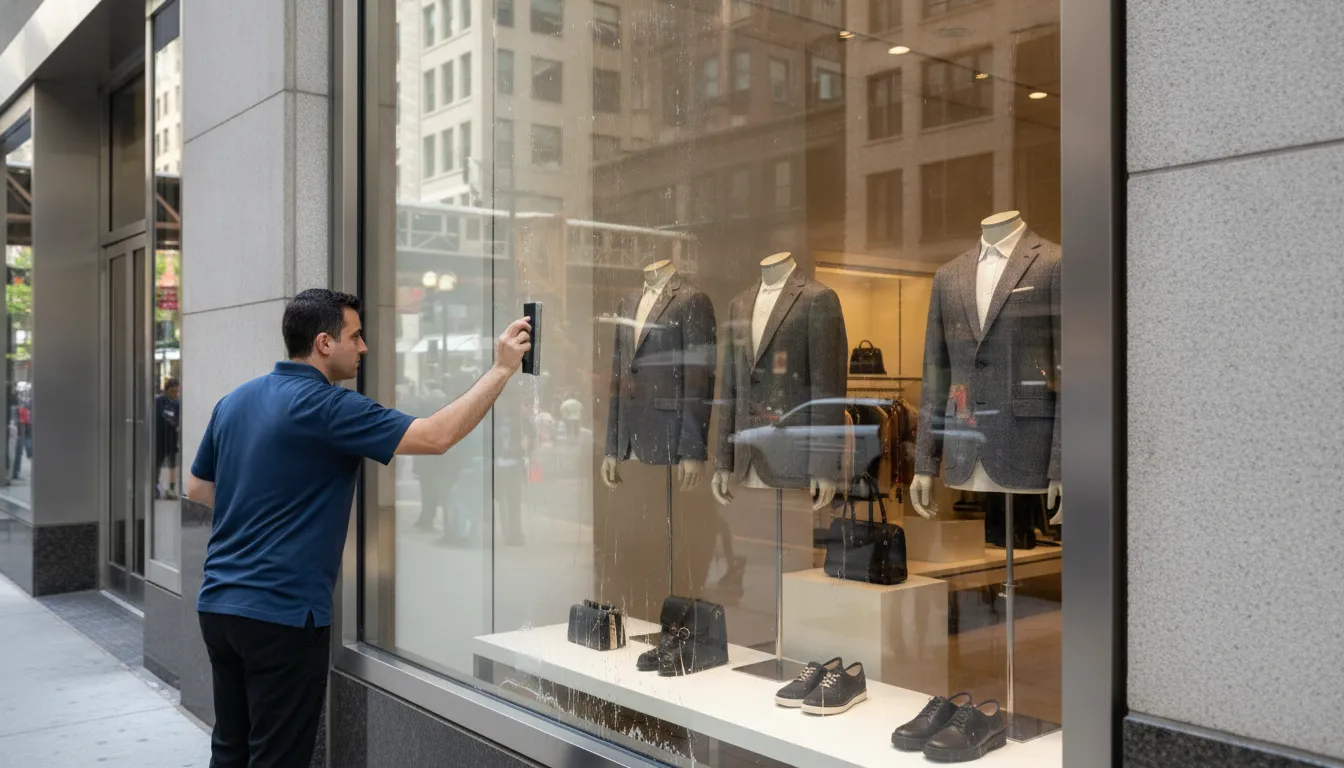
A tagged pane and a smashed pane are different problems. In an anti graffiti film vs safety film decision, anti-graffiti film is a clear, replaceable surface layer. It takes spray paint, scratches, stickers, and acid etching so the glass underneath can stay in service. Safety and security film is built to hold broken glass together after an impact. Sullivan’s Window Tinting installs both for homes and businesses across Chicagoland and nearby Wisconsin markets. The right choice starts with the damage you are trying to avoid, not with whichever clear film a vendor happens to have on the truck.
Anti-Graffiti Film vs Safety Film: Two Different Jobs
Both films can look nearly invisible once they are on the glass, which is why property owners mix them up at the estimate. The adhesive, the side of the glass, and the repair plan are different. One film is meant to be removed. The other is meant to stay bonded for the life of that pane.
Anti-graffiti film is a sacrificial layer. Manufacturers such as 3M describe anti-graffiti film as a removable shield for vandalism, graffiti, etching, scratches, and abrasion. Reflectiv’s anti-graffiti film guide describes the same sacrificial layer: the film takes tags and scratches, then comes off so the glass stays. It does not chemically bond to the glass. When the surface is ruined, a trained installer peels the damaged sheet and applies a new one. The pane stays. Sullivan’s service page describes the same idea: film on existing glass or other smooth surfaces that can be removed and replaced after spray paint, acid etching, or scratching.
Safety and security film does the opposite job. Sullivan’s safety and security film holds shattered glass together, lowers injury risk, and makes forced entry harder. It is offered in 4-mil, 8-mil, and 15-mil thicknesses. On high-risk openings, a frame-edge attachment system can be added so the broken sheet is more likely to stay in the opening. The film does not make glass unbreakable, and it is not bulletproof. Its value shows up after the glass fails, when fragments would otherwise fall into a sales floor, a lobby, or a sidewalk.
| Question | Anti-graffiti film | Safety and security film |
|---|---|---|
| Main job. | Absorb tags, etching, scratches, and stickers. | Hold broken glass after impact. |
| What happens when it is damaged. | Remove the film and replace that layer. | The film stays bonded so shards do not fall freely. |
| Typical glass face. | Often the exterior face that vandals can reach. | Usually the interior face, sometimes with edge attachment. |
| Look. | Optically clear, meant to stay out of the way of displays. | Virtually clear, chosen by thickness and attachment. |
| Wrong use. | Expecting it to stop a break-in. | Expecting it to be peeled off after every tag. |
If the complaint is a mark on the glass, start with anti-graffiti film. If the complaint is flying glass or a smash-and-grab, start with safety film for glass. A broad office comparison of solar, privacy, safety, and anti-graffiti options lives in the commercial window film types comparison. This page stays on the protection choice only.
What Anti-Graffiti Film Does to the Surface
Anti-graffiti film does not stop someone from trying to tag a window. It gives that damage a disposable surface. Paint, marker, sticker adhesive, cutter scoring, and many etching attacks land on the film. When the film is spent, it comes off. The glass does not have to be the part you throw away. That is the point of a sacrificial layer: the replaceable sheet is supposed to take the loss.
That is a maintenance system, not a one-time coating. Sullivan’s applies the film to existing glass and other smooth surfaces, including storefront display glass, transit shelters, elevator and escalator panels, restroom mirrors and partitions, and glass doors. The film is meant to stay crystal clear so shoppers can still read a display.
Exterior glass is the usual storefront case because that is the face a vandal can reach from the sidewalk. The same clear film is also used on interior glass, including partitions, mirrors, and lobby panels that get scratched from the public side. A site visit decides the face. Guessing from the sidewalk is how a clear film ends up on the side nobody damages, while the tagged face stays bare.
Replacement is part of the product. The bond is made so a professional can remove the sheet when it is tagged or etched. It is not a do-it-yourself peel-and-stick project, and it is not a substitute for safety glazing. For the storefront vandalism case itself, including which businesses use it and how replacement is timed, read anti-graffiti film for Chicago storefronts. This section only explains the surface job so you can tell it apart from impact film.
What Safety and Security Film Does After the Glass Breaks
Safety film and security film are close cousins, and owners often use the names as if they were one product. Both are polyester sheets bonded to glass so that, if the pane breaks. The fragments stay attached to the film instead of spraying into a room or onto a sidewalk. Thicker film and a proper anchor raise the effort required to push through the opening. They do not turn ordinary glass into a vault, and they are not a coating you refresh after every tag.
On Sullivan’s safety and security service, the practical outcomes are shatter resistance, slower forced entry, and less injury risk from loose shards. Commercial uses include ground-floor display windows, sidelights, and other openings where a strike would otherwise empty the frame. Residential uses include ground-floor windows, patio doors, and other vulnerable glass. The security window film guide for commercial buildings covers smash-and-grab behavior, anchoring, and what to ask about documented testing. The 3M safety and security window film guide covers that product family. Neither page is a substitute for choosing anti-graffiti film.
A few limits are worth stating plainly. Security film does not stop the glass from cracking. It does not replace a lock, an alarm, or a frame that is already failing. Bullet resistance is a different product class. If a vendor promises “unbreakable windows” from a clear film, ask which test and which thickness they mean, then compare that answer with a project-specific review.
Where Each Film Goes on the Glass
Placement is the easiest field check once you know which problem you are solving. Anti-graffiti film belongs on the face that receives the abuse. On a street-facing storefront, that is usually the exterior. On an interior partition or a restroom mirror, it may be the public side of that surface. The sheet should be optically clear, with clean edges and no cloudy patches that fight the display behind it.
Safety and security film is commonly installed on the interior face, where the adhesive can hold fragments on the occupied side of the glass. For openings that need the broken sheet to stay in the frame, the installer may add attachment at the frame edge. That hardware is part of a security specification. It is not part of a sacrificial graffiti layer.
The two films can share one opening when both risks are real. A common pattern is security film on the interior and anti-graffiti film on the exterior. One holds the glass if it breaks. The other is the layer you discard after a tag or an etch.
They are not two copies of the same product. Anti-graffiti film on the inside of a street window will not catch exterior paint. Security film alone will not give you a peel-off surface for acid etching on the street face. The installer also has to reach the correct face safely, from the sidewalk or from inside.
Solar-control and decorative films are a third conversation. They manage heat, glare, privacy, or appearance. They are not a vandalism layer and they are not an impact layer. If the glass also needs comfort or privacy, that can be planned in the same visit. But it should not be used as a stand-in for either protection film.
How to Choose for Your Opening
Match the film to the last incident, not to a product name on a brochure. Walk the glass and write down what actually happened before you ask for a price.
- Name the damage you have actually seen. Paint, marker, stickers, scratches, or etching point to anti-graffiti film. A broken pane, a near break-in, or a storm strike points to safety or security film.
- Mark the face. Exterior street glass, lobby panels, mirrors, and doors do not all need the same side coated.
- Decide whether both risks are present. A display that gets tagged and also sits on a quiet side street may need the sacrificial layer plus an interior security film.
- Leave thickness, attachment, and warranty to the site measure. Published prices are not a substitute for a measured opening.
Bring photos of past damage, the glass size, and whether the pane is part of a storefront system or an ordinary window. Sullivan’s has installed window film for Chicagoland homes and businesses since 1988, and the estimate is free. The visit confirms film type, glass condition, and access. It does not start from a flat rate, because two openings of the same width can need different film and different access.
Skip any plan that treats anti-graffiti film as a cheaper security film, or security film as a wipe-clean graffiti coating. The first will disappoint you the night someone throws a brick. The second will disappoint you the morning someone etches the exterior and you cannot peel that film off without giving up the impact bond.
Common Mix-Ups Before You Book the Work
Three mix-ups show up on almost every call about protective film. Naming them before the site visit keeps the specification from drifting into the wrong product.
The first is treating every clear film as security film. A crystal-clear sacrificial sheet can look like the 4-mil or 8-mil safety film in a sample book. The difference is the bond and the job after damage. If the installer describes easy removal after a tag, you are hearing an anti-graffiti specification. If the installer describes fragment retention, thickness, and possible frame attachment, you are hearing a safety or security specification.
The second is assuming one film covers every pane on the property. A street display, a restroom mirror, an interior office partition, and a patio door do not share a risk. Tagging and etching cluster on surfaces the public can touch. Impact risk clusters on large exterior glass, ground-floor entries, and doors. Sullivan’s service list keeps anti-graffiti film and safety and security film as separate offerings for that reason. The window film FAQs are the broader service overview, not this decision.
The third is planning the work as a do-it-yourself roll. Both films depend on clean glass, accurate cuts, and controlled application. Anti-graffiti film also has to be removable later without scarring the pane. Safety film has to stay bonded, and some openings need attachment at the frame. A factory-finished result is part of the install, not a bonus. Professional measurement is how you avoid a sheet that stops short of the edge a vandal can still reach. Or a security film that is asked to do a job it was never anchored for.
If heat, glare, or daytime privacy is the main complaint, say that too. Those goals belong to solar-control or decorative film, which can be discussed in the same appointment. They should not be substituted for either protection film. A clear sacrificial layer is not a privacy film, and a security film is not a heat-rejection film just because it is polyester.
Schedule a free film assessment
Frequently Asked Questions
Is anti-graffiti film the same as safety film?
No. Anti-graffiti film is a sacrificial surface layer for tags, etching, scratches, and stickers. Safety film is bonded so broken glass stays together after an impact. They can both look clear, and some sheets are a similar thickness, but they are not interchangeable products.
Can anti-graffiti film stop a break-in?
No. It is not a forced-entry product, and it should not be sold that way. If the risk is a smash-and-grab or flying glass, use safety or security film, sometimes with frame-edge attachment. Anti-graffiti film is there so a mark on the surface does not become a new pane of glass.
Can both films go on the same window?
Yes, when the opening has both problems and the glass can accept both layers. Security film usually goes on the interior. Anti-graffiti film goes on the face people can vandalize, often the exterior. One site visit can specify both if access, glass condition, and the frame allow it.
Will either film change how the glass looks?
Both are designed to stay visually clear when they are installed correctly. Anti-graffiti film should not block a display or a view through the storefront. Safety film is also virtually clear, though thickness and any frame attachment are chosen for the risk, not for decoration. A poor install, not the film category, is what usually leaves bubbles, haze, or lifted edges.
Does anti-graffiti film block UV?
Clear anti-graffiti film can block a large share of ultraviolet light. 3M states that its anti-graffiti films block up to 99 percent of the sun’s UV rays, which helps limit fading behind the glass. UV control is a side benefit of the sacrificial layer. It is not a reason to pick this film instead of a solar-control film when heat and glare are the real complaint.
Match the Film to the Damage
Choose anti-graffiti film when the glass needs a replaceable face for paint, etching, and scratches. Choose safety or security film when the glass needs to stay together after it breaks. Choose both when the same opening faces the street and also needs impact resistance. Sullivan’s can measure the glass, name the right layer, and install it so the finished pane still looks like part of the building.