
Glass entry doors and sidelights can make a Chicago office feel open and welcoming, but they can also create glare, expose interior activity, and leave nearby spaces uncomfortable. Choosing commercial window film for Chicago entryways starts with identifying what the glass needs to do: admit daylight, provide privacy, manage solar heat, reinforce a visual design, or add a layer of protection. The right film depends on the glass, its orientation, the door’s use, and your priorities, not simply on how dark the glass looks.
Request a free estimate for your entryway glass
Why Do Office Entryways Need a Different Film Plan?
An entry is not just another window. It is a high-traffic transition where visitors approach, staff pass through, and door hardware operates throughout the day. A film choice that works well on a fixed office window may not answer the needs of an entry door or its narrow sidelights. The purpose of each pane, the amount of exposure, and the way people use the space all matter.
Start by looking at the entry from both sides. From outside, note whether passersby can see reception desks, waiting areas, confidential work, or interior corridors. From inside, check for direct sunlight on the floor, glare on screens, or a bright patch that makes the entry feel warmer than the rest of the lobby. Also observe whether glass near the door is part of the visual identity of the business. These simple observations help distinguish a privacy problem from a solar-control problem or an aesthetic one.
Make a short list of the outcomes you want, in order. For example, a clinic might put waiting-room privacy first while keeping the entrance bright. A professional office might want to reduce afternoon glare without obscuring its reception area. A street-level business may care most about consistent appearance across its door and sidelights. When needs compete, knowing which one matters most makes a product discussion more useful.
It helps to map the entry in zones rather than treating every pane as identical. Mark the door glass, each sidelight, and any adjoining fixed windows. Note where visitors pause, where employees sit, and which direction the strongest sunlight comes from. A simple sketch or a few clear photographs can help explain the layout during an estimate request. Include a view from outside and inside, but avoid photographing sensitive information or people who have not agreed to be included.
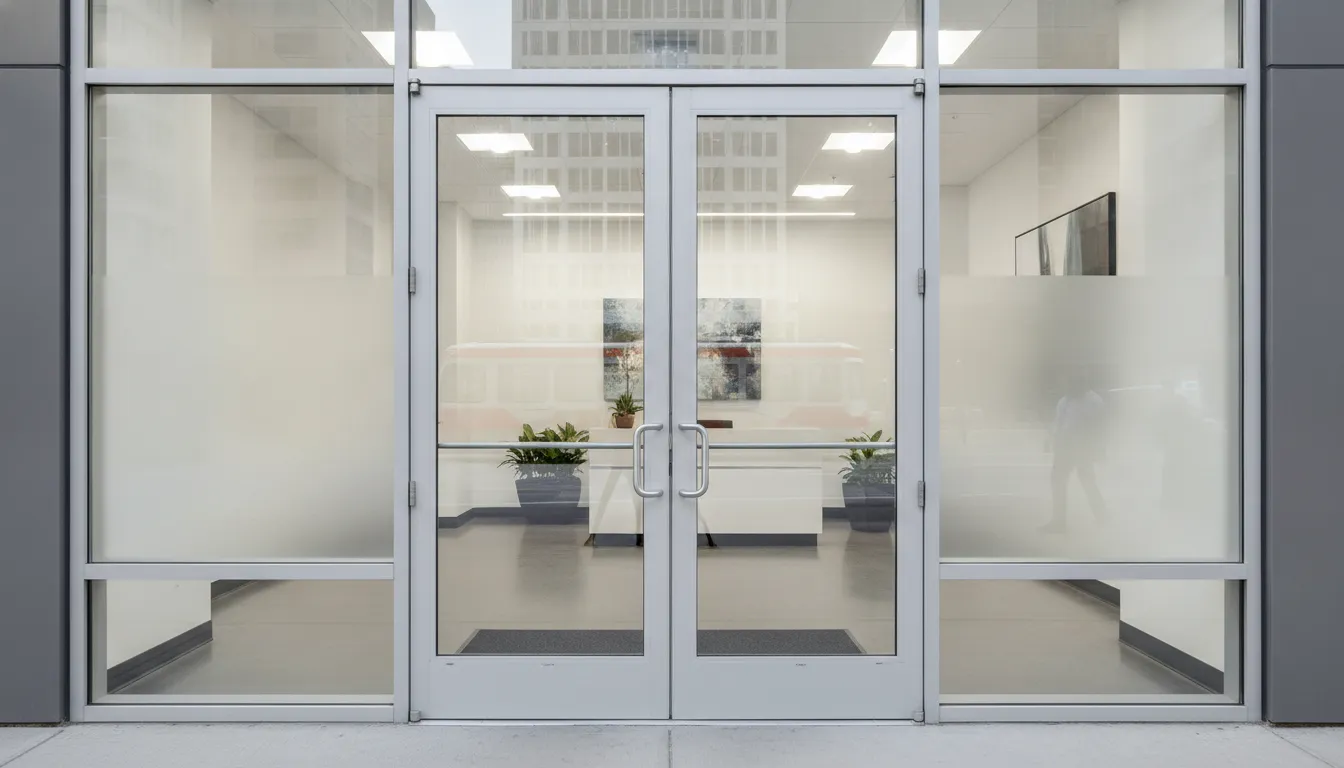
Then separate the symptoms from the desired result. “The lobby feels exposed” may mean people can see a reception monitor from the sidewalk, or it may mean employees feel visible while greeting visitors. “The entrance is too bright” may refer to glare on a screen, reflected light, or an uncomfortable patch of direct sun. These distinctions matter because a treatment selected for one problem may not resolve another. Describe the time of day, season, and location where the issue is most noticeable; that context gives a professional a clearer starting point than a general request for darker glass.
Consider the whole approach to the entry, not only the glass panel itself. Adjacent interior partitions, nearby workstations, and the path from the door to reception can affect whether a film solution feels successful. A modest change to one pane may solve a specific sightline issue, while a broader layout or film plan may be needed if privacy is needed across several connected areas.
Which Problem Are You Trying to Solve?
Window film is an umbrella term for products designed for different jobs. Solar-control film is intended to address solar heat gain and glare. Privacy film changes how clearly people can see through a pane, with the exact effect depending on the product and lighting conditions. Decorative film can add a patterned, frosted, or branded visual treatment. Safety and security film is designed to help hold broken glass together, though it is not a replacement for appropriate doors, locks, or a security plan.
These categories are not interchangeable. A decorative finish may give a lobby more privacy but may not be the best answer to strong sun. A solar-control product might help with sunlight and heat but may not obscure a direct view enough for a private reception area. A safety-oriented product has a different purpose from either one. Ask the installer to connect each recommendation to the problem you identified and explain what it does not address.
If glare or solar exposure is the leading concern, compare your conditions with the overview of commercial window film types in Chicago. If the main objective is a particular room appearance or light-through privacy effect, the guide to decorative office window film can help you consider design options. For a broader look at building applications, see the Chicago commercial window film guide.
How Do Privacy Needs Differ at Doors and Sidelights?
Sidelights can expose a direct view into reception or a nearby room. A film treatment can soften or interrupt that view while still allowing daylight into the entry, depending on the film selected. A frosted or patterned appearance can also signal a boundary without making the entrance feel closed off. For an office with private discussions near the door, consider whether the film should cover the full pane or only the portion that blocks the most sensitive sightlines.
Door glass brings an additional practical question: people need to recognize that it is a door and see enough to move through it safely. Before selecting an opaque or strongly patterned appearance, consider the view from both directions, the approach path, and how the treatment will work with any existing markers on the glass. Do not assume that a film’s privacy effect is identical in all lighting. A lighting difference between inside and outside can change how transparent or reflective a pane appears, so discuss real-world day and evening conditions.
One-way privacy should not be treated as guaranteed privacy at every hour. Its appearance can depend on which side is brighter. If the entry must remain private after dark while the interior lights are on, explain that use case before choosing a product. A separate privacy film guide for Chicago offices can help frame questions about workplace sightlines, while the overview of the one-way effect explains why lighting conditions matter.
For more controlled privacy in a meeting area beside an entry, compare fixed decorative film with electric switchable film for offices. Switchable film serves a distinct purpose and may suit a room where privacy needs change, rather than a door whose primary job is constant passage. The goal is not to add the most coverage; it is to put the right treatment where it solves a real visibility problem.
How Should You Compare Film Options?
Use a simple comparison to focus the discussion. These are general decision points, not a specification for any particular glass or product. A professional assessment can confirm which options are appropriate for the actual panes and their use.
| Primary need | Film category to discuss | Entryway planning question | What to confirm |
|---|---|---|---|
| Glare or solar heat gain | Solar-control film | When and where does direct sunlight affect the entry or reception area? | How the selected product balances solar control, visibility, and natural light on this glass |
| View into reception or nearby rooms | Decorative or privacy film | Which sightlines should be softened, and at what times is privacy needed? | Appearance from inside and out, coverage area, and how lighting affects privacy |
| Branding or a designed entrance | Decorative film | Should the door and sidelights share one pattern, or should the treatment define a specific zone? | Pattern, placement, visual continuity, and interaction with door markings |
| Concern about glass breaking | Safety or security film | What is the concern, and which panes or adjacent areas need attention? | Film limitations, glass compatibility, and whether other door or security measures are needed |
| Several problems at once | Combination to review with an installer | Which priority matters most if one treatment cannot address every need? | Compatibility, appearance, performance expectations, and any tradeoffs |
Do not make a decision from a sample’s shade alone. Ask how the recommended film is expected to look in the actual entry, how much view or daylight it preserves, and whether it addresses your priority. If visual consistency matters, compare the proposed appearance on the door and sidelights together. Differences in pane size, nearby finishes, and viewing angle can make an otherwise sensible choice feel uneven if the full entrance is not considered.
Think about each decision as a tradeoff to review, not a promise that one film will solve every concern. More visual coverage may make the entrance feel less open. A film chosen mainly for solar performance may have a different look from a nearly clear decorative treatment. A more noticeable pattern can create a clear visual boundary but may not fit a minimalist lobby. Ask for the intended balance in plain terms: what will change, what will remain visible, and what limitations should be expected. If several goals rank equally, tell the installer rather than choosing one in isolation; the recommendation may involve distinct treatments in separate zones, subject to the glass and product compatibility.
Safety film deserves particularly careful expectation-setting. It is intended to help hold glass together if it breaks; that does not mean every installation makes a door unbreakable or prevents entry. Read the guide to safety film for glass and ask a professional to explain which specific concern a proposed system can address. When the entry is part of a wider security plan, discuss how film relates to locks, access control, and the door assembly instead of treating it as a stand-alone fix.
What Should Chicago Businesses Check Before Installation?
Start with an inventory of the glass. Note which panes are in the door, which are fixed sidelights, and whether other glazing continues into the lobby. Record rough dimensions if available, but do not use those measurements to order or specify film. Exact assessment includes the glass and the installation conditions, and the installer can verify details during the estimate process.
Next, note features that may affect access or finished appearance: handles, closers, locks, access readers, existing safety markings, and any edges that receive frequent contact. Door glass is touched and viewed up close more often than a high office window. Explain how the entrance operates and how much pedestrian traffic it sees. The installation plan should account for access and avoid interfering with hardware or the way the door is used.
Ask how the work area will be managed around a busy entrance. A business may need to guide visitors through another door or keep a small area clear while work is underway. Identify who can approve temporary access changes and who should receive schedule updates. If the entry is shared with other tenants or a property manager, confirm the coordination process early. These practical details help set an achievable schedule and reduce last-minute disruption without assuming a particular installation duration.
Check the expected relationship between film and the glass. Film suitability can vary with the type and condition of the glass and its configuration. Do not assume that a product appropriate for a nearby fixed window is automatically appropriate for a door pane. Ask the installer to assess the specific glass and explain any relevant compatibility limits before work is scheduled.
Building requirements are another reason to verify the details rather than guessing. The applicable Chicago commercial energy code is organized in a chapter on commercial energy efficiency; review the Chicago code chapter on commercial energy efficiency as a reference point, and confirm current requirements with the appropriate building professional or authority for your project. Film should not be treated as permission to alter a required door or glazing assembly or as a substitute for checking applicable rules.
Finally, plan for business continuity. Decide whether the entry can be temporarily restricted, whether visitors need a different route, and which hours are least disruptive. The installation schedule depends on the project and site conditions, so ask for a plan specific to your location. The article on commercial window film installation timing offers a useful set of scheduling considerations.
How Does Professional Installation Protect the Finished Look?
On an entryway, the quality of the finished edge and the alignment of adjacent panes are easy to notice. Professional installation begins with confirming the glass, the intended film, the placement, and the work area. The installer then prepares the glass and applies the product so it sits consistently across each pane. The details matter: a clean finish around the handle, an even boundary on a sidelight, and a design that reads as intentional from the sidewalk contribute to a factory-finished look.
Ask what to expect during the work and afterward. Find out how the entry will be accessed, what areas need to be kept clear, and whether there are care instructions or a curing period to observe. Avoid assuming that every film has identical handling or maintenance requirements. Product-specific guidance from the installer is more useful than a generic schedule.
Warranty coverage is another item to discuss before choosing. Sullivan’s Tinting emphasizes manufacturer-backed warranties on most film products, but terms depend on the product selected. Ask which warranty applies, what it covers, how to keep its documentation, and whom to contact with a concern. The commercial window film warranty guide can help you prepare questions, and the professional installation overview explains why the work itself is part of the result.
What Should You Include in a Free Estimate Request?
A useful estimate starts with clear priorities, not a guess about which product to buy. Describe the entrance and what is bothering you. Mention whether the concern is privacy, sun exposure, appearance, glass protection, or a combination. Tell the installer whether the issue is strongest in the morning, afternoon, or after dark, and whether it affects a specific workstation or room.
- Share the business location and the number of entry doors or sidelight areas involved.
- Describe the glass layout, door operation, and any nearby hardware or access equipment.
- Rank the desired outcomes, such as more privacy, less glare, a designed appearance, or added glass protection.
- Explain how the entrance is used and which operating hours are difficult to interrupt.
- Ask about product options, expected appearance, compatibility, warranties, installation planning, and care.
Window film projects are priced for their specifications rather than by a universal published price. The number and size of panes, the film type, the complexity of the work, and location all contribute to a custom estimate. For a commercial project involving other areas beyond the entrance, the guide to commercial window film costs in Chicago outlines factors to discuss; the estimate itself should address your actual site and priorities.
If you are weighing a film project against a larger glass upgrade, review the considerations in window film versus window replacement. The right choice depends on the condition and purpose of the existing glass, along with what you want to improve. An assessment can clarify whether film is a sensible option for your entryway or whether another step should be considered.
Request a free estimate for your Chicago office entry
Frequently Asked Questions
Can window film make an office entry private without blocking daylight?
Some decorative and privacy films are designed to soften a view while allowing daylight through, but the amount of visibility and light varies by product. Explain which sightlines you want to obscure and how the entrance looks at different times of day. A professional can help compare options for the specific glass.
Should the door and sidelights use the same film?
They do not always need identical coverage, but considering them together helps the finished entrance look coherent. The door also has hardware, movement, and visibility needs that a fixed sidelight may not share. Discuss the whole entry so placement and appearance suit how people approach and use it.
Does safety film make entry glass unbreakable?
No. Safety or security film is intended to help hold broken glass together, but it should not be described as making glass unbreakable or guaranteeing that entry is prevented. Ask what the selected film can and cannot do on your specific glass, and consider it as one part of a wider safety plan.
Can the film be installed without closing the business?
Scheduling depends on the entrance, scope, access, and site conditions. Share your operating hours and visitor flow when requesting an estimate. The installer can discuss a site-specific plan to limit disruption and explain any temporary access arrangements.
Ready to Plan a More Comfortable, Useful Entry?
Commercial window film can help address specific concerns around an office entrance, but the best recommendation begins with the glass and the way people use the space. Sullivan’s Tinting is family-owned and operated, serving the greater Chicago area with professional window film installation and personalized recommendations. Describe your priorities and arrange a no-obligation assessment before choosing a product.
A thoughtful entryway plan can preserve the welcoming feel of glass while making the space better suited to your business.