
Cold drafts near a window in winter and intense afternoon sun in summer can make a room less comfortable. Insulating window film is one option homeowners may consider, but it is important to understand what the film is designed to do. Architectural film can manage solar heat gain and reduce unwanted solar heat entering through glass; it is not a replacement for every insulation, air-sealing, or window-repair need. The right choice depends on the glass, room, exposure, and the problem you want to solve.
Request a free estimate for your home windows
What does insulating window film actually do?
“Insulating window film” is often used as a broad description for film intended to improve comfort around glass. Many architectural films are selected for solar control: they help reduce solar heat gain, glare, and ultraviolet exposure while allowing sunlight into the room. Film performance varies by product. A solar-control film, a decorative privacy film, and a safety film are made for different needs, so they should not be treated as interchangeable.
In a sun-exposed room, solar-control film may make the space feel more comfortable by limiting heat entering through the window. It may also help reduce glare on screens and block 99% of harmful UV rays, an important consideration for interior furnishings. These benefits do not mean every room will feel identical after installation or that a film will eliminate all heat transfer. The existing glass, window orientation, shading, season, and selected film all matter.
Film also does not repair a loose sash, damaged seal, or gap around a frame. If you feel moving air at the edges of a window, first identify whether the issue is an air leak or radiant discomfort from the glass. Weatherstripping and other building-envelope improvements address different problems than solar-control film. The City of Chicago’s weatherization education program describes low-cost weatherization education for residents; that is a useful reminder that window film is one possible part of a broader comfort plan, not a cure-all.
How is film different from plastic window coverings?
Temporary plastic coverings and professionally installed architectural film serve distinct purposes. Plastic shrink coverings are generally applied over a window opening as a seasonal barrier. Architectural film is applied directly to the glass and remains in place as a finished surface. Neither should be expected to solve every draft or insulation concern. The best comparison is based on your specific issue and the condition of the window.
| Option | Where it is applied | What it may address | Important limitation |
|---|---|---|---|
| Solar-control window film | Directly on glass | Solar heat gain, glare, and UV exposure, depending on product | Does not seal frame gaps or repair failed windows |
| Seasonal plastic covering | Across the window opening | A temporary seasonal covering | Not a permanent glass treatment; follow the product instructions |
| Weatherstripping or air sealing | At joints and openings | Air movement through gaps | Does not provide the same solar-control or UV function as film |
| Window replacement | Replaces the window unit | Can address an aged, damaged, or unsuitable assembly | A larger project; needs a separate assessment |
For a plain-language overview of a seasonal covering, ENERGY STAR explains how plastic window coverings are applied. This is not a product comparison or a claim that one approach fits every home. It helps clarify that a covering over the opening and film on the glass are different treatments.
Which home problems may film help address?
Start with the room’s actual pain point. A homeowner who wants less afternoon glare may need a different solution from someone seeking privacy in a bathroom or added resistance to glass breakage. Window film should be matched to the desired result rather than chosen only by a general label.
- Hot, sunny rooms: Ask about solar-control choices and how the glass’s exposure affects the recommendation. West- and south-facing windows may experience different sun patterns from shaded or north-facing windows.
- Glare on screens: Consider the time of day, screen location, and how much daylight you want to preserve. A film that lowers glare should be discussed in terms of visible light as well as heat rejection.
- Fading concerns: UV protection can help reduce one contributor to fading. Sunlight, visible light, and other conditions also affect materials, so no film should be described as preventing all fading.
- Privacy: Decorative or privacy films offer a different function from solar-control films. The look and privacy effect can depend on lighting conditions and product design. See this guide to privacy window film for homes.
- Glass breakage concerns: Safety and security films are a separate category intended to help hold broken glass together. They are not a substitute for solar-control film. Learn more about safety film for glass.
One useful starting point is to note which rooms feel uncomfortable, when the problem occurs, and whether the concern is heat, glare, privacy, fading, or air movement. A simple record helps an installer recommend a solution to the actual issue rather than assuming all windows need the same film.
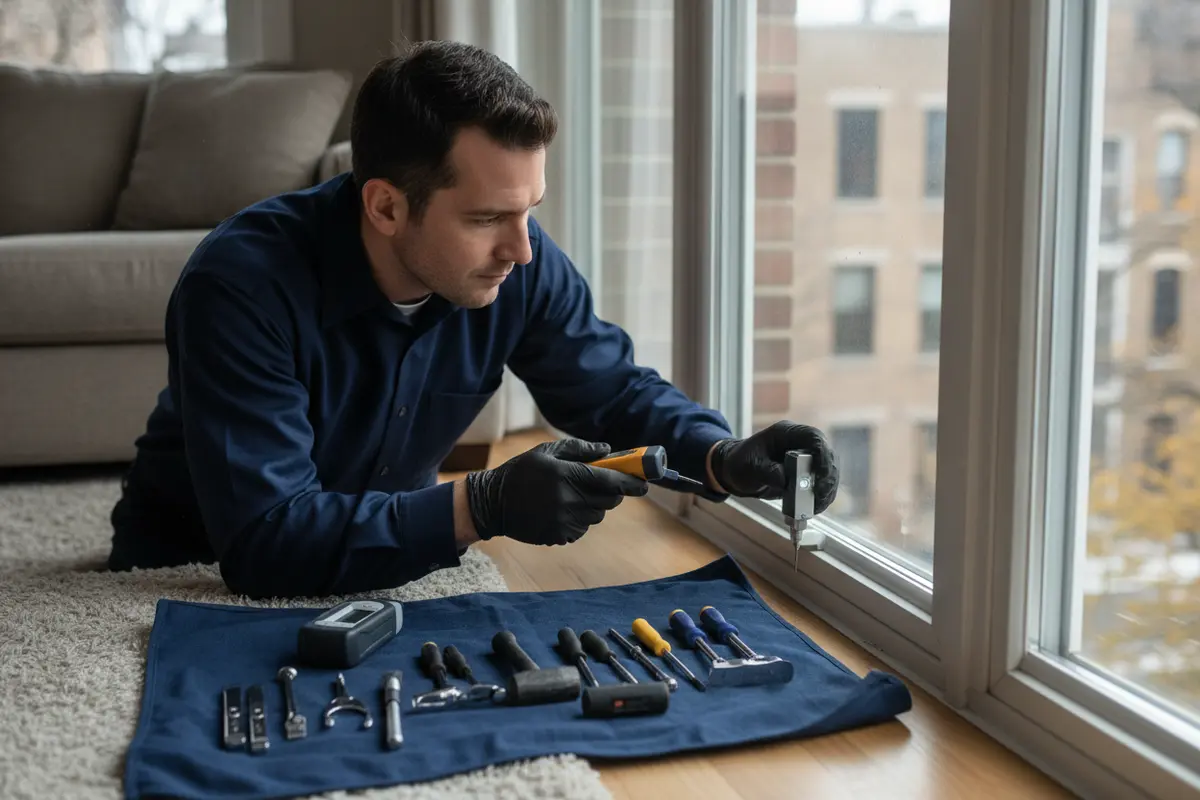
How does a professional assess windows before recommending film?
Glass is not one-size-fits-all. A professional assessment considers the existing window construction and the goals for each room. A recommendation should take into account the window type, glass condition, orientation, shading, and how the room is used. This matters because a film choice that works well for one exposure may not be appropriate for another. The glass and film must be considered together.
- Describe the concern. Explain whether the problem is summer heat, winter discomfort, glare, UV exposure, privacy, or a combination. Be specific about the time of day and season.
- Identify the windows. Note which sides of the home receive direct sun, which rooms have large panes, and whether any windows are older, damaged, or recently replaced.
- Discuss desired light and appearance. Decide whether maintaining a bright view is a priority and whether a visible change to the glass would be acceptable.
- Review film categories. Ask how solar-control, decorative, and safety films differ. Request an explanation of the intended outcome and relevant product characteristics for the particular glass.
- Confirm installation and care details. Discuss professional installation, expected curing, cleaning guidance, and the applicable manufacturer-backed warranty for the selected product.
Professional installation is important because application quality affects the finished appearance. A careful assessment and precise fit help support the factory-finished look homeowners expect. Sullivan’s is family-owned and operated and has served the greater Chicago area since 1988. Learn about the company’s background and approach, or review its residential window film services.
What should you compare when choosing a film?
Do not compare films by a single promise such as “keeps heat out.” Ask what the product is intended to control and how it balances heat rejection, visible light, glare, appearance, and privacy. Product specifications and suitability depend on the film and the glass. A qualified installer can explain the differences in the context of your windows.
| Question to ask | Why it matters | What to clarify |
|---|---|---|
| What is the main function? | Film types address different needs | Solar control, decorative privacy, or safety/security |
| How will the room look? | Light transmission and appearance vary | Expected brightness, reflectivity, and view |
| Is it suitable for this glass? | Compatibility matters for the existing window | Assessment of glass type and condition |
| What care is recommended? | Proper aftercare supports the installed finish | Curing guidance and approved cleaning practices |
| What warranty applies? | Coverage depends on product and terms | Manufacturer-backed warranty details for the chosen film |
A table cannot replace a glass assessment. It is a way to organize the conversation and make sure the recommendation addresses your priorities. Ask for the reasoning behind the product choice, not just a category name. If a room has multiple goals, rank them: for example, reducing afternoon glare may come first, while preserving a specific view is also important.
Can film solve winter drafts or replace insulation?
Not by itself. If cold air is entering around a frame, film applied to the glass will not close that gap. A draft may point to weatherstripping, caulking, window operation, or another building issue that should be assessed separately. If the window is uncomfortable even when no air is moving, the glass surface and the room’s heating conditions may also play a role.
Likewise, insulating window film should not be presented as a replacement for attic, wall, or whole-house insulation. It is a targeted treatment for glass, and solar-control products are most directly relevant where sunlight and heat gain are the concern. For homes with persistent cold spots, widespread drafts, condensation, or damaged windows, consider an appropriate building or window assessment along with a film consultation.
For ideas that are specifically about seasonal comfort, see Sullivan’s discussion of window film for winter comfort in Chicago homes. For a broader discussion of what film may contribute to home energy use, consult the home window film energy savings guide. The actual outcome depends on your home, windows, habits, and selected film; avoid assuming a fixed bill reduction.

What happens during professional installation?
Once a suitable product is selected, the installer prepares the glass, measures and cuts film to fit, and applies it with care. The exact process depends on the windows and project. Homeowners should clear access to the work area and discuss any special concerns in advance, such as fragile furnishings or hard-to-reach panes. The installer can explain what to expect for the particular job.
After application, film may need time to cure. During that period, the glass may not look fully settled, and care instructions can differ by product. Follow the installer’s directions about cleaning and avoid disturbing the film while it cures. Ask which cleaning materials are appropriate and when normal cleaning can resume. These practical details help protect the finished appearance.
Before work begins, confirm which windows are included, the selected film, the expected appearance, access requirements, and the warranty terms. If you are comparing options, a professional installation overview can help explain why careful fit and application matter. You can also browse the project gallery to see examples of window film applications.
How should Chicago homeowners plan a project?
Chicago-area homes face changing seasons, varied building styles, and different orientations. A large sunroom window, a shaded north-facing bedroom, and a west-facing living room have different conditions. Instead of selecting one film for the entire house based on a general product description, map the rooms and explain what you want to improve in each.
- Make a short list of the rooms that are uncomfortable and the hours when the problem is most noticeable.
- Separate heat and glare concerns from drafts, privacy needs, or a desire for added glass protection.
- Decide whether retaining a bright, natural appearance or maintaining a particular view is especially important.
- Ask whether the recommended film is suitable for each specific window and whether different rooms call for different products.
- Request a custom estimate based on the measurements, film selection, project complexity, and location. Sullivan’s does not publish set pricing because project details vary.
Homeowners in Chicago, Wauconda, Barrington, Hoffman Estates, Northbrook, Schaumburg, Arlington Heights, Delavan, Elkhorn, and Racine can check service-area information to determine whether their location is covered. Read the window film FAQs for additional general answers, then discuss your particular glass and goals directly.
How can you decide which rooms need attention first?
A whole-home project can feel easier to plan when you separate the symptoms by room rather than beginning with a film product. Use a simple observation sheet for several days. For each room, record the time the discomfort begins, whether direct sunlight reaches the glass, how the space is being used, and whether blinds or curtains are already in place. Add the season and weather conditions when practical. This gives the installer a clearer picture than a general statement such as “the house gets too hot.”
For example, imagine a west-facing living room that becomes uncomfortable late in the day while a north-facing bedroom remains pleasant. The living room may be a sensible first place to discuss solar heat gain and glare. That does not automatically mean the same film belongs on every window. A different example is a bright home office where the main complaint is reflections on a monitor, but the homeowner wants to preserve daylight. In that case, explain both goals and ask how product options trade off glare control and visible light.
Now consider a bedroom where the concern is a cold sensation beside the window on a still winter morning. Check whether air is moving at the frame, whether the sash closes properly, and whether the issue appears across multiple windows. Those observations help distinguish a draft from discomfort associated with the glass. Film may be worth discussing, but an air leak or damaged assembly calls for its own evaluation. This sequence avoids using a glass treatment to address a problem outside its function.
Rank each room’s priorities before an assessment. A short list might say: first, reduce late-day glare; second, retain a clear outward view; third, consider privacy only where needed. Another room might prioritize privacy and a softer appearance above heat management. A room-by-room priority list makes it easier to compare recommendations, explain why different products may be considered, and decide whether to handle the most noticeable area first or include several spaces in one project.
What should you prepare before requesting an estimate?
Useful preparation does not require technical measurements or product knowledge. Gather the information you already have and describe the outcome you want. If the windows were recently replaced or you know the glass type, share that detail, but do not guess if you are unsure. A professional can assess the glass and explain what information is needed for a suitable recommendation.
- List the windows and rooms. Identify the spaces to consider and note unusually large panes, high windows, or difficult access.
- Describe when the issue occurs. “The room is sunny and uncomfortable after lunch” is more useful than “the window is bad.” Note whether the concern changes by season.
- Separate goals. Mark which priorities are heat rejection, glare control, UV protection, privacy, or appearance. Mention if air movement or condensation is also present.
- Explain light preferences. Tell the installer whether you want to retain a bright room, preserve a particular view, or accept a noticeable appearance change for another benefit.
- Ask about scope and terms. Confirm which windows are included, how the film recommendation is tied to the glass, what installation and curing involve, and what warranty applies.
These notes help keep the conversation practical. They also make it easier to compare proposals fairly: check that each one addresses the same windows and goals, rather than comparing only a product label or a total cost. If the recommendations differ, ask what assumptions differ, such as the expected daylight, the type of glass, or whether the priority is glare versus heat control.
How do film and other comfort measures fit together?
Window comfort often involves more than one part of a building. Solar-control film may be relevant where direct sun produces heat gain or glare. Weatherstripping and air sealing address leakage at joints. Curtains, shades, and exterior shading change how sunlight reaches a room. Repair or replacement may be appropriate when a window is damaged or does not operate as intended. These approaches do not do the same job, and a home may need more than one kind of improvement.
Think of the options as a sequence of questions rather than competing products. First, is there moving air or visible damage? If so, investigate the frame, seal, or window operation. Second, does direct sun create a recurring hot spot or screen glare? That points to a solar-control discussion. Third, is privacy the main need? Compare decorative options that suit the room. Finally, if the glass itself is a concern, ask whether a separate safety film or window assessment is more appropriate. Keeping these goals separate helps prevent unrealistic expectations.
ENERGY STAR’s instructions for temporary plastic coverings are relevant when a homeowner is considering a seasonal barrier across the opening. The City of Chicago’s weatherization education resource also points readers toward broader low-cost weatherization techniques. Neither resource establishes what a particular film will do on a particular window; product selection still depends on the glass and the desired result. For a professional look at residential options, review Sullivan’s window film services and bring your questions to an assessment.
Likewise, do not assume film is automatically a better choice than replacement, or that replacement is necessary whenever a room is uncomfortable. The scale and cause of the problem matter. A functioning window with recurring sun-related discomfort is different from a unit with damaged hardware or failed seals. A measured discussion can clarify whether a film consultation is relevant, whether another trade should assess the issue, or whether both paths deserve consideration.
Frequently asked questions
Does insulating window film keep a room warm in winter?
Film is not a replacement for insulation or for repairing air leaks. Some products are designed to influence heat transfer or solar gain, but the effect depends on the film, glass, and conditions. Ask an installer what a specific product can reasonably do for your windows.
Will window film make a room dark?
Not necessarily. Films differ in visible light transmission, appearance, and reflectivity. Discuss how much daylight and view you want to retain, and review suitable options for the windows before choosing.
Can the same film reduce heat, glare, and UV exposure?
A solar-control product may address more than one of these concerns, but products vary and no film should be assumed to perform identically across all goals. Ask for product-specific details and a recommendation based on your glass.
Is window film the same as plastic over a window?
No. Plastic coverings are typically placed across the opening as a seasonal treatment, while architectural film is applied directly to glass. They serve different purposes; ENERGY STAR provides instructions for plastic coverings, while a film professional can explain glass-applied options.
How much does insulating window film cost?
There is no single price that applies to every home. The estimate depends on measurements, film type, complexity, and location. A free, project-specific estimate is the appropriate way to understand the cost for your windows.
Get a personalized free estimate
Ready to assess your home windows?
Insulating window film may be worth considering when your goal involves solar heat gain, glare, or UV protection, but the right product starts with the glass and the problem you want to solve. A professional assessment can help distinguish film needs from drafts or other insulation concerns and explain options for a factory-finished result.