
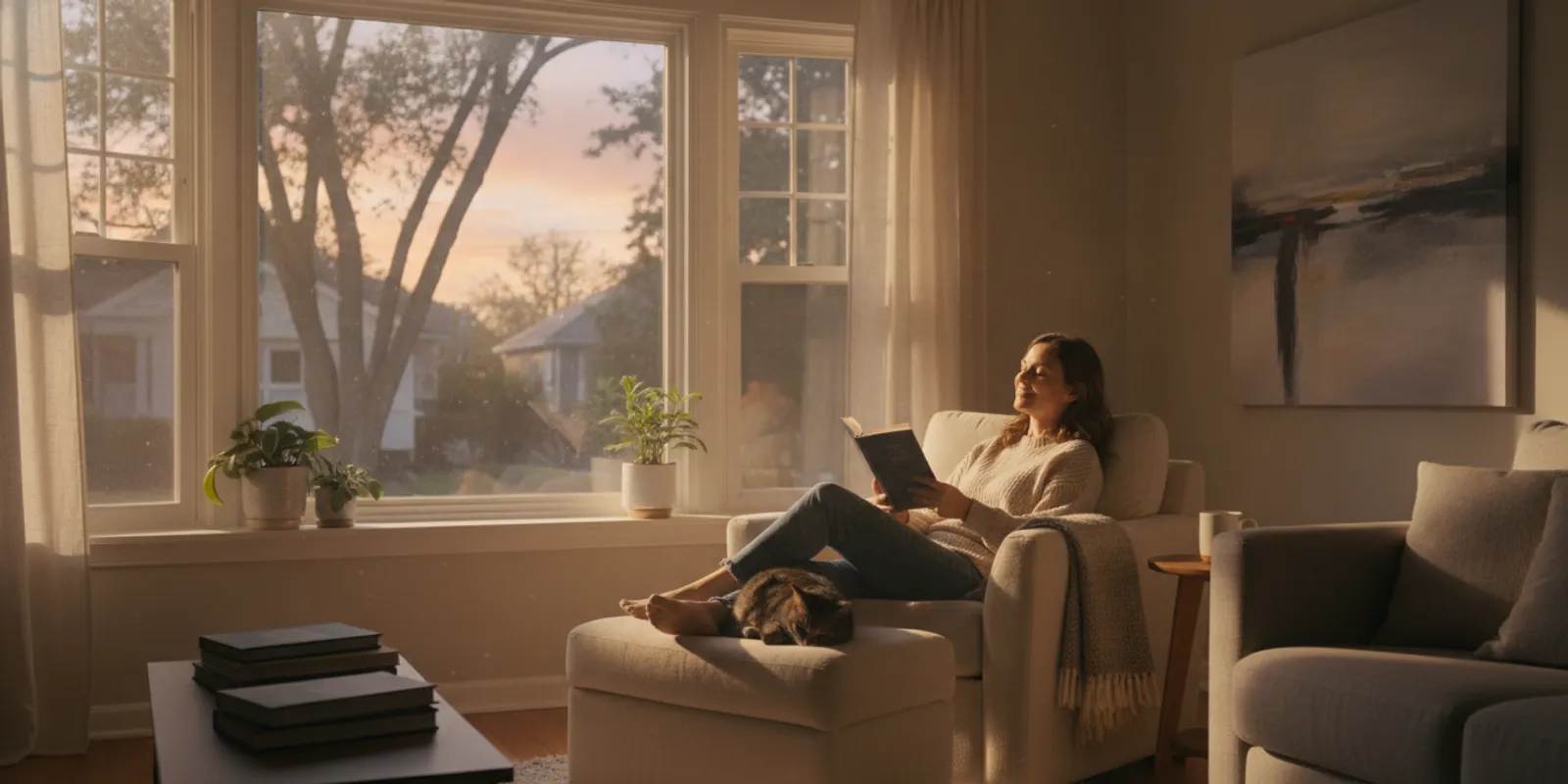
If a room feels comfortable in the morning but grows glaring or warm later in the day, the windows may be part of the problem. Choosing window film for west-facing windows in Chicago starts with understanding when sunlight reaches the glass, what you want to improve, and how much visible light you want to preserve. The right recommendation depends on the room, glass, and your priorities—not direction alone.
Request a free estimate for your west-facing windows
Why can west-facing windows feel uncomfortable in the afternoon?
West-facing glass receives direct sunlight later in the day, when the sun is lower in the sky. That can create bright patches, reflections, and uneven comfort in rooms that get little direct sun earlier. The Australian Government’s YourHome guidance notes that east- and west-facing walls and windows receive more sun in summer during early morning and late afternoon, when the sun is lower and shines for longer (guidance on building orientation).
In a Chicago home or workplace, the experience varies with the building and the season. Nearby buildings, trees, overhangs, window size, room layout, and how you use the space can all affect the impact. A west-facing living room with a television may have a glare problem first. A home office may have both glare and changing comfort. A business with a sunny meeting area may want to address reflections without making the room feel closed in.
Window film can help manage solar heat gain, glare, UV exposure, or privacy, depending on the film selected. These are different goals, and one film type does not necessarily address all of them in the same way. Start by identifying what happens in the room and when. Sullivan’s overview of residential films for heat reduction can help you understand why recommendations vary by objective.
Track the exposure before you choose
Spend a few ordinary days noticing how the room changes. Check it in the morning, around midday, and during the hours when the sun reaches the west-facing glass. You do not need a formal measurement to make useful notes. Record whether a bright area moves across a desk, whether reflections appear on a screen, or whether people naturally move away from a seat as the afternoon progresses. Note whether the discomfort lasts a short time or continues into the evening.
Also distinguish direct sunlight from warmth that has built up in the room. If the room feels warm even after the glass is no longer in direct sun, other factors may contribute, including ventilation, equipment, occupancy, or heat stored by interior surfaces. Film selection should be based on the window-related concern, not an assumption that film alone will resolve every source of discomfort. These observations help an installer understand the issue and set realistic expectations.
What should you identify before choosing a film?
Before comparing products, observe the windows across a typical day. Note which rooms are affected, the hours when discomfort or glare is strongest, and whether the problem changes with season or weather. A few clear observations make a professional assessment more useful.
- Define the main concern. Is the priority heat rejection, bright glare, fading concerns, privacy, or a combination?
- Describe how the room is used. Screen work, cooking, relaxing, customer seating, and meeting use can call for different balances of light and comfort.
- Look at each window individually. A west wall may include different sizes, shading, or glass types. The windows may not all need the same treatment.
- Consider the desired appearance. Decide whether preserving a bright, natural look is important and whether a reflective or decorative appearance fits the room.
- Check the existing glass. Share what you know about its age, type, and condition. A professional should evaluate compatibility before recommending a film.
Also consider what you do not want to change. Someone who likes a sunlit room may favor a different balance than someone whose top concern is screen visibility in the late afternoon. Sullivan’s room-by-room selection guide offers a useful way to organize those priorities.
Separate the problem from the preferred result
It can help to write down two short lists: what is bothering you and what you want the room to keep. For example, a homeowner may want fewer bright reflections at the dining table but still value a clear view of the yard. A person working at a west-facing desk may want improved screen visibility while retaining enough daylight to work without relying on interior lights. A business may want to reduce late-day glare in a customer area without making the storefront feel unwelcoming.
This distinction makes product discussions more precise. “Make the room better” is difficult to compare; “reduce the reflection on this screen while keeping the room bright” gives the installer a concrete objective. If several people use the space, ask them which conditions matter most. Their priorities may differ, so the right selection may involve a compromise or separate treatment by window rather than one uniform specification.
Which window film goals can matter most on a west exposure?
West-facing windows do not automatically call for one particular film. The best fit depends on the problem you are solving and the trade-offs you are comfortable with. Discuss the options in terms of the room’s actual use rather than choosing by a product label alone.
Solar heat gain control
If the room becomes uncomfortable as afternoon sun reaches the glass, ask about a solar-control film selected for heat rejection. Film options differ in their solar performance and appearance. A professional recommendation should consider the glass and the effect you want, rather than promising that every film will perform alike or eliminate all temperature variation.
When comparing recommendations, ask what the film is designed to do under the conditions you described and how it may change the view or daylight. Heat rejection is one part of a room’s comfort. The result can also depend on shading, HVAC operation, room orientation, and how the space is used. A clear explanation of the intended benefit is more helpful than choosing only by a broad label such as “heat blocking.”
Glare management
Glare can make a screen difficult to see or create harsh brightness in a room. A film may reduce the intensity of incoming light, but the amount of visible light transmitted and the visual effect differ by film. Talk through the specific time of day and position of screens or seating. Compare a recommendation’s glare-control goal with the amount of daylight you want to retain. See the guide to glare reduction for home workspaces for related considerations.
Explain the angle of the problem, too. A reflection that falls across one computer monitor may not affect a nearby workstation. In a living room, glare may be most noticeable from one chair or when watching a television. Moving a screen or changing its angle can be part of understanding the issue, even if film remains under consideration. A specific description helps distinguish direct brightness from reflected light and leads to a better discussion of what film can address.
UV protection
Many window films are selected to help limit UV exposure and protect furnishings from fading. Sullivan’s standard messaging is that window film blocks up to 99% of harmful UV rays. UV protection is not the same as controlling heat or glare, so ask how the proposed product addresses each goal. For a closer explanation, read how window film blocks UV rays.
Fading is influenced by more than one factor, so avoid treating UV protection as a promise that furnishings will never change. Fabrics, finishes, sunlight exposure, and other conditions matter. If protecting a rug, artwork, or furniture is part of your decision, point out its location and exposure during the assessment. That helps keep the conversation focused on the actual interior and the protection you want.
Privacy or a different look
If a west-facing window also needs more privacy, decorative or privacy film may be worth considering. Privacy effects depend on the film and lighting conditions; a product should not be assumed to provide the same view in every situation. Decorative film can also change the appearance of glass without replacing it. Explore decorative film options for homes if appearance or screening is part of your goal.
Privacy is especially worth discussing separately from afternoon sun control. A film selected for visual screening may not have the same performance or appearance as a solar-control option. Describe whether you want to obscure a view from outside, soften the look of a pane, or simply address glare. If the window is visible from the street or a shared area, consider how it should look from both sides and at different times of day.
How do common film approaches compare?
This comparison is a starting point for a conversation, not a product specification. Exact performance and appearance vary by film and existing glass. Ask a professional to assess the windows and explain the trade-offs for your project.
| Film approach | When to discuss it | What to compare |
|---|---|---|
| Solar-control film | Afternoon heat or strong sunlight is the leading concern. | Heat rejection, visible light, appearance, and glass compatibility. |
| Glare-control priority | Reflections or brightness interfere with screens, seating, or tasks. | Glare reduction balanced against preferred daylight and view. |
| UV-protection priority | Protecting interiors from UV exposure is a key objective. | UV performance and how it fits alongside heat and glare goals. |
| Decorative or privacy film | Screening or a changed glass appearance matters alongside comfort. | Privacy under different lighting, pattern, opacity, and visual style. |
A consultation can help determine whether one film addresses the leading concern or whether separate areas need different solutions. Sullivan’s comparison of commercial film types discusses how a project’s goal informs the choice. For residential projects, the residential window film guide provides broader context.
Compare more than the shade or reflectivity
People often begin by asking how dark a film will look. Appearance matters, but it is only one item to compare. Ask about the intended heat or glare performance, how much visible light the film allows through, and what the view may look like from inside and outside. Consider whether the glass faces a shaded yard, a neighboring building, a street, or an open view. Those surroundings can affect how a reflective or tinted appearance feels in practice.
Request that recommendations be compared on the same terms. For each option, ask which of your stated concerns it addresses, what compromise it involves, and whether the recommendation is appropriate for the existing glass. If one option emphasizes keeping more daylight and another places greater emphasis on solar control, that distinction may be more useful than a general “best” designation. A recommendation should relate to the room and the result you described, not simply to a product category.
When you compare options, ask for the recommended film’s intended performance alongside its visible appearance. A darker-looking film is not automatically the best answer to an afternoon comfort problem, and a product selected for one objective may not deliver the same balance as another. Consider the view from both inside and outside, how the windows look next to untreated glass, and how much daylight you want during overcast periods as well as sunny afternoons. If glare is the primary concern, discuss the screens or work surfaces affected. If warmth is the main concern, describe when the room feels uncomfortable and whether it is a single area or several rooms. Those details make the comparison practical rather than generic. The installer can explain what the product is designed to address, what it cannot guarantee, and how the final recommendation accounts for your existing windows.
Should every west-facing window receive the same film?
Not necessarily. One room may need stronger glare management, while another may prioritize maintaining a bright appearance. Windows on the same side of a building can also differ in size, shading, condition, and glass construction. A window-by-window plan can avoid treating every pane as if it had the same exposure and purpose.
For example, a west-facing home office with afternoon screen reflections may need a different balance from a dining room where preserving daylight is especially important. In a business, a west-facing customer area may have different needs from a private office. A film plan can take account of these differences, while keeping appearance and the building’s overall goals in view.
Ask the installer to explain which windows are included, what each film is intended to do, and whether the proposed appearance will be consistent across the elevation. If your concern involves an older property or specialized glass, share that before selection. Sullivan’s article on window film for historic Chicago homes covers the importance of evaluating existing windows and character.
Use a simple room-by-room plan
For a home, make a short list with the room, the window or group of windows, the time the issue appears, and the main activity affected. A sample note might read: “West living-room picture window; strong glare on the television from late afternoon; keep the garden view and a bright daytime appearance.” For a home office, note which direction the desk faces and whether the problem is a reflection, direct brightness, or warmth.
For a business, the same approach can capture different needs in reception, meeting, and work areas. Consider the people who use each space and whether appearance should match across a visible set of windows. If only a few panes create a problem, ask whether a selective treatment is practical and how it may look beside untreated glass. If the goal includes a consistent exterior appearance, mention that early so it can be part of the comparison. A written plan makes it easier to check that the estimate covers the areas you intended.
What should you ask during a professional assessment?
A helpful assessment should connect the recommendation to your observations. Bring your notes about time of day, affected rooms, and the tasks that become difficult. Then ask direct questions:
- What is the primary problem this film is intended to address?
- How will it affect the room’s visible light, view, and appearance?
- Is the film suitable for the existing glass, and what should be checked before installation?
- Would treating only certain windows make sense, or is a consistent look important?
- What product warranty applies, and what care does the film need after professional installation?
- What will the custom estimate include, such as the windows covered, film type, and project scope?
Ask for an explanation in plain language and compare recommendations against your priorities, not just product names. Professional installation matters because the finished appearance and compatibility depend on careful assessment and application. You can learn more about why professional window film installation matters before moving ahead.
Check that the recommendation answers your original question
Before deciding, restate the original concern and ask the installer to connect the proposed film to it. If the issue is late-day glare, ask how the proposed option relates to screen visibility and daylight. If the priority is heat rejection, ask what performance goal is relevant to the existing glass and whether other conditions in the room may still affect comfort. If privacy or appearance matters, confirm how the film is expected to look in the lighting conditions that concern you.
It is also reasonable to ask what is not included in the proposed solution. A clear answer helps prevent mismatched expectations, especially when a room has several issues at once. Note any differences between options in the estimate so you can review them later. For a multi-room project, a written window list can help you confirm that the proposal reflects the locations and priorities you discussed.
How can you prepare for a free estimate?
Before arranging an estimate, list the windows you are concerned about and the rooms they serve. Take note of when sunlight becomes a problem, whether there is an existing shade or overhang, and what you hope will change. If you know the glass type or have concerns about the condition of a pane, include that information. Photos can help explain the layout, but an in-person assessment may be needed to evaluate the glass and project details.
There is no one-size-fits-all published price for a window film project. The estimate is customized to details such as measurements, film choice, complexity, and location. Sullivan’s free estimate page is the next step for a personalized recommendation. You can also review answers to common window film questions before your conversation.
To make the discussion efficient, gather your window list, room observations, and any preferences about daylight or appearance. Mention if the project includes both residential and work areas, or if you want to compare treating only the most affected windows with a broader plan. You do not need to choose a product before requesting an estimate; the purpose of the conversation is to clarify the options and scope based on your windows. Since pricing is custom, ask what measurements, film selection, project complexity, and location mean for the specific proposal rather than relying on a generic figure.
Get a free estimate for your project
Frequently asked questions
Does a west-facing window always need solar-control film?
No. Direction is one consideration, but the room’s use, glass, shading, and main concern matter too. An assessment can help determine whether solar control, glare management, UV protection, privacy, or another approach fits.
Will window film make a west-facing room dark?
Appearance and visible light transmission vary by film. Explain how bright you want the room to remain and compare suitable options with a professional before choosing.
Can one film reduce heat, glare, and UV exposure?
Films can address different combinations of goals, but they do not all perform identically. Ask for the performance and trade-offs of the specific film recommended for your windows.
Do all the windows on the west side need film?
Not always. A plan can account for which windows cause problems, the glass at each location, and whether consistent appearance matters. A professional can advise whether selective or broader coverage is appropriate.
Ready to make west-facing windows more comfortable?
West-facing windows can bring useful daylight, but late-day sun may create a specific mix of heat, glare, and UV concerns. A room-by-room assessment helps match the film to the glass and to the change you want, while keeping appearance and natural light in the discussion.
Request a free estimate from Sullivan’s Tinting
With a clear goal and a professional recommendation, you can make an informed choice for your Chicago-area home or business.