
Searching for a window glass stain look usually means you want the character of stained, etched, or patterned glass without replacing an existing pane. Decorative window film can create that kind of visual effect while also addressing privacy, branding, and light control. It is not the same material as traditional stained glass, but it can be a practical, flexible finish for many homes, offices, and storefronts.
Request a free estimate for decorative window film
What does “window glass stain” usually mean?
Most people using the phrase window glass stain are looking for a decorative glass appearance, not a way to permanently color the pane. They may want colored-glass character, a frosted pattern, an etched border, or a textured design on an entry door, interior partition, bathroom window, conference-room wall, or storefront.
Traditional stained glass is made by assembling pieces of colored glass, often with joints or leading between sections. Etched glass is physically altered to create a design. Decorative window film is a professionally applied layer placed on the existing glass. Depending on the film, the surface can appear frosted, translucent, patterned, colored, or printed for a particular visual result.
That distinction matters when comparing options. Film can reproduce the impression of texture, color, or etched detail, but it is not hand-built stained glass. Its strengths are different: it can be applied over existing glass, selected for a desired level of privacy, and changed later. That flexibility can be useful when a room or business changes over time.
Before choosing an appearance, consider what the glass needs to do. Is the goal to soften a view, add a design feature, separate work areas, or make a storefront more distinctive? The answer helps narrow down the pattern and coverage instead of treating every decorative film as interchangeable.
Could decorative window film create a stained-glass look?
Yes. The right decorative film can create a stained-glass-inspired effect while leaving the underlying glass in place. The final appearance depends on the pattern, color, opacity, window size, viewing angle, and amount of daylight in the room.
Some designs are subtle. A lightly frosted pattern can soften a clear pane while still allowing daylight into the room. Other designs use stronger contrast, geometric shapes, simulated texture, or color accents to make the glass a focal point. A sample viewed in the actual space is more useful than relying only on a small image online.
For ideas, compare decorative window film for homes with these decorative film design ideas. Think about whether the goal is a quiet architectural detail or a noticeable feature. A restrained pattern may work well on several interior panes, while a bold design may suit a single entry or reception area.
Placement changes the effect, too. A pattern centered at eye level can address sightlines while leaving upper glass open. A full-pane treatment creates a more unified look. Ask how the design will meet at mullions, door handles, and frame edges before settling on a layout.
How do film and traditional stained glass compare?
Neither option is right for every opening. Start with the look you want, then consider the existing glass, the room, maintenance, and whether the finish may need to change later.
| Consideration | Decorative window film | Traditional stained or etched glass |
|---|---|---|
| Starting point. | A professional applies it to existing glass. | It may need a new custom panel. |
| Design choices. | Looks can be frosted, patterned, colored, or branded. | The glass itself is colored, etched, or built. |
| Light transmission. | Coverage can balance privacy and daylight. | Light depends on the glass design and color. |
| Future changes. | Film can usually be removed or replaced later. | A new look may need another glass project. |
| Best fit. | It suits privacy, design, and branding updates. | It suits permanent architectural glass work. |
This comparison is a starting point, not a promise that every film or glass product performs the same way. Film may be a fit when the existing pane is sound and you want a lower-disruption visual update. A custom glass project may be preferable when the glass itself must be fabricated as a permanent art or architectural feature. The National Glass Association provides information about the glass industry; discuss the specific construction and suitability of your opening with a qualified professional.
When comparing options, also consider the scope of the work. A film project focuses on the surface treatment and its layout across existing panes. A traditional glass project may involve design, fabrication, handling, and fitting of a new or modified panel. The right comparison is not only about appearance. It is about whether the existing opening can remain as it is, how permanent you want the result to be, and how closely the chosen treatment meets your functional needs.
How can decorative film improve privacy without making a room dark?
Privacy film can obscure views while allowing selected amounts of sunlight through the glass. The result depends on the film’s opacity and pattern. A translucent finish may blur shapes but still spread daylight through a room. A denser frost or patterned band may provide more visual separation in a bathroom, office, or street-facing window.
Privacy is also directional and time-dependent. A film that works well during the day may not provide the same level of privacy at night when interior lights are on. Reflective effects can change with the relative brightness indoors and outdoors. Describe when and from where privacy is needed during the assessment.
For residential planning, the guide to privacy window film for homes can help you think through rooms, sightlines, and design preferences. If the project is in an office, compare those needs with privacy film for Chicago offices, where meeting-room separation and daylight may be equally important.
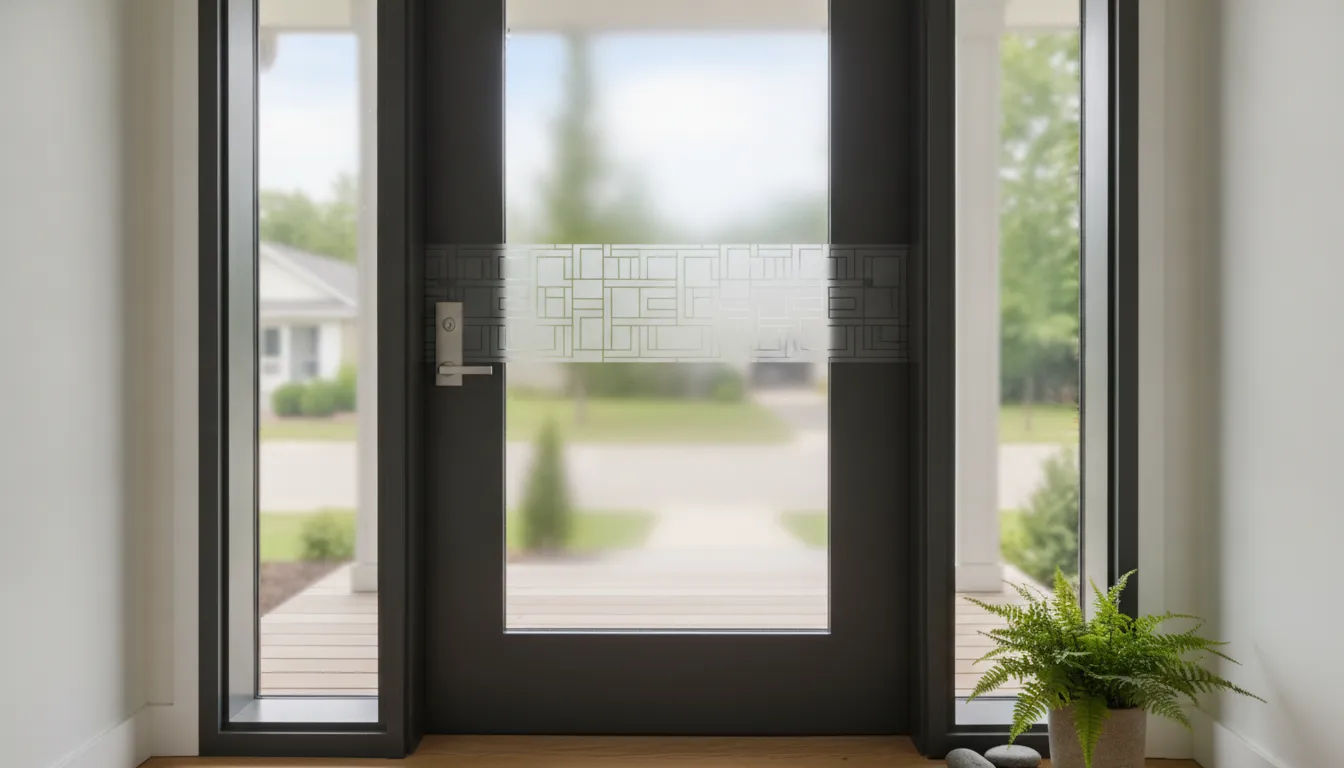
It helps to test privacy from both sides of the glass, at the times the space is used. Consider the view from a sidewalk, hallway, neighboring room, or reception area. If privacy after dark is essential, discuss the lighting conditions rather than assuming a decorative pattern provides the same effect in every situation.
A simple way to clarify the need is to name the specific sightline. For a bathroom, you may want to obscure a view from outside while keeping the window bright. For a conference room, the goal may be to limit distractions from the corridor without turning the room into a closed-off box. For a street-facing entry, a band at eye height may be enough, while the rest of the glass stays clear. These scenarios point to different coverage and opacity choices.
How much light will a decorative film allow through?
There is no single answer because decorative films range from nearly clear patterns to dense finishes. Ask to see samples in lighting similar to the installation area. A sample that looks bright beside a showroom window may appear different on a shaded partition or a north-facing opening.
Consider three practical questions:
- Do you need a clear view, a softened view, or no recognizable view?
- Should the design cover the entire pane or only a portion, such as eye level?
- Is daylight the priority, or is the opening mainly used for privacy and visual separation?
Partial coverage can be useful when you want privacy where people look through the glass but want to keep an open feel above or below the pattern. Full coverage can create a stronger design statement or conceal an unattractive view. A professional installer can explain how the selected film will interact with the size and condition of the pane.
Think about how people use the room through a normal day. Someone seated at a desk may have a different sightline from a person walking past the window. A child or seated visitor may look through the lower portion of a door, while an adult standing in a hallway sees a different section. Marking the approximate eye-level zone can help you decide whether a band or full coverage makes more sense. This kind of planning prevents choosing a pattern based only on how it looks in a catalog.
Can decorative film support business branding?
Decorative film can turn plain glass into a branded or visually coordinated surface without replacing the glass. A business may use a pattern, logo treatment, color accent, or privacy band on an entry, reception area, conference room, retail display, or interior divider.
Branding should serve the space rather than overwhelm it. The design needs to remain legible at the intended viewing distance, fit the surrounding finishes, and support the privacy level required by the room. A frosted treatment may communicate a clean, understated identity, while a stronger pattern may help customers recognize a storefront or guide visitors through an office.
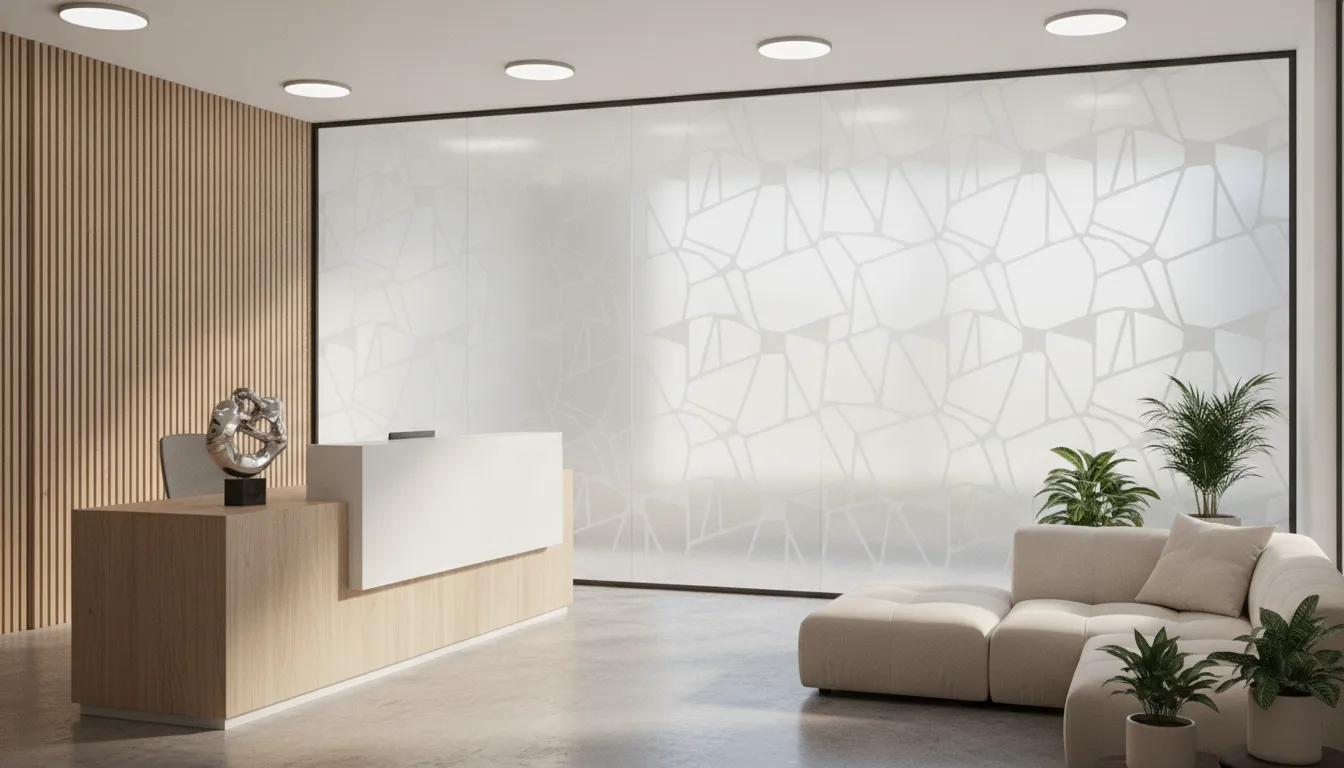
Decorative film can also create a consistent look across panes with different dimensions. Before approving artwork, confirm measurements, panel breaks, door swings, handles, and safety markings that must remain visible. These details are part of planning a professional installation, not an afterthought. Explore the available decorative and privacy film services to understand the category of work.
For a business, it is useful to walk the customer route before finalizing the design. Stand outside and consider whether the entry is easy to identify. Then move through the lobby or reception area and check whether a patterned divider separates spaces without making the area feel confusing. In a meeting room, place the proposed band or design where it offers privacy to seated occupants while maintaining a sense of openness. Bring these observations into the design discussion.
If a logo or custom graphic is part of the plan, decide which elements are essential and which are decorative. A design that looks attractive on a screen may need adjustment to fit narrow sidelights or multiple door panels. Confirm the size and position of each element on the glass layout, including how it will appear from the exterior and interior. A clear proofing step reduces the chance of discovering after installation that a key feature is hidden by a handle or interrupted by a frame.
Is decorative window film removable?
Decorative window film is generally a changeable surface, but removal should be planned as a professional service. Film selection, adhesive, exposure to sunlight, glass condition, and installation age can affect removal. Removing film does not guarantee the glass cannot be damaged, so avoid treating it as a do-it-yourself project.
Removability is valuable for changing offices, updated branding, or homeowners who want flexibility. It can also make film a useful alternative when a permanent alteration is not appropriate. Ask what happens if the design must be changed and whether the existing glass will need cleaning or inspection afterward.
If you are considering a future change, read what homeowners should know about removing window film. The goal is to choose a finish with a realistic long-term plan rather than assuming every product behaves identically.
It can help to plan the change before installing the design. Consider whether a commercial tenant may move, a brand may be updated, or a room may later become a different type of workspace. Ask how to document the selected film and coverage so a future installer understands what was applied. Also ask whether partial replacement is practical for the design or whether the entire pane would need a coordinated update. These questions do not mean removal is difficult; they simply make the lifespan and future options part of an informed decision.
Why does professional application matter for a window glass stain look?
A decorative design looks intentional when the film is measured, aligned, cut, and applied cleanly. Dust, bubbles, misaligned pattern lines, visible seams, or poor edge finishing can distract from the glass and affect the finished appearance.
Professional application starts with examining the existing pane and frame. The installer can identify hardware, seals, obstructions, unusual shapes, and access issues that affect the layout. Measurements should account for design direction and for how separate pieces meet at mullions or panel edges.
The work also needs to suit the film category. A decorative layer intended for appearance is not automatically a solar-control product or a safety product. If the opening also raises concerns about heat, glare, UV protection, or glass breakage, discuss those goals separately rather than assuming one decorative pattern addresses them all. Review Sullivan’s window film service categories to distinguish among applications.
For more on the finish, preparation, and planning involved, review this guide to professional window film installation. The benchmark is a factory-finished look that complements the existing glass and surrounding space.
Installation planning is especially important when a pattern repeats across adjacent panes. The layout needs to account for the direction of the motif and the visual rhythm at each joint. If a pattern meets at a frame, a small alignment difference may be obvious from across the room. For an entry door, the installer must also account for handles, locks, hinges, and the way the door moves. Reviewing these details beforehand helps set clear expectations for the finished look.
Ask what surface preparation is included and how the finished film should be cared for. The glass needs to be suitable for application, and the chosen treatment should match the opening and the intended use. A clear discussion about what the film does and does not provide is useful when privacy, appearance, solar control, or safety goals overlap. Different film categories address different needs, so the recommendation should be specific to the project rather than a one-size-fits-all answer.
How should you choose a decorative film for existing glass?
Use this process before selecting a pattern:
- Define the main problem. Decide whether the priority is privacy, appearance, branding, glare softening, or a combination.
- Study the opening. Note its size, shape, frame, direction, nearby lighting, and whether it is a door, sidelight, fixed pane, or interior partition.
- Choose the visual level. Compare clear, translucent, frosted, patterned, and more opaque options.
- Check viewing conditions. Look at samples in daylight and after interior lights are on if night privacy matters.
- Plan edges and seams. Ask how the design will align across panels, hardware, and corners.
- Discuss future needs. Explain whether the film may need removal, replacement, or an update as the room changes.
- Request a professional assessment. An estimate should account for measurements, film selection, complexity, and location rather than a generic assumption.
You can also review the portfolio gallery for examples of how decorative treatments can change the character of glass. When comparing installers, look for clear explanations of film category, expected appearance, application process, and available manufacturer-backed warranty information. For more project planning guidance, see the window film frequently asked questions.
Bring one reference photo of the opening and note the color, opacity, and placement you want. Rank privacy, daylight, and appearance before the visit. Ask how much of the pane will be covered and how the edges will finish.
Get a free estimate for your glass design
Frequently asked questions
Is window glass stain the same as stained glass?
No. Decorative film can create a stained-glass-inspired appearance on existing glass, but it is a film layer rather than a custom panel made from assembled or etched glass.
Can decorative film provide privacy and daylight together?
Yes, depending on the film. Translucent and patterned options can reduce clear views while allowing some daylight through. The exact balance depends on product, pattern, coverage, and lighting.
Can I use decorative film on a glass door?
It may be suitable for many glass doors and sidelights after the opening, hardware, edges, and visibility requirements are assessed. Door applications need careful layout so the design looks clean and does not interfere with operation or required safety markings.
Will decorative film solve heat or glare problems?
Not automatically. Decorative film is primarily selected for appearance and privacy. If heat rejection, solar heat gain control, glare, UV protection, or safety is also important, ask about a film category designed for that purpose.
How do I start a window glass stain project?
Start by identifying the opening, the desired look, the privacy level, and the amount of light you want to preserve. Then request a professional assessment so the recommendation can account for the actual glass and installation conditions.
Ready to explore decorative film for your existing glass?
Sullivan’s Window Tinting provides consultative recommendations and professional window film installation for property owners in Chicagoland and select Wisconsin markets who want a carefully finished decorative upgrade.