
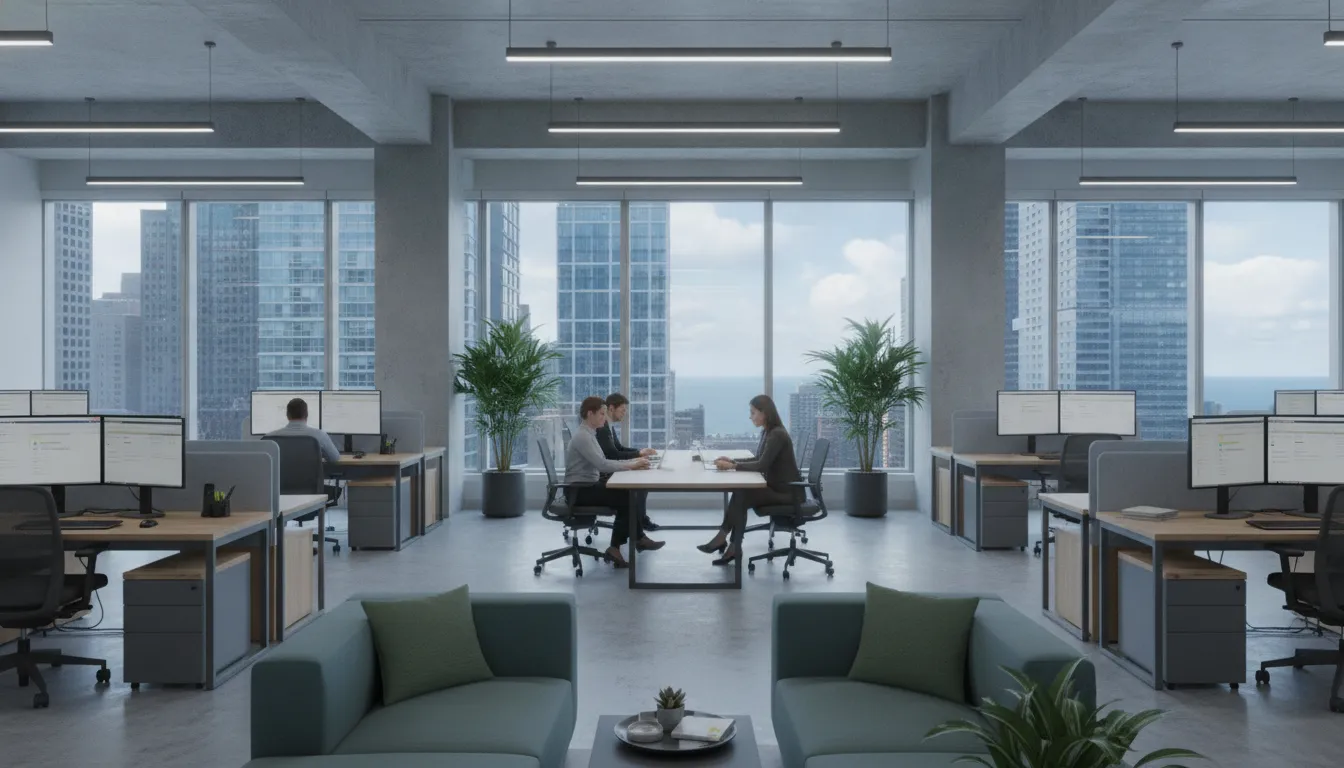
North-facing windows are often treated as an easy case because they may receive less direct sun than south- or west-facing glass. In a Chicago office, retail space, or medical facility, however, glare, cold perimeter areas, privacy concerns, neighboring buildings, and the existing glazing can still affect how the space performs.
Request a free estimate for your commercial window film project.
The best commercial window film north-facing windows solution depends on the building’s glass, room use, seasonal comfort goals, and need for daylight, glare control, privacy, or security. A professional assessment can identify whether a lighter solar-control film, low-e option, or another category is appropriate.
The right decision starts with the actual conditions at each window, not orientation alone. Reviewing exposure, glazing, and the priorities of the people using the space helps narrow the options while preserving the clean, factory-finished appearance a commercial installation should deliver.
How to Choose Commercial Window Film for North-Facing Windows
Short answer: Start with the room’s actual problem, not the compass direction alone. North-facing commercial glazing may need a lighter solar-control solution, a low-e approach, privacy film, or no film in that area, depending on the glass, neighboring buildings, season, and how the space is used.
In a commercial setting, north-facing windows are glazed walls or individual windows whose primary outward exposure is toward north. That label is a useful starting point, but it does not describe the complete daylight environment. Nearby buildings can reflect sunlight into the room. A neighboring structure may create shade in one season and expose the glass in another. Interior blinds, reflective surfaces, computer screens, and displays can also make glare a practical concern even when the facade is not receiving strong direct sun.
Chicago conditions make a room-by-room review especially important. A downtown office, a retail space beside a low-rise building, and a medical facility with privacy requirements can have very different priorities behind similar north-facing glass. Seasonal comfort matters too. The right recommendation may focus on glare and daylight control, winter comfort, UV protection for merchandise, or privacy rather than maximum solar heat rejection.
Some orientation guidance recommends lighter solutions for north-facing windows than for south- or west-facing exposures, but that is a starting point, not a universal rule. The film provider should assess the building’s sunlight exposure before selecting a product, as commercial guidance recommends. Sullivan’s approach is to evaluate each window and the existing glass instead of assuming one film performs equally well everywhere. That compatibility check helps narrow the choice without making the room darker than necessary.
For a useful overview before an assessment, review these commercial film options. Then compare the recommended film with the room’s daylight, glare, privacy, and operational requirements.
Do North-Facing Windows Still Need Commercial Window Film?
Answer: Sometimes. North-facing glass may be a lower solar-heat priority than south- or west-facing glass, but it can still create glare, expose furnishings and merchandise to UV, feel uncomfortable in winter, or create a need for privacy and safety improvements. The right decision depends on the building, glass, room use, and operating goals.
Orientation alone does not tell you how a workspace will perform. Nearby buildings can reflect daylight into offices, while computer screens, polished floors, and display cases can make diffuse brightness distracting. Sullivan’s Tinting notes that commercial window film can help reduce glare on screens and displays and provide UV protection for interiors and merchandise. Review the options for commercial glare and heat control when those concerns affect daily operations.
Daylight is another reason not to default to a dark product. Commercial film can reduce solar heat gain and glare while available tint levels preserve natural light, according to Sullivan’s commercial window film guidance. A U.S. Department of Energy case study also describes a high-performance low-e film designed for year-round performance without excessively reducing visible light transmittance: read the DOE case study. For a north-facing office that is bright but not severely overheated, that balance may matter more than maximum heat rejection.
Winter comfort can also influence the recommendation. The U.S. General Services Administration explains that low-e film can insulate in winter, reduce energy use in both seasons, and improve occupant comfort: see the GSA evaluation. ARPA-E has also described a transparent, heat-reflective retrofit film as a research-stage system, not a standard product assumption for every commercial project: review the project description.
Film may not be the first priority when north-facing windows have no glare, comfort, privacy, or interior-fading concern. In that case, start with an assessment of the existing glazing and room conditions. Businesses should not assume one film works equally well on every glass type. A window-by-window recommendation can identify where professional installation adds value and where other building improvements should come first.
Which Film Type Fits a North-Facing Commercial Facade?
Answer: The right choice depends less on the compass direction alone and more on the facade’s glass, nearby buildings, room use, and primary goal. Solar-control film is often considered when glare or solar heat is affecting occupants. Low-e film may be relevant when year-round comfort and heat transfer are concerns. Privacy, decorative, and safety/security films address visibility, appearance, or glass-performance goals instead.
Commercial film categories should be treated as starting points for an application review, not as interchangeable products. A commercial film provider identifies solar-control, privacy/decorative, security/safety, and low-e or energy-saving films as distinct categories. That distinction matters on a north-facing facade because a darker film is not automatically the best way to improve comfort or preserve the appearance of a business.
Solar-control film for glare and solar heat
Solar-control film can reduce solar heat gain and glare, while available tint levels can preserve natural light. It may suit offices with screen glare, retail spaces with display concerns, or reception areas that become uncomfortable during certain hours. The recommendation should reflect the actual exposure rather than assume every north-facing window behaves the same way.
Low-e film for comfort and heat transfer
Low-e film is a different consideration. GSA describes low-e film as a technology that can block direct solar heat in summer and insulate in both summer and winter, with potential occupant-comfort benefits. That makes it worth discussing when perimeter rooms feel cold in winter or fluctuate across seasons, especially where replacing existing glass is not the immediate plan. The existing glazing must still be assessed for compatibility.
Privacy, decorative, and safety/security applications
Frosted or other privacy and decorative options can obscure views while supporting a finished appearance in conference rooms, medical settings, entry areas, or interior partitions. Safety and security film serves a different purpose by helping strengthen glass against impacts. Sullivan’s commercial options include tinted, reflective, and frosted films selected according to application and goals. Review the commercial film options before requesting a professional recommendation for the facade.
How Should You Balance Daylight, Glare, Privacy, and Comfort?
Answer: Start with the room’s primary problem, then select the light, reflective, frosted, or solar-control approach that addresses it without sacrificing more daylight or visibility than the space requires. North-facing glass may need a different solution from a brighter facade, but orientation alone cannot determine the right film.
Most commercial films are intended to preserve natural light while reducing glare and heat. Privacy treatments can change that balance by slightly reducing visible light or obscuring views. Sullivan’s Tinting recommends evaluating the application, goals, and glass type rather than applying one film throughout a building. See these commercial film options before narrowing the specification.
| Primary goal | Likely film direction | Daylight and privacy tradeoff | Assessment question |
|---|---|---|---|
| Reduce screen or display glare | Light solar-control film | Can reduce glare while preserving useful brightness; confirm the visible-light target. | When and where do reflections interfere with work or customer experience? |
| Improve seasonal comfort | Solar-control or low-e approach | May address solar heat or winter comfort, but performance depends on the existing glazing. | Are complaints tied to a season, perimeter zone, or particular glass type? |
| Limit sightlines | Frosted, decorative, or privacy film | Provides more visual separation, but may reduce transparency and daylight. | Do occupants need privacy, borrowed light, or a clear exterior view? |
| Protect people or property | Safety or security film | Prioritizes glass performance and protection rather than glare or privacy alone. | Is the concern impact, breakage, access control, or interior exposure? |
For examples involving glare and comfort in active business spaces, review commercial glare and heat control. A professional assessment should also consider neighboring buildings, blinds, room use, season, and glass compatibility. The goal is a consistent, factory-finished appearance with a treatment matched to each window’s actual job.
What Should Chicago Building Managers Check Before Installation?
Answer: Before selecting commercial window film for north-facing windows, review the facade exposure, glass construction, room function, building operations, and warranty requirements. A window-by-window assessment is more reliable than assuming every pane needs the same solution.
Use this checklist to prepare for a productive professional assessment:
- Map orientation and surrounding conditions. Confirm which windows face north, then note nearby buildings, reflective surfaces, landscaping, and seasonal changes in daylight. North-facing does not automatically mean a space has no glare or comfort concern. Film selection should account for the building’s actual sunlight exposure, as noted in this commercial exposure guide.
- Document the glazing. Record whether each area has single-pane, double-pane, tinted, coated, or otherwise specialized glass. Include frame condition and any existing blinds or shades. Businesses should not assume one film works equally well on every glass type or project. The installer should confirm compatibility before recommending a product.
- Match film goals to room use. Identify where screens, displays, merchandise, patient areas, conference rooms, or customer-facing spaces create specific concerns. A workplace may prioritize glare control and preserved daylight, while a lobby may need privacy or a different visual finish. Review the available commercial film options before the site visit.
- Plan around operations. List occupied hours, security procedures, furniture that must be moved, sensitive equipment, and areas that cannot be closed. Commercial installations can be planned to minimize business disruption and deliver a clean, professional finish. For scheduling considerations, see this guide to commercial installation planning.
- Ask about testing and warranty coverage. Request the recommended film category, glass-compatibility review, preparation method, expected appearance, manufacturer-backed warranty, and maintenance guidance in writing. These are useful questions for a film installer before approving the scope.
Why Professional Installation Matters for the Finished Result
Answer: Professional installation helps ensure the selected film matches the building’s glass, operating needs, and warranty requirements while producing a clean, factory-finished appearance with less disruption to staff and customers.
A successful project begins before the film reaches the window. An installer should assess the existing glazing, frame condition, room use, neighboring buildings, blinds, and the specific concern on each elevation. North-facing glass may call for a different approach than more sun-exposed windows, but orientation alone is not enough to choose a product. Sullivan’s guidance is to evaluate solutions window by window rather than assume one film works equally well for every glass type and project need. Questions for a film installer can help a facility team organize that discussion.
Surface preparation is equally important. Glass must be cleaned carefully so the film bonds evenly and the finished surface is free from avoidable dust, residue, and visible imperfections. A professional team can also plan access around employees, customers, equipment, and business hours. Sullivan’s commercial installations are planned to minimize business disruption and are described as efficient projects with a clean, professional finish. For scheduling considerations, review this guide to commercial installation planning.
Compatibility and warranty awareness should remain part of the recommendation, not an afterthought. The appropriate film depends on the glass assembly and the project’s objectives, so an installer should explain what is being selected and why. Manufacturer-backed warranty requirements may also affect the approved product and installation method. The result should look intentional from inside and outside, preserve the desired daylight, and support the building’s comfort or privacy goals without a visibly improvised appearance.
Sullivan’s Window Tinting is family-owned and operated and has provided professional window film installation since 1988. That experience supports a consultative process focused on assessment, careful preparation, and a finished result suited to the space.
Request a free estimate for your commercial window film project.
Frequently Asked Questions
What types of film work best for north-facing commercial windows?
The best option depends on the room’s priorities. Solar-control film can address glare and solar heat, low-e film may support year-round comfort, and privacy or decorative film can limit visibility. A professional assessment should consider the glass, neighboring buildings, daylight goals, and how each space is used.
Can commercial window film reduce glare on north-facing windows?
Yes. North-facing glass can still create glare when the sky is bright, nearby buildings reflect light, or screens face the windows. Solar-control film can reduce glare while preserving useful daylight, but the appropriate tint level depends on the room and its existing blinds or shades.
Does film help reduce heat loss through north-facing windows in winter?
Some low-e films are designed to improve insulation and occupant comfort in both summer and winter. The U.S. General Services Administration says low-e film can reduce summer and winter energy use, but results depend on the existing glazing and building conditions: GSA low-e window film evaluation.
Can privacy film block the outside view without removing natural light?
It can reduce visibility, but privacy treatments vary in appearance and light transmission. Frosted or other privacy options may soften or reduce daylight more than a clear solar-control film. The right choice depends on whether the priority is daytime privacy, consistent appearance, or maintaining an open, bright interior.
Is commercial window film suitable for every type of glass?
No. Film compatibility can vary by glass type, pane configuration, coatings, and frame conditions. Businesses should evaluate the actual glazing window by window instead of assuming one product works equally well everywhere. Professional review also helps confirm the desired finish and installation plan.
North-facing windows can still benefit from a recommendation based on the building, glass, room use, and comfort goals. A professional assessment helps your team choose an approach that supports the space while preserving the finished appearance you expect.
Request a no-obligation free estimate for commercial window film