
A window tinting service is the full job of matching architectural window film to your glass, then installing it so the pane looks factory-finished. A real visit covers a consult, a glass check, a film match, a clean install, a written warranty, and a crew that actually serves your town. Price alone does not tell you any of that.
Sullivan’s Window Tinting has done this work for Chicagoland and nearby Wisconsin homes and businesses since 1988. The notes below are how to judge any professional installer, including us, before you book.
Request a free estimate and walk through your windows with a local installer
What Should a Window Tinting Service Include?
A complete window tinting service is a sequence, not a roll of film dropped at the door. The International Window Film Association’s architectural installation process describes the work as a consult, a film choice, careful prep, application, and a cure period with a final look. If a proposal skips one of those, you are buying product, not service.
Use this as the short test of a written proposal. Read each row before you sign.
| Step | What a professional does | What a thin bid skips |
|---|---|---|
| Consult. | Asks what bothers you: heat, glare, UV, privacy, or broken-glass risk. | Quotes a tint shade with no goal. |
| Glass check. | Notes pane type, age, seals, and odd shapes before recommending film. | Assumes every window is the same. |
| Film match. | Names the film family and why it fits that room or facade. | Offers one product for the whole building. |
| Install. | Cleans, cuts, applies, and trims so edges look built-in. | Leaves dust, bubbles, or ragged edges. |
| Warranty. | Hands you manufacturer terms plus who to call if something lifts. | Says it is warrantied, with no paper. |
| Coverage. | Confirms your city is in the regular service area. | Says the crew will try to get there, with no local plan. |
Sullivan’s free on-site estimate follows that order. We look at the glass, recommend a film for the goal, and price the job from measurements, film type, and how hard the panes are to reach. We do not publish a flat rate, because two buildings with the same window count can need different film.
If you are still sorting the words, window tint and window film are the casual and the product names for the same architectural upgrade. The service is what turns the film into a finished pane.
How Does the Consultation Start?
The first meeting should start with your problem, not a product list. Heat on a west wall, glare on a monitor, fading floors, a bathroom that feels exposed, or glass you want held together if it breaks are different jobs. A useful consult names the main goal for each group of windows.
Bring three things so the visit stays short:
- The rooms or elevations that bother you most, and the time of day the problem shows up.
- Anything you will not give up, such as a clear view, a historic frame, or daytime privacy.
- Access notes: occupied offices, pets, high panes, or a storefront that cannot close.
A good installer will also ask what you have already tried. Blinds, new HVAC settings, or a prior film job all change the recommendation. You should leave the consult knowing which goal each film is meant to solve, and which goals it will not.
Our window film FAQs cover the questions people ask before that visit, including how film behaves on different glass. Read them, then use the estimate to apply the answers to your panes.
What Does a Glass Assessment Check?
Film sticks to a specific pane, so the glass check comes before the product pitch. Sullivan’s work includes single-pane, double-pane, tempered, and laminated glass, but the right call still depends on that window. Age, seal condition, coatings, and shape can rule a film in or out.
Ask the installer to say, out loud, what they saw:
- Is the unit single or insulated, and are the seals intact?
- Is the glass tempered, laminated, or a standard anneal pane?
- Are there low-e coatings, old film, paint, or damage that would block a clean bond?
- Are any panes odd shapes, such as a trapezoid, a sidelight, or a skylight?
That last point matters in older Chicagoland houses and in commercial entries with custom glass. A crew that only prices rectangles will either skip those panes or force a film that does not sit flat. We look at nonstandard shapes during the same visit, because a partial job rarely solves the room.
The assessment is also where safety film and solar film part ways. A pane you want held together after impact is not the same specification as a pane you want cooler at 3 p.m. Mixing those goals without saying so is how people end up with film that looks fine and misses the point.
How Should Film Be Matched to the Room?
Matching is the step where the service earns its fee. Solar-control film, decorative and privacy film, anti-graffiti film, and safety and security film do different jobs. One building often needs more than one. A conference room, a storefront, and a west bedroom should not automatically get the same roll.
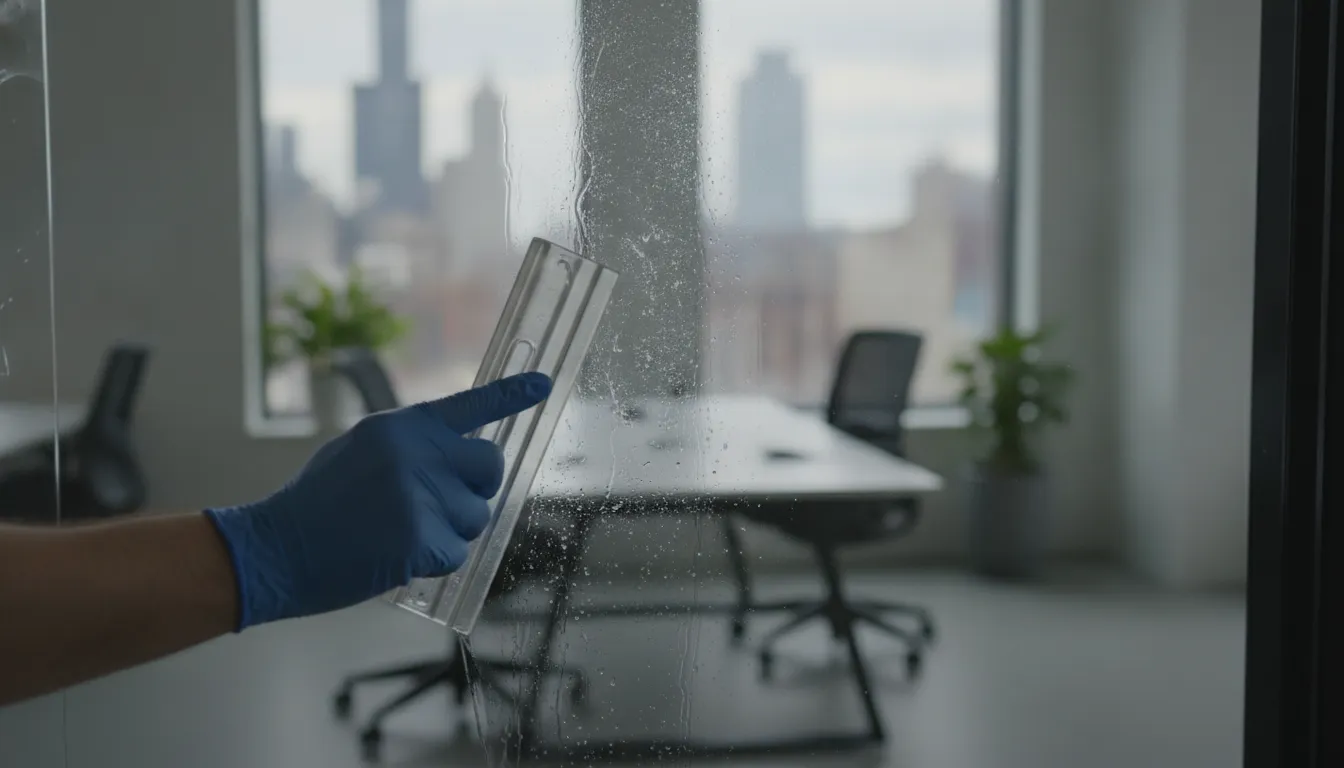
Push for a plain reason tied to your goal. “This film rejects more solar heat while staying lighter” is a reason. “This is our best seller” is not. You should also hear what the film will not do. No film replaces a broken seal, a failing frame, or a pane that should be replaced.
Daylight is the usual tradeoff. Darker film can cut glare, but it can also make a north room feel dim in January. Privacy film can soften a view from the sidewalk and still leave the room bright, or it can block more of the view when you need stronger separation. Ask to see samples against your own glass, in the light you actually live with.
The residential and commercial film options on our service page show the families we install. The visit is where we narrow that list to the panes in front of us. Homes that want a room-by-room pass can also read how to choose window film room by room before we arrive.
How Do You Judge Installation Quality?
Installation quality shows up at the edges, not in the brochure. The International Window Film Association describes a clear architectural sequence. It starts with a thorough clean and a measured cut. A slip solution lets the installer position the film. A squeegee pass pushes out water, and a trim leaves a straight line. Cure time follows. Rushing that sequence is how dust and silver edges appear.
On the day of the job, look for four things:
- The glass is cleaned before any film is lifted off the liner.
- Cuts match the pane, including notches around hardware, instead of a rough overcut.
- Edges are even, with no large bubbles, fingernails, or debris trapped underneath.
- The crew protects floors, frames, and nearby finishes, then explains the cure window.
Commercial jobs should also spell out how the crew will work around open offices or a shop that stays open. Minimal disruption is part of the service, not a bonus. If you want the longer story of why a sloppy bond fails later, our piece on why professional installation protects the result stays on that defect, not on this buying sequence.
After the cure, walk the glass in daylight. Small water marks can fade as the film sets. Dust specks, lifted corners, and crooked sightlines should be called out while the crew’s notes are still fresh. A professional service expects that walkthrough.
What Warranty and Follow-Up Should You Get?
Ask for the warranty in writing before you approve the work. The International Window Film Association notes that professional film is a tested product with manufacturer-backed written warranties. That remains true even when the install itself takes only hours. “Lifetime” on a website is not the same as the page that names what is covered and who honors it.
A useful packet has three parts:
- The manufacturer warranty for the film you actually bought, not a generic brand promise.
- Who registers it, and whether you or the installer files the paperwork.
- Who you call if an edge lifts, and whether that person still works your area.
Most films Sullivan’s installs carry a manufacturer-backed warranty. Terms are not identical from one product to the next, so we hand you the document for the film on your glass rather than a single slogan. Care instructions come with that packet. Film lasts longer when it is cleaned with non-abrasive methods and not scraped in the first days while it cures.
Commercial buyers who want a deeper warranty checklist can use what to demand in a commercial window film warranty. This article stays on the handoff every home and business should expect: paper, registration, and a person who answers.
Which Towns Does the Service Cover?
A window tinting service is only useful if the crew can return. Sullivan’s regular area is Chicago, Wauconda, Barrington, Hoffman Estates, Northbrook, Schaumburg, and Arlington Heights in Illinois, plus Delavan, Elkhorn, and Racine in Wisconsin. If your building sits in one of those markets, say so on the estimate so we route the visit correctly.
Local coverage is more than a pin on a map. Glass in a 1920s Chicago two-flat, a Schaumburg office park, and a Racine storefront does not present the same access, wind, or occupancy problems. A crew that already works those streets spends the visit on your film match instead of learning the building type from scratch.
Confirm the town before you compare bids from far outside the area. A low number that cannot include a return visit is not a lower price. It is a different product. You can see the markets we name on our service-area page, and read how neighbors describe finished work on customer reviews.
We are a family-owned installer based in Wauconda, not a national call center. The same standard applies wherever you hire: the person who measured the glass should be able to explain the film. And someone from that company should still be reachable after the cure.
Get a free estimate and compare your glass, film match, and warranty in one visit
Frequently Asked Questions
What is included in a window tinting service?
A full service includes a consult on your goal, a check of the glass, a film recommendation, professional installation, written warranty paperwork, and care guidance. Measuring and quoting without looking at the panes is only a price, not the service.
Do I need different film on different windows?
Often, yes. A west living room, a bathroom, and a storefront can need solar control, privacy, and safety or anti-graffiti film in the same project. The match should follow the goal for each group of panes, not one default shade.
Will window film work on every type of glass?
Many single-pane, double-pane, tempered, and laminated units can take film, but the installer should confirm the specific pane first. Coatings, failed seals, old film, and odd shapes can change the recommendation. Do not accept a bid that skips that look.
How long does architectural film take to cure?
The International Window Film Association says architectural film usually needs a few days to dry and cure after it is applied. Your installer should tell you when you can wash the glass and whether to limit window use during that time. Small moisture marks can clear as the film sets.
Does Sullivan’s publish prices for this service?
No. Every estimate is custom, based on window measurements, film type, complexity, and location. The free visit is how you get a number that matches your glass instead of a generic rate that leaves out the hard panes.
Ready to See What Your Windows Need?
You now have a plain way to judge a window tinting service. Ask for the consult, the glass notes, the film reason, the install standard, the warranty page, and proof the crew serves your town. If any answer is vague, keep looking.
Sullivan’s Window Tinting will walk that list with you at no charge. We measure the glass, recommend a film for the goal, and leave you with a written next step. Approving the visit does not lock you into a film you have not seen on your own windows.
Request your free estimate and review the film plan before any work is scheduled