
What is commercial window tinting? It is the familiar phrase many businesses use for professionally applying window film to building glass. Film is a thin material installed on existing glazing to help address goals such as solar heat gain control, glare, privacy, appearance, or protection. The right answer is not simply choosing a darker window: different film categories do different jobs, and glass suitability matters.
Request a free estimate for your business windows
What is commercial window film?
Commercial window film is a professionally applied layer that changes the performance or appearance of business windows without replacing the glass. Some films are designed to manage sunlight and glare. Others obscure views, add decorative effects, or help hold glass together if it breaks. The word “tint” can suggest only a dark appearance, but architectural films include clear and translucent choices too.
Film selection should begin with the problem a business wants to address. A meeting room needing visual screening has a different requirement from a west-facing office with afternoon glare. A protective film does not necessarily reduce heat, and a solar-control product is not automatically a security solution. Sullivan’s is family-owned and operated and has provided window film services since 1988. Explore its window film services and company background.
What problems can film address in a business?
Windows influence comfort, brightness, visibility, and the way a workplace looks. Film can be considered when a business wants to improve one of these conditions while keeping existing windows. Before comparing products, write down the problem in observable terms. “The office is uncomfortable” is a start; “the desks beside the west windows have screen glare late in the day” gives a more useful point of investigation.
- Solar heat gain: Solar-control film can help manage the sun’s heat entering through glass. Results depend on the product, glazing, exposure, and room conditions.
- Glare: A suitable solar-control film may reduce harsh brightness on computer displays, merchandise, or work surfaces. The aim is to improve usability without making the room unnecessarily dim.
- UV exposure: Film options provide UV protection and can help protect furnishings and merchandise from fading. Sullivan’s describes films that block 99% of harmful UV rays; check the specifications for the product being considered.
- Privacy: Frosted, patterned, or more opaque decorative film can limit views through selected glass. Translucent options may still allow daylight to pass.
- Breakage concerns: Safety and security film can help hold broken glass together. It does not make glass unbreakable or guarantee that entry is impossible.
- Surface marking: Anti-graffiti film can provide a sacrificial layer on certain exposed glass, subject to the surface and product being suitable.
Film does not resolve every building issue. Uneven temperature may also involve HVAC operation, air leakage, shading, or window condition. A targeted assessment can help distinguish a window-related concern from other causes. For general context about how window coverings affect heat gain and daylight, see the U.S. Department of Energy; evaluate film performance using the individual product’s documentation.

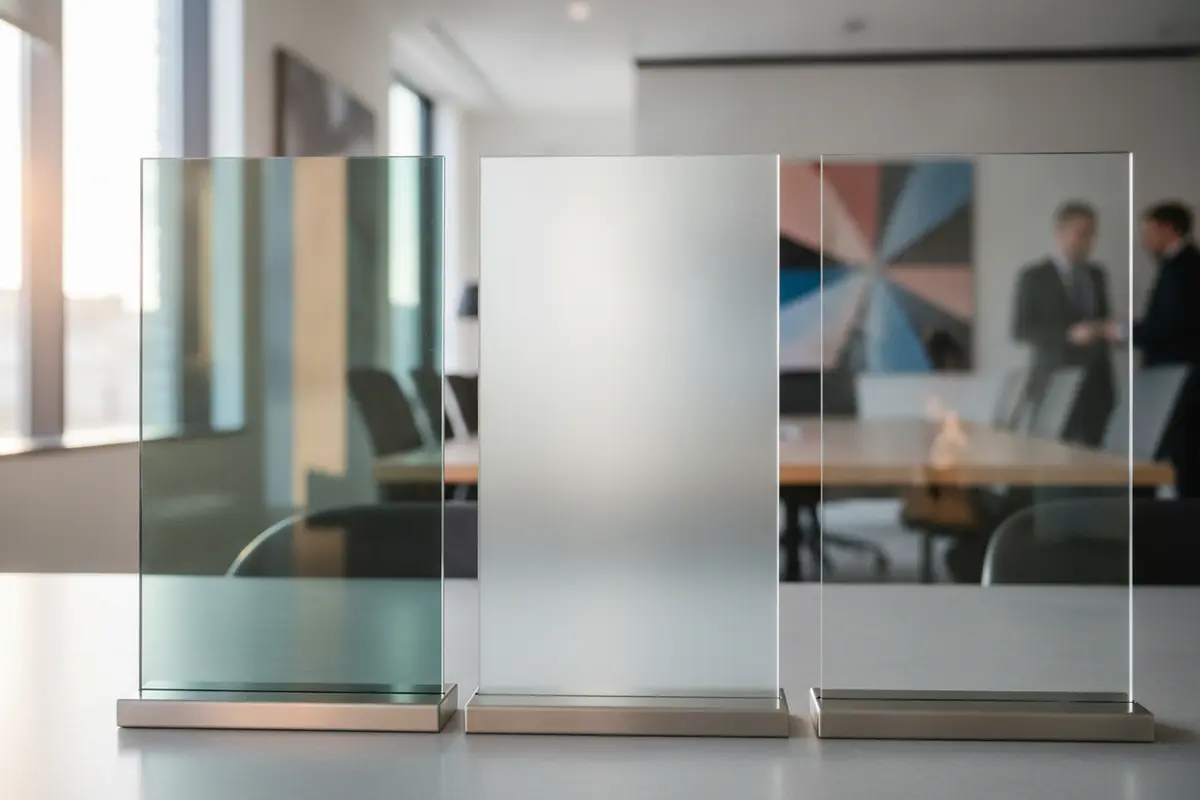
How do the main commercial film types compare?
This table is a starting point, not a product specification. Visible light, reflectivity, color, and performance differ among films and glazing systems. Ask an installer to assess the actual glass and explain which tradeoffs matter for the space.
| Film category | Typical purpose | Useful evaluation questions |
|---|---|---|
| Solar control | Manage solar heat gain and glare | Which windows receive sun, and how much daylight and view should remain? |
| Decorative or privacy | Change appearance or limit views | Is privacy needed throughout the day? Should the finish be translucent or opaque? |
| Safety and security | Help hold glass together if broken | Which panes are the priority, and what protection is realistic for this glass? |
| Anti-graffiti | Provide a replaceable surface layer against certain marks | Is the glass suitable, and what is the process if the film is damaged? |
| Electric switchable | Change between clear and private when powered | Are electrical connections and controls practical for the space? |
A single building may need more than one category. A conference room might benefit from decorative film, while sun-exposed work areas may call for solar-control film. Choosing by task avoids treating every window as if it has the same purpose. Samples viewed in actual lighting can clarify appearance; Sullivan’s project gallery offers examples of completed work.
How should a business assess its windows?
A short record of what happens in the space makes a product discussion more useful. It can also show whether the issue is limited to certain panes or affects an entire area. For example, a property manager who marks only three afternoon-glare windows can ask about a targeted solution instead of assuming every pane needs identical treatment.
- Map the affected glass. Note the room, floor, window location, and direction if known. A simple floor plan with marked windows is helpful for larger sites.
- Record when the concern occurs. Note whether glare or heat is strongest in the morning, afternoon, or only during a particular season. Timing can help identify the relevant exposure.
- Describe the task affected. Note whether screen glare makes a workstation hard to use, whether customers see reflections on merchandise, or whether passersby can see into a meeting room.
- Rank priorities. Decide whether heat control, glare reduction, daylight, privacy, appearance, or glass protection comes first. Some goals involve tradeoffs, so ranking them helps steer the conversation.
- Gather known glass details. Share information about glazing type, coatings, previous film, cracks, or planned replacement. Compatibility can depend on construction and condition; an in-person check may be needed.
- Consider daily operations. Identify busy periods, rooms that must remain accessible, security requirements, and any window treatments that will remain in place.
- Compare samples and documentation. Review appearance, product specifications, care instructions, and applicable warranty information rather than choosing on shade alone.
Photographs from inside the room can illustrate glare or sightlines, but they cannot establish glass compatibility. For a useful first conversation, pair photos with notes on the approximate dimensions, room use, sun exposure, and desired outcome. A custom estimate depends on measurements, film type, project complexity, and location; there is no one published price for every building. Sullivan’s explains its free estimate process.
How do needs differ from one business space to another?
Film decisions should reflect how people use each area. These examples show how one property can have several objectives and how the assessment changes with each use.
Street-facing retail
A retailer may want customers to see merchandise while reducing reflections or harsh light on displays. The appropriate solar-control choice depends on the desired daylight and outward view. If the concern is scratching or marking on accessible storefront glass, anti-graffiti film has a separate role. Do not assume one product covers both needs. The manager can identify display cases that catch reflections, hours when the problem is most noticeable, and which storefront panels are most exposed. See window film for retail settings.
Conference rooms and internal partitions
A meeting room may need privacy from a hallway without feeling closed off. Frosted or patterned film can obscure direct views while allowing light through, depending on the design. Decide whether the whole pane should be covered or only a band at eye level. Consider seated and standing sightlines, door glazing, and whether the room should feel open when not in use. A paper sketch marking the desired coverage can make sample review more concrete. Explore decorative film for office meeting rooms.
Workstations beside exterior windows
Record which desks have display glare and when it occurs. If only a few workstations are affected, the assessment can focus on those exposures rather than defaulting to uniform treatment everywhere. Also consider whether film appearance and light transmission will be acceptable to occupants in adjacent areas. Keep the display positions and any blinds in the notes, since both influence the experience at a desk. See the discussion of office heat control.
Entries, reception, and public areas
Entrances combine frequent movement, visibility, branding, and sometimes privacy concerns. Keep the intended function clear: a decorative treatment changes appearance, while safety and security film is selected for different glass-protection goals. Glass type, edges, and installation details matter. A manager can also flag opening hours and visitor routes so any work plan accounts for access. For context, review commercial entryway film considerations.
Warehouses and large glazed areas
In a warehouse, the concern may be a bright work zone, a sun-exposed office, or visibility through large windows. Separate affected use areas and note whether equipment, shelving, or workflow creates access constraints. For instance, glare over a packing station may call for a different evaluation from a bright office where screens are used. Large glazing can require more detailed planning than a small office; product choice still depends on the actual glass. See warehouse window film applications.
These cases illustrate why a property may need a coordinated plan rather than one film everywhere. Match each selection to a real use and preserve the qualities the business wants to keep, such as a clear view, natural light, or an open feel.
What happens during professional installation?
Professional installation starts with understanding the glass and the requested outcome. An installer reviews the windows, considers film compatibility, and discusses the proposed finish and project scope. Existing damage, glass construction, and coatings can affect a recommendation, so do not assume every film is suitable for every pane.
Once the plan is agreed, the work generally involves preparing the glass, measuring and fitting the selected material, and applying it to create a clean, factory-finished look. For an operating business, discuss which rooms are accessible, when work can occur, how people will move through the area, and whether furnishings need to be moved. A small suite with a few offices and a multi-floor workplace have different access questions, even if their goals are similar.
After application, film may need time to dry and settle. Follow product-specific care instructions rather than cleaning the glass immediately as usual. Ask which documentation applies to the chosen product and project. Review questions to ask a commercial installer before selecting a provider, and learn about installation planning.
What should you ask before selecting a film?
A useful conversation is about the outcome and constraints, not just the product name. Bring window notes and ask which category suits the concern and what tradeoffs to expect. Questions may include:
- Which film addresses this specific concern, and what does it not do?
- How will the option affect daylight, visibility, color, and appearance from inside and outside?
- Has the glass been checked for compatibility, including known coatings or prior treatments?
- Could a different film or no film be more appropriate for some windows?
- What work areas need to be clear, and how will access be coordinated?
- What product specifications, care information, and warranty documentation apply?
- What measurements and project details are needed for a custom estimate?
It can also help to ask for a window-by-window recommendation rather than a single broad label. If the priority is privacy, clarify whether the concern is direct sightlines, visibility at night, or separation between work areas. If the priority is heat or glare, identify the time of day and the room activities affected. For more background, see window film FAQs, the commercial film type comparison, and guidance about privacy film for Chicago offices. You can also review service-area information to see whether your property is within the stated markets.
Request a free estimate for commercial window film
Frequently asked questions
Is commercial window tinting the same as window film?
In everyday conversation, commercial window tinting often means applying window film to business glass. Window film is more precise because products can be clear, decorative, privacy-focused, solar-control, or protective—not only dark-tinted.
Can commercial film provide privacy without blocking daylight?
Some translucent decorative films obscure direct views while allowing light through. The level of privacy and visible light depends on the finish and viewing conditions. Reflective films can also behave differently as indoor and outdoor lighting changes, so ask how the intended space will look at different times.
Does one film solve heat, glare, and security concerns?
Not necessarily. Film categories are designed for different purposes. A solar-control option may address sunlight-related heat or glare but may not provide the privacy or glass-protection characteristics a business wants. Identify each concern and compare products accordingly.
How much does commercial window film cost?
There is no single price for every building. Cost depends on measurements, film type, complexity, and location. A custom estimate can be prepared after the windows and goals are understood; Sullivan’s does not publish one universal project price.
Can film be installed while a business is operating?
Scheduling and access can be discussed around the space’s use, but the plan depends on windows and scope. Tell the installer about busy periods, restricted areas, and rooms that cannot be interrupted so the project can be considered in context.
Ready to discuss your business windows?
Commercial window film can address a specific concern while keeping existing glass, but a good recommendation begins with the windows, the people using the space, and the qualities the business wants to retain. Record the affected areas, define the main priority, and ask about product tradeoffs and glass suitability. Sullivan’s serves the greater Chicago metropolitan area and select Wisconsin markets; learn more about commercial window film in the Chicago area or contact Sullivan’s with a project question.
Request your free estimate today
A professional assessment can help match a suitable film to your glass, priorities, and daily operations.